Key performance
Technical specifications
- Displacement
- 937 cc → 890 cc
- Power
- 111.0 ch @ 9250 tr/min (81.6 kW) → 111.0 ch @ 9000 tr/min (81.6 kW)
- Torque
- 93.0 Nm @ 6500 tr/min → 91.1 Nm @ 7250 tr/min
- Compression ratio
- 13.3 : 1 → 13.1 : 1
- Bore × stroke
- 94 x 67.5 mm → 96 x 61.5 mm
- Fuel system
- Injection Ø 53 mm → Injection Ø nc
- Euro standard
- Euro 5 → Euro 5+
- Rear suspension
- Mono-amortisseur, déb : 140 mm → Mono-amortisseur, déb : 145 mm
- Front tyre pressure
- 2.30 bar → —
- Rear tyre pressure
- 2.50 bar → —
- Seat height
- 820.00 mm → 815.00 mm
- Weight
- 188.00 kg → 175.00 kg
- Dry weight
- 166.00 kg → —
Engine
- Displacement
- 890 cc
- Power
- 111.0 ch @ 9000 tr/min (81.6 kW)
- Torque
- 91.1 Nm @ 7250 tr/min
- Engine type
- Bicylindre en L à 90°, 4 temps
- Cooling
- liquide
- Compression ratio
- 13.1 : 1
- Bore × stroke
- 96 x 61.5 mm
- Valves/cylinder
- 4
- Camshafts
- 2 ACT
- Fuel system
- Injection Ø nc
- Starter
- électrique
- Euro standard
- Euro 5+
Chassis
- Frame
- monocoque en aluminium
- Gearbox
- boîte à 6 rapports
- Final drive
- Chaîne
- Front suspension
- Fourche téléhydraulique inversée Ø 43 mm, déb : 130 mm
- Rear suspension
- Mono-amortisseur, déb : 145 mm
Brakes
- Front brakes
- Freinage 2 disques Brembo Ø 320 mm, fixation radiale, étrier 4 pistons (M4.32 monobloc)
- Rear brakes
- Freinage 1 disque Ø 245 mm, étrier 2 pistons
- Front tyre
- 120/70-17
- Rear tyre
- 180/55-17
Dimensions
- Seat height
- 815.00 mm
- Seat type
- Selle biplaces
- Fuel capacity
- 14.00 L
- Weight
- 175.00 kg
- New price
- 12 590 €
Overview
A 90° open V2. A V2 for everyone… or for everyone. While the V4 has taken over all of Ducati’s muscular motorcycles, the twin-cylinder is far from disappearing in Bologna. Proof of this is the brand-new 890 cm³ engine, which is being integrated into numerous actresses. Here, it plays a major role and develops its reputation. Because it must give life and stir the soul of the 2026 Monster.
The MONSTER, and not the plural! It has been a while since a single model has been featured in the catalog. As if there was only one place for the descendant of the 1993 900. The Streetfighter, Diavel, and Scrambler are responsible for providing other experiences of the roadster theme. For the Monster, only the essentials matter: a handlebar, an engine, and two wheels. It was very true at the beginning… It’s a little denser today.
Let’s take a look at this engine. Although its displacement is close to the beginnings, its design is light-years away. Lightweight, compact, very technical, it presents the current solutions such as 4 valves per cylinder, liquid cooling, injection, ride-by-wire – everything that was found in the Testastretta 937 except that… Its ribs are a little more square, it loses the desmodromic system and belts, loses 5.9 kg and gains variable valve timing. This is not the first time that purists will choke on this. For other enthusiasts, it is the guarantee of a more full, more flexible, more exploitable engine.
It already officiates in the Panigale V2, Streetfighter V2, and Multistrada V2 – a consanguinity linked to a rationalization of costs without disappointing. It animates the trail with real pleasure; this engine suits it like a glove. It allows for a very exploitable efficiency on the Streetfighter; but may leave power-hungry riders wanting more on the sports bike. The efficiency is there, the madness less. Okay, okay, but what is its power? I’ll get to it. Contrary to expectations, the new Monster develops exactly the same dose as the previous one: 111 horsepower. The torque? The maximum is slightly down, by 2 Nm, with 9.3 mkg. Ducati has not given as many watts as in the Streetfighter V2, to mark the difference. Where the new twin stands out is with 80% of the maximum torque available between 4,000 and 10,000 rpm.
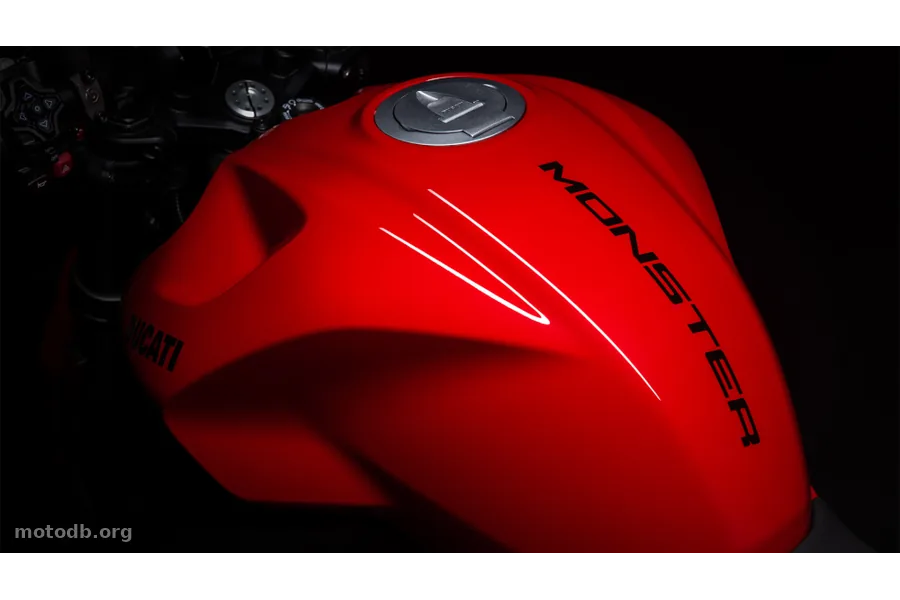
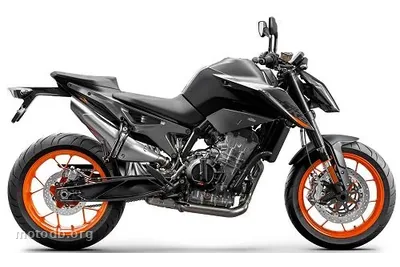
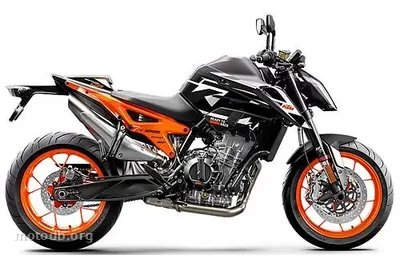
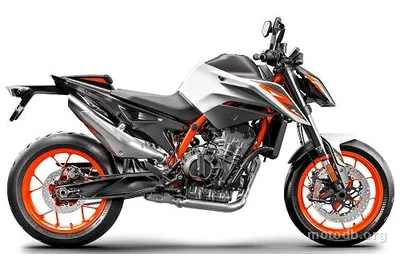
The engine has a rounded belly, in concert with its back-mounted, bulging fairing. If Ducati has largely reshaped the new Monster, it is in a certain continuity with the 2021-2025 model. Nothing to do with the previous shock. The volumes are close, the tank captures attention and doesn't let go with its sculpted shapes, the plastic takes its ease on the edges of the radiator while abandoning the walls of the engine, the rear is refined in favor of a single-seat – the Monster always has a certain personality. It engages with its new headlight, obviously influenced by the XDiavel V4.
When Ducati decides to take its motorcycles to a new generation, it doesn’t do it halfway. New engine, new look, and new chassis. Although the design has a similar approach to the previous Monster, with a minimalist aluminum frame, many things lead it to a renewal. Especially in dynamics: the motorcycle is 4 kg lighter (175 kg before adding gasoline), the wheelbase increases by 18 mm, the rake angle is reduced to 23.3° and the rider’s position changes. It sits lower by 5 mm, advances its arms by 7 mm, and raises them also by 7 mm to grab the handlebar. A slightly more sporty attitude to rediscover the expression of the first Monsters.
Its aluminum frame weighs only 4 kg, serves as an airbox, and holds an inverted Showa 43 mm fork. The swingarm is attached directly to the engine. Totally new on the Monster, it borrows the scheme of the latest version of the Panigale V4. A very beautiful piece, entirely dedicated to efficiency. The Monster doesn’t just want to offer you sensations, it also wants you to ride with courage. No issues with braking, with the return of Brembo components: large 320 mm discs, 4-piston M4.32 calipers, aviation hoses, a PR18/21 radial master cylinder. Especially since with its very contained weight, the Ducati is unlikely to overheat them. The right lever will be your friend, without having the formidable level of a Stylema or Hypure system, more destined for large road or track caliber bikes.
New opus of Monster…. So reinforced electronics? With parsimony. There were already quite a few assists. It is the dashboard that evolves the most, with an improved commodo and a new, larger 5-inch screen. The display evolves and offers two themes (Road or Road Pro). The shifter transitions to the 2.0 model, offering a more direct and less rubbery feel. Then the Monster retains its cornering ABS, traction control, wheelie control, engine brake control, power modes, and riding modes. Previously, there were three: Sport, Urban, and Touring. The Monster V adds a fourth composition, Rain. With more efficiency and intervention of the DWC, DTC, ABS, EBC, a low power level, a very progressive throttle response, and power reduced to 95 horsepower.
Two legendary Ducati bikes were born in the 1990s: the 916 and the Monster. The first has transformed over time to become the Panigale V4. The second has been declined in multiple versions and has been sufficiently renewed so that only its name and the angle of its engine remain. Once again, the Monster evolves, the enfant terrible is of a different breed but does not transform or shock as much as the previous version.
The Monster phase 4, the 937 cm³, delivered a visual slap. A upheaval, almost a change of identity, which had disturbed the fans. Not the market, which places it among the brand's best sellers. This 5th generation presents itself as more accessible, still as striking; only its brutality is lost with time.
The Monster will be offered in a version compatible with A2, with 43.5 hp (not 47.5 hp ??????) and 5 mkg. There is also a + version, with a small windscreen and seat cover included.
M.B - Photos constructeur
Standard equipment
- Assistance au freinage : ABS
- Nombre de mode de conduite : 4
- Taille de l'écran TFT couleur : 12,70 cm / 5 pouces
- Jantes aluminium
- Shifter
- Indicateur de vitesse engagée
- Prise USB
- Contrôle de traction
- Contrôle anti wheeling
- Embrayage anti-dribble
- ABS Cornering
- Contrôle du frein moteur
Practical info
- Véhicule accessible au permis A2 ou bridable à 47.5ch / 35 Kw
- La moto est accessible aux permis : A, A2
- Pays de fabrication : Italie
Reviews & comments
No reviews yet. Be the first to share your opinion!