Key performance
Technical specifications
Engine
- Displacement
- 803 cc
- Power
- 80.0 ch @ 8250 tr/min (63.5 kW)
- Torque
- 78.0 Nm @ 6250 tr/min
- Engine type
- V2, four-stroke
- Cooling
- Air
- Compression ratio
- 11.0:1
- Bore × stroke
- 88.0 x 66.0 mm (3.5 x 2.6 inches)
- Valves/cylinder
- 2
- Camshafts
- 1 ACT
- Fuel system
- Injection. 45mm throttle body
- Valve timing
- Desmodromic valve control
- Starter
- Electric
Chassis
- Frame
- Tubular steel Trellis frame
- Gearbox
- 6-speed
- Final drive
- Chain (final drive)
- Clutch
- APTC wet multiplate with hydraulic control
- Front suspension
- 43mm upside-down forks
- Rear suspension
- Progressive linkage with preload and rebound Sachs adjustable monoshock
Brakes
- Front brakes
- Double disc. Optional ABS. Four-piston calipers.
- Rear brakes
- Single disc. Optional ABS. Two-piston calipers.
- Front tyre
- 120/60-17
- Front tyre pressure
- 2.10 bar
- Rear tyre
- 160/60-17
- Rear tyre pressure
- 2.20 bar
Dimensions
- Seat height
- 770.00 mm
- Wheelbase
- 1450.00 mm
- Length
- 2100.00 mm
- Fuel capacity
- 15.00 L
- Weight
- 187.00 kg
- Dry weight
- 167.00 kg
- New price
- 8 550 €
Overview
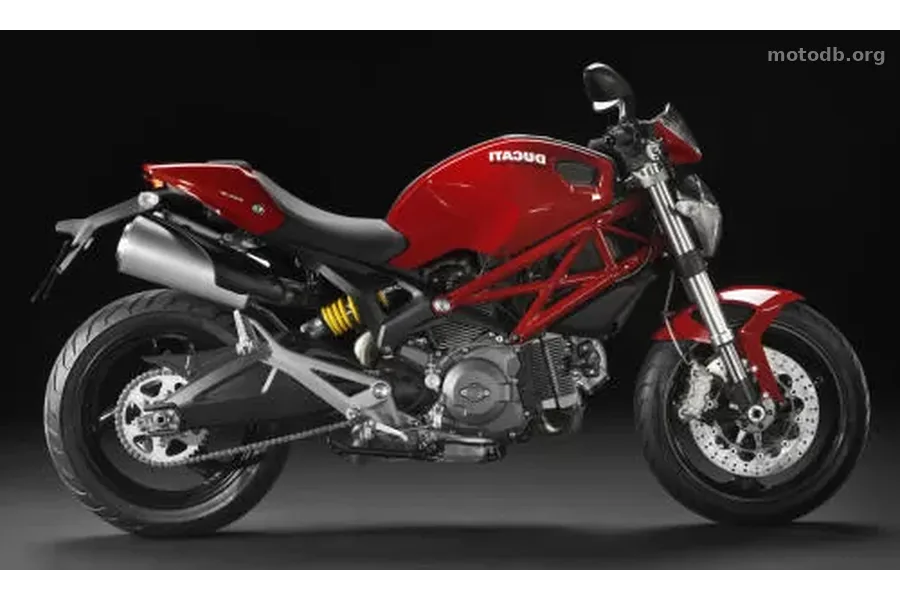
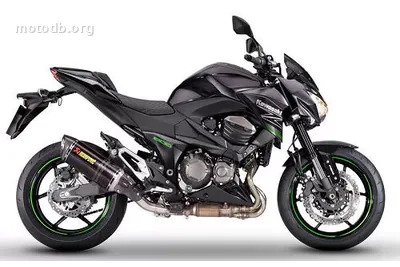
2014 was the last year for commercial sales of the 696 Monster. The latest modifications to the little Monster date back to 2011. Nothing exceptional, just tweaks to improve the riding experience. First for the rider, whose riding position is noticeably raised thanks to a 20 mm higher handlebar. The seat is redesigned, with a more refined approach to the fuel tank. A rear frame incorporates discreet passenger grab handle locations, carved into the passage of the rear wheel. Proper grab handles are available as an option, as is data acquisition. Finally, the forks are signed Marzocchi, as with all Monsters now. Minor improvements, at the limit of detail compared to the emotion provoked by this generation of Monster. Remember:
They dared! Attacking the Monster myth was as simple as attempting to redesign the 916. Pierre Terblanche had broken his teeth on it... But it had to happen, and Ducati attempts it in a beautiful way. After 15 years without a ride, after a slew of versions (600, 620, 695, 750, 800, 900, 1000, S2R, S4, S4R, S4RS and special series), after so much praise and criticism, the Monster passes the torch to a new generation.
Of course, it will be scrutinized. It will be criticized for this or that for a while. Certain design choices will be difficult to forgive... and that is the fate of every motorcycle elevated to the rank of icon when the day of remodeling arrives (the 916, the R1, the CB 500, the VFR, the Stinger, etc...). So, let's salute the audacity before criticizing excessively. And whether one is for or against this change, it must be admitted that this new Monster does not lack character. Still low and stocky, it now appears to tuck its head into its shoulders. Its stylized headlight gives it a touch of MV-Agusta Brutale, while the lateral exhausts under the seat make us think of the Triumph Street Triple. The perforated louvers in the fuel tank are surprising, stand out, can be disturbing, but do not overturn as much as the solutions adopted for the chassis.
Previously, the frame was a tubular trellis from end to end. On the 696 Monster, this type of structure still dominates, with larger diameter tubes, but, surprise, it ends with a cast aluminum piece to create the rear frame. In fact, a hybrid, like the frame of the Desmosedici GP7. Like all modern roadsters, the 696 is also equipped with top-sportive braking: 320 mm discs bitten by radial 4-piston calipers. And to not do things halfway, the swingarm is also completely new, huge, seemingly ready to absorb a pack of horsepower.
Because indeed, there are more powerful horses in the 696’s twin. 9% more, or 80 horsepower. And at the same displacement, the torque makes an even more significant jump of 11%, reaching almost 7 mkg. And yet, the internal dimensions are the same - but we are in the presence of the evolution of the 695 cm3: the cylinder heads are now of the same type as those of the 1100 that equips the Multistrada and Hypermotard. The pistons and combustion chambers have evolved. Ducati has also improved heat exchange by giving a new shape to the cooling fins. The APTC clutch is also present, synonymous with easier engagement.
Even while modernizing, the Monster remains a Monster, immediately identifiable, and now incorporates modern technology. Adieu the double needle speedometer - the dashboard is a completely new dual-window digital display. Classy, high-tech, design, but what will it be like to glance at the engine speed (although purists claim that a Ducati is ridden by ear)? The rear light swaps the bulb for LEDs, the front light becomes a very nice ovalized multi-combiner.
M.B - Manufacturer photos
Standard equipment
- Assistance au freinage : ABS en option
Practical info
- La moto est accessible aux permis : A
Reviews & comments
No reviews yet. Be the first to share your opinion!