Key performance
Technical specifications
- Displacement
- 955 cc → 959 cc
- Power
- 157.0 ch @ 10500 tr/min (115.5 kW) → 157.0 ch @ 10500 tr/min (114.6 kW)
- Torque
- 106.9 Nm @ 9000 tr/min → 107.4 Nm @ 9000 tr/min
- Engine type
- Bicylindre en L à 90°, 4 temps → V2, four-stroke
- Cooling
- liquide → Liquid
- Compression ratio
- 12.5 : 1 → 12.5:1
- Bore × stroke
- 100 x 60.8 mm → 100.0 x 60.8 mm (3.9 x 2.4 inches)
- Fuel system
- Injection Ø 62 mm → Injection. Mitsubishi electronic fuel injection system. Twin injectors per cylinder. Full Ride-by-Wire elliptical throttle bodies.
- Valve timing
- — → Desmodromic valve control
- Starter
- — → Electric
- Frame
- monocoque en aluminium → Monocoque Aluminium
- Gearbox
- boîte à 6 rapports → 6-speed
- Final drive
- Chaîne → Chain (final drive)
- Clutch
- — → Slipper clutch
- Front suspension
- Fourche téléhydraulique inversée Showa BPF Ø 43 mm, déb : 120 mm → Fully adjustable Showa BPF fork. 43 mm chromed inner tubes
- Rear suspension
- Mono-amortisseur Sachs, déb : 130 mm → Fully adjustable Sachs unit. Aluminum double-sided swingarm.
- Front wheel travel
- — → 120 mm (4.7 inches)
- Rear wheel travel
- — → 130 mm (5.1 inches)
- Front brakes
- Freinage 2 disques Brembo Ø 320 mm, fixation radiale, étrier 4 pistons → Double disc. ABS. Floating discs. Four-piston calipers. Radially mounted.
- Rear brakes
- Freinage 1 disque Ø 245 mm, étrier 2 pistons → Single disc. ABS. Two-piston calipers.
- Front tyre
- 120/70-17 → 120/70-ZR17
- Rear tyre
- 180/60-17 → 180/60-ZR17
- Wheelbase
- — → 1431.00 mm
- Length
- — → 2050.00 mm
- Height
- — → 1115.00 mm
- New price
- 16 990 € → 16 590 €
Engine
- Displacement
- 959 cc
- Power
- 157.0 ch @ 10500 tr/min (114.6 kW)
- Torque
- 107.4 Nm @ 9000 tr/min
- Engine type
- V2, four-stroke
- Cooling
- Liquid
- Compression ratio
- 12.5:1
- Bore × stroke
- 100.0 x 60.8 mm (3.9 x 2.4 inches)
- Valves/cylinder
- 4
- Camshafts
- 2 ACT
- Fuel system
- Injection. Mitsubishi electronic fuel injection system. Twin injectors per cylinder. Full Ride-by-Wire elliptical throttle bodies.
- Valve timing
- Desmodromic valve control
- Starter
- Electric
Chassis
- Frame
- Monocoque Aluminium
- Gearbox
- 6-speed
- Final drive
- Chain (final drive)
- Clutch
- Slipper clutch
- Front suspension
- Fully adjustable Showa BPF fork. 43 mm chromed inner tubes
- Rear suspension
- Fully adjustable Sachs unit. Aluminum double-sided swingarm.
- Front wheel travel
- 120 mm (4.7 inches)
- Rear wheel travel
- 130 mm (5.1 inches)
Brakes
- Front brakes
- Double disc. ABS. Floating discs. Four-piston calipers. Radially mounted.
- Rear brakes
- Single disc. ABS. Two-piston calipers.
- Front tyre
- 120/70-ZR17
- Front tyre pressure
- 2.50 bar
- Rear tyre
- 180/60-ZR17
- Rear tyre pressure
- 2.50 bar
Dimensions
- Seat height
- 830.00 mm
- Wheelbase
- 1431.00 mm
- Length
- 2050.00 mm
- Height
- 1115.00 mm
- Fuel capacity
- 17.00 L
- Weight
- 200.00 kg
- Dry weight
- 176.00 kg
- New price
- 16 590 €
Overview
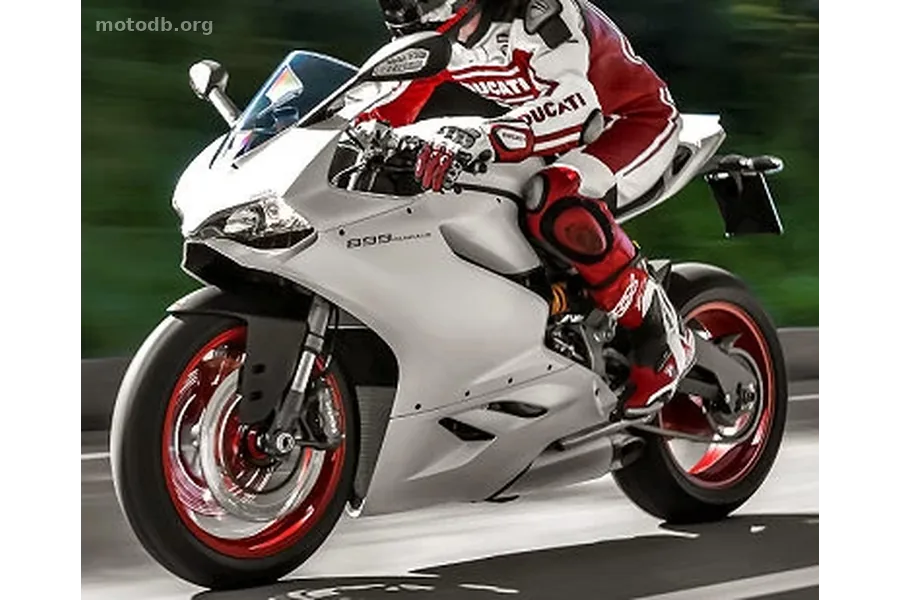
Who remembers the era when a mid-displacement Ducati sportbike displaced 748 cc? The Bolognese lineage has never stopped growing, generation after generation. 749, 848, 899, and now 959. The 2016 Ducati 959 Panigale pushes the needle one notch further, brushing up against the liter mark without ever crossing the line. A clever positioning that lets it stay in the shadow of the 1299 while delivering a fiery temperament. With 157 horsepower extracted from a 955 cc Superquadro V-twin, it gains 9 horsepower over the 899 it replaces. And for those who enjoy historical nods, this displacement and power output are strangely reminiscent of the factory 916 Corsa that raced in World Superbike during the 1990s.
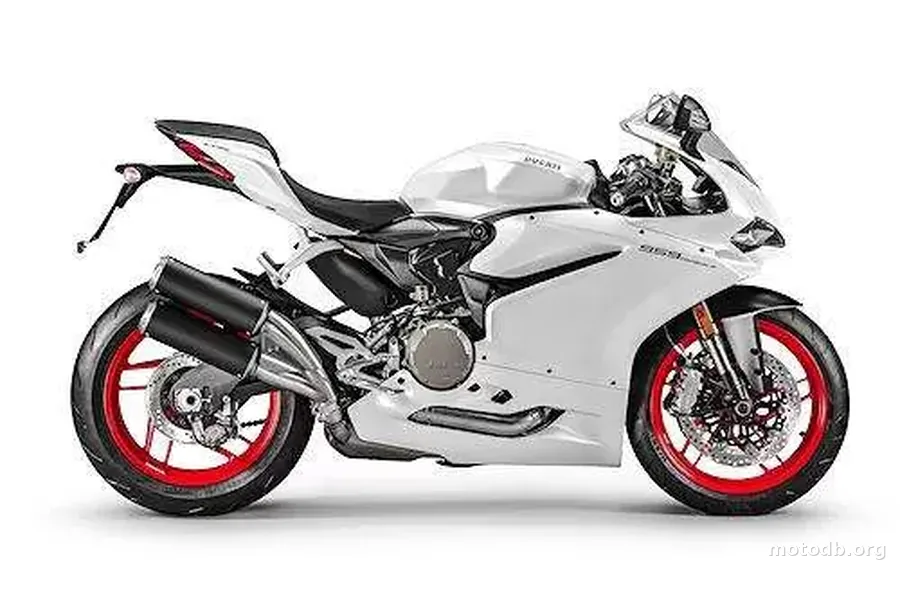
Visually, the Ducati 959 Panigale borrows the mold of its big sister with a compactness that leaves you speechless. It's hard to believe a twin-cylinder of this displacement fits into such a tight chassis. The aluminum monocoque frame, the fully adjustable 43 mm Showa BPF fork, the side-mounted Sachs shock absorber: the Panigale recipe is there in broad strokes. The sore point is the dual side-exit exhaust imposed by Euro4 regulations. Where the 899 tucked its silencers under the engine in a clean design, the 959 sports two pipes that weigh down the silhouette. Ducati also persists in keeping a conventional double-sided swingarm, with no single-sided unit. Love it or hate it, the lines suffer for it. The other consequence of meeting these regulations: 7 extra kilos on the scales. The Ducati 959 Panigale tips in at 200 kg wet and 176 kg dry. It's not a dealbreaker, especially compared to a Yamaha R6 or a Kawasaki ZX-6R that play in lower displacement classes, but it's a notable weight gain for an Italian sportbike.
On the mechanical side, the Superquadro has been seriously reworked. Stroke grows to 60.8 mm for a 100 mm bore, with a 12.5:1 compression ratio. New valves, modified crankshaft, revised camshafts, a second row of injectors kicking in at 8,500 rpm: the engineers didn't settle for simply increasing displacement. Torque climbs to 107.4 Nm at 9,000 rpm, enough to feel the V-twin pulling hard through the rev range. The six-speed gearbox sends everything to the rear wheel via chain drive, with a DQS quickshifter as standard, functional only on upshifts. Downshift capability remains reserved for the 1299 versions. The same hierarchy logic applies to the electronics: the 959 gets three riding modes (Race, Sport, Wet), an 8-level DTC traction control, a 3-position EBC engine brake control, and Bosch ABS, but no inertial measurement unit or wheelie control. The retail price of the Ducati 959 Panigale comes in at 16,590 euros, nearly 5,000 euros less than the 1299. It's the entry ticket into the Panigale universe, and it remains fair.
The braking duties fall to Brembo M4.32 four-piston calipers on 320 mm floating discs, handling the job with authority, even if the M50 units on Ducati's larger-displacement bikes remain a step above. The 1,431 mm wheelbase, lengthened by 5 mm over the 899, and the swingarm pivot lowered by 4 mm aim to improve stability and traction. The 830 mm seat height and 17-liter fuel tank round out a package built for the sporting rider who wants to go fast without fighting the machine. Against a Triumph Daytona 675 R or an MV Agusta F3 800, the Ducati 959 Panigale plays the displacement and engine character card. It targets the rider seeking the Ducati thrill, the sound of the Desmo V-twin, and the Panigale style, without needing the 205 horsepower of the 1299. Those hunting for a good deal will also find the Ducati 959 Panigale on the used market at increasingly attractive prices, especially the 2017 and 2018 model years. The Corse version, introduced in 2018 and continued into 2019, adds a layer of prestige with its racing livery and a few specific upgrades. But in its standard form, the 959 remains a complete sportbike, capable of delivering thrills on track and on the road alike. Its only real flaw: that side-exit exhaust that somewhat spoils the visual party.
Standard equipment
- Assistance au freinage : ABS de série
Practical info
- La moto est accessible aux permis : A
Indicators & positioning
Similar bikes
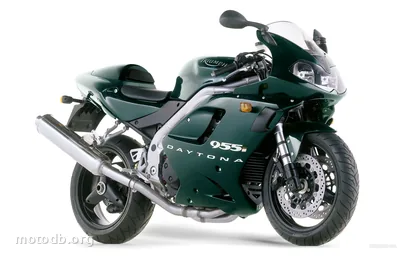
Centennial Edition Daytona
Reviews & comments
No reviews yet. Be the first to share your opinion!