Key performance
Technical specifications
Engine
- Displacement
- 1198 cc
- Power
- 160.0 ch @ 9500 tr/min (117.7 kW)
- Torque
- 136.3 Nm @ 7500 tr/min
- Engine type
- Bicylindre en L à 90°, 4 temps
- Cooling
- liquide
- Compression ratio
- 12.5 : 1
- Bore × stroke
- 106 x 67.9 mm
- Valves/cylinder
- 4
- Camshafts
- 2 ACT
- Fuel system
- Injection Ø 56 mm
Chassis
- Frame
- Treillis en tubes d'acier
- Gearbox
- boîte à 6 rapports
- Final drive
- Chaîne
- Front suspension
- Fourche téléhydraulique inversée Ø 48 mm, déb : 170 mm
- Rear suspension
- Mono-amortisseur, déb : 170 mm
Brakes
- Front brakes
- Freinage 2 disques Ø 320 mm, fixation radiale, étrier 4 pistons
- Rear brakes
- Freinage 1 disque Ø 265 mm, étrier 2 pistons
- Front tyre
- 120/70-17
- Front tyre pressure
- 2.50 bar
- Rear tyre
- 190/55-17
- Rear tyre pressure
- 2.50 bar
Dimensions
- Seat height
- 825.00 mm
- Fuel capacity
- 20.00 L
- Weight
- 232.00 kg
- Dry weight
- 209.00 kg
- New price
- 17 590 €
Overview
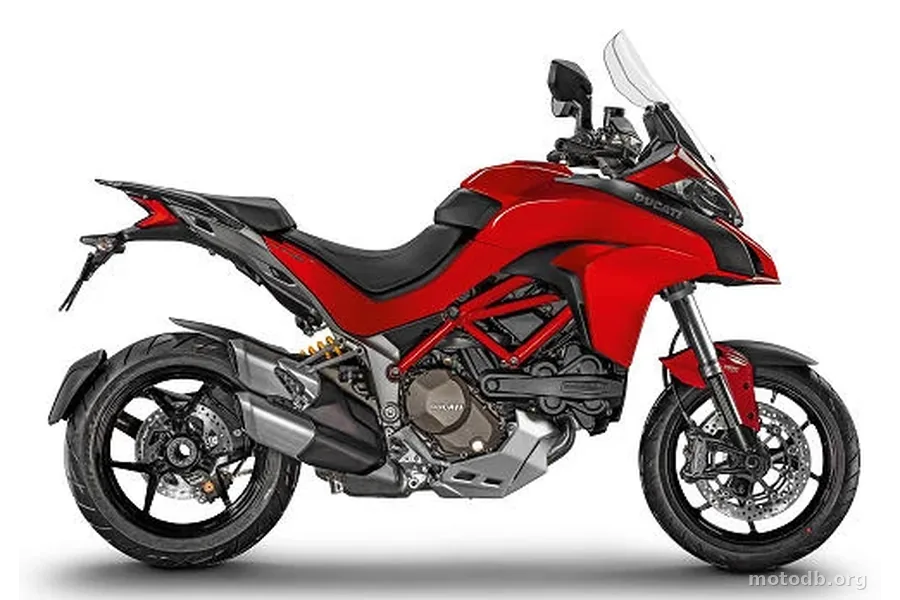
When Ducati launched the first Multistrada, nobody quite knew what to make of it. An adventure bike? A sport tourer? A track weapon disguised as a globe-trotter? The answer was: all of the above, and that was precisely what unsettled people. The 1200 put the debate to rest in 2013 by fully embracing that hybrid identity, and this third-generation DVT pushes the envelope even further, with engine technology found nowhere else in mass-production motorcycling.
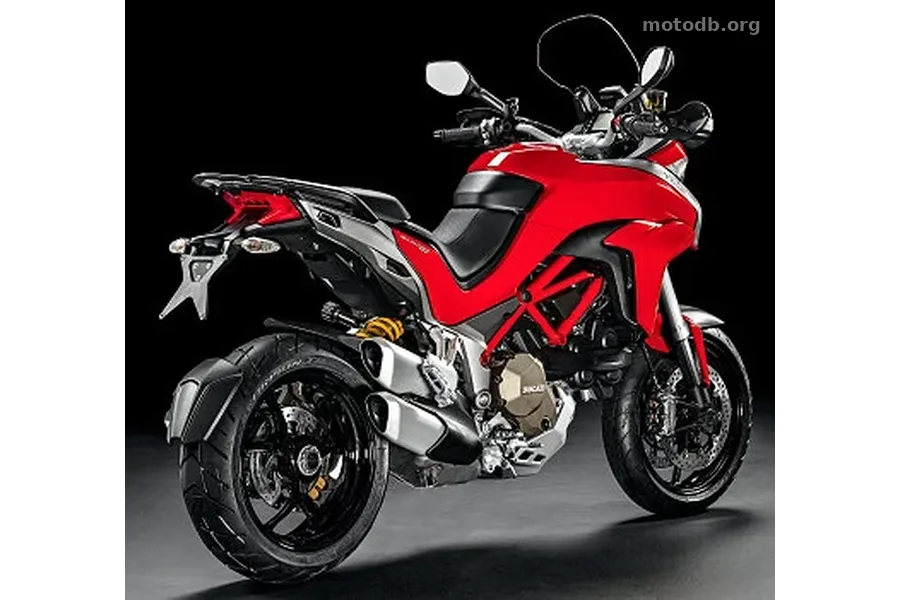
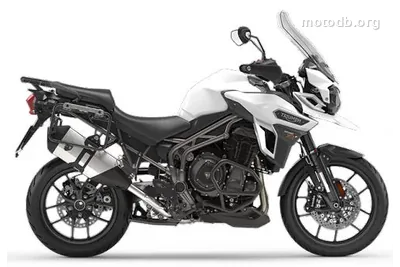
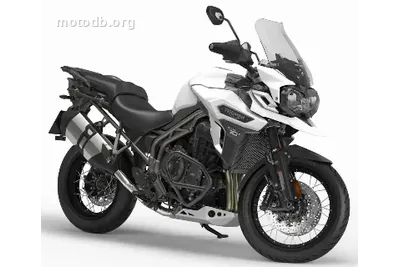
The face of this Multistrada leaves no ambiguity about its intentions. Where conventional big adventure bikes — the GS chief among them — wear the look of friendly long-distance tourers, the Ducati stares down the road with something distinctly more aggressive. The front fairing is less reminiscent of a migrating bird's beak than the head of a bird of prey on the hunt. The elongated headlights, the redesigned belly pan, the more muscular flanks: the silhouette has gained density without betraying the styling codes established over previous generations. You recognize the MTS immediately, but you sense it has shifted up a gear.
What truly changes is what lies beneath the bodywork. The 1198 cc Testastretta receives the DVT system — Desmodromic Variable Timing — a variable valve timing technology acting on both the intake and exhaust camshafts simultaneously. Honda varies the number of active valves on its V-TEC, Kawasaki played with intake-side timing alone on the GTR 1400, but Ducati is the first to control both sides of the valve train simultaneously on a mass-production motorcycle. In practice, hydraulic phasers — driven by oil pressure and managed by the engine ECU — advance or retard the camshafts according to rpm and load. The result: at 3,500 rpm, 80 Nm is already on tap, and torque remains above 100 Nm across a range stretching from 5,750 to 9,000 rpm. Peak torque of 136.3 Nm arrives at 7,500 rpm, a significant gain over the previous generation. Maximum power reaches 160 hp at 9,500 rpm. Ducati claims an average 8% reduction in fuel consumption, and service intervals extend to 15,000 km for routine maintenance, with valve clearance checks pushed to every 30,000 km.
The chassis follows the same logic of controlled evolution. The tubular steel trellis frame is redesigned and strengthened, now finished in bright red, and ground clearance rises to 180 mm — 20 mm more than before. That's enough for well-graded forest tracks, not for genuine rough terrain. The 48 mm upside-down fork and monoshock, both fully adjustable, deliver 170 mm of travel at each end. The S version receives the more sophisticated semi-active Skyhook suspension, which opens up a notable gap between the two variants. Electronics now integrate an IMU inertial measurement unit that enables cornering ABS, with Brembo four-piston calipers biting twin 320 mm discs up front. The four riding modes — Sport, Urban, Touring, and Enduro — modulate power delivery, traction control, and adaptive braking accordingly.
Everyday usability has been carefully considered. The seat adjusts to 825 or 845 mm, keyless start operates from two metres away, two 12V sockets and cruise control round out the equipment list. The LCD instrument cluster replaces the previous cluttered screen with something far more legible. On the weight front, 232 kg fully fuelled represents eight kilograms more than the preceding model — an increase the engine absorbs effortlessly but that low-speed manoeuvring is quick to remind you of. The price of €17,590 positions the Multistrada 1200 DVT clearly above the pack, and questions about the value of the 2015-to-2017 model years come up frequently, with used market prices varying according to condition and fitted options. Four optional packs allow buyers to tailor the machine to their intended use, from the Touring pack with heated luggage to the Enduro pack by Touratech featuring engine protection and off-road footpegs. This is not a motorcycle for beginners, nor for those looking to keep costs in check. It is a machine for demanding riders who want a single motorcycle capable of doing everything — just not quietly.
Standard equipment
- Assistance au freinage : ABS in curves
Practical info
- La moto est accessible aux permis : A
Indicators & positioning
Similar bikes
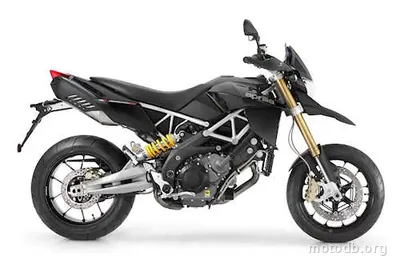
Dorsoduro 1200
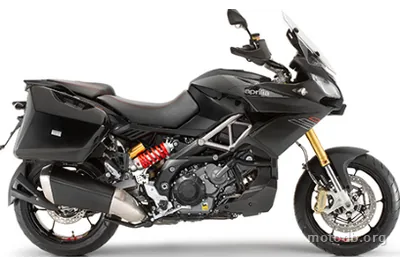
Caponord 1200 Travel Pack
Reviews & comments
No reviews yet. Be the first to share your opinion!