Key performance
Technical specifications
Engine
- Displacement
- 999 cc
- Power
- 193.0 ch @ 13000 tr/min (142.0 kW)
- Torque
- 111.8 Nm @ 9750 tr/min
- Engine type
- 4 cylindres en ligne, 4 temps
- Cooling
- liquide
- Compression ratio
- 13:1
- Bore × stroke
- 80 x 49.7 mm
- Valves/cylinder
- 4
- Camshafts
- 2 ACT
- Fuel system
- Injection Ø 48 mm
Chassis
- Frame
- double poutre en alu
- Gearbox
- boîte à 6 rapports
- Final drive
- Chaîne
- Front suspension
- Fourche téléhydraulique inversée Ø 46 mm, déb : 120 mm
- Rear suspension
- Mono-amortisseur, déb : 130 mm
Brakes
- Front brakes
- Freinage 2 disques Ø 320 mm, étrier 4 pistons
- Rear brakes
- Freinage 1 disque Ø 220 mm, étrier simple piston
- Front tyre
- 120/70-17
- Front tyre pressure
- 2.50 bar
- Rear tyre
- 190/55-17
- Rear tyre pressure
- 2.90 bar
Dimensions
- Seat height
- 820.00 mm
- Fuel capacity
- 17.50 L
- Weight
- 204.00 kg
- Dry weight
- 183.00 kg
- New price
- 15 900 €
Overview
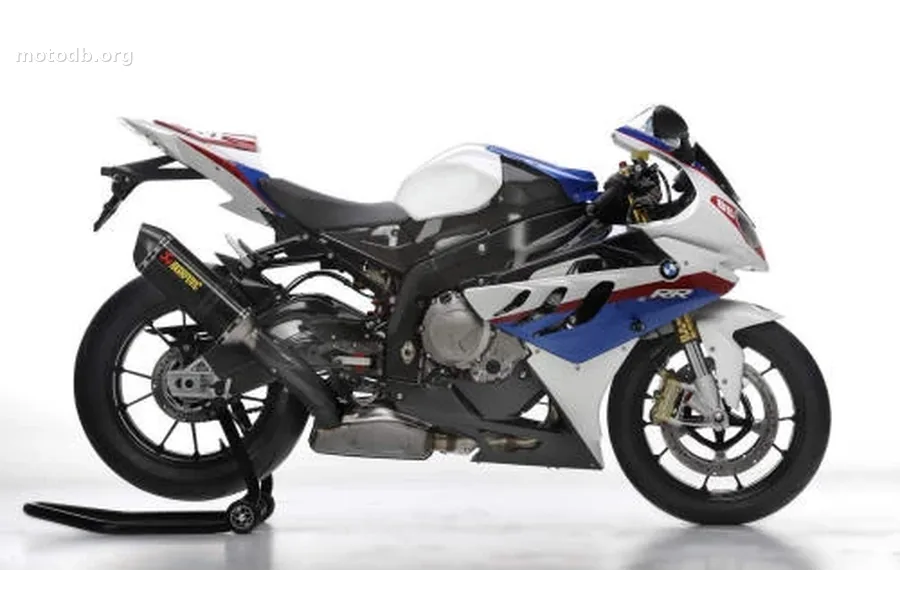
Who remembers that in 2009, BMW landed on the hypersport segment out of nowhere, shaking up Japanese manufacturers that had been established for decades? A year later, the Munich firm drove the point home with the S 1000 RR Motorsport, dressed in the white-blue-red tricolor beloved by the propeller brand's racing department. A livery that oozes paddock atmosphere, just a couple of stickers away from a World Superbike machine. And beneath the cosmetics, the mechanicals are the real deal.
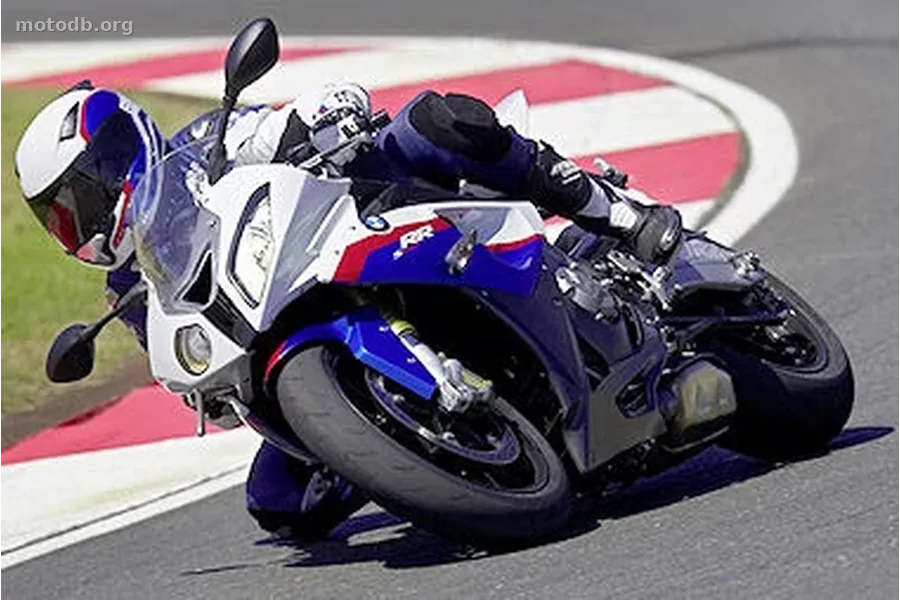
The 999 cc inline four-cylinder puts out 193 horsepower at 13,000 rpm, backed by 111.8 Nm of torque available from 9,750 rpm. With a 13:1 compression ratio and an ultra-short 49.7 mm stroke, this engine breathes hard and loud, built to devour laps without coming up for air. Against the Yamaha R1 or the Aprilia RSV4, the Bavarian has nothing to envy on paper. It even plays the equipment card with a quickshifter, a defeatable sport ABS, and traction control — rider aids that let you tap into the bike's potential without turning every track day into a game of Russian roulette. In 2010, offering this level of electronics on a superbike was almost an act of provocation toward the Japanese and Italian competition.
On the chassis side, the aluminum twin-spar frame houses a 46 mm inverted fork and a mono-shock offering 120 and 130 mm of travel respectively. Braking relies on two 320 mm discs gripped by four-piston calipers up front, complemented by a single 220 mm disc at the rear. Serious hardware, no frills. The 120/70-17 and 190/55-17 tires remain within segment standards. It all adds up to a wet weight of 204 kg, which stays reasonable for a full-fairing sportbike of that era. The 820 mm seat height and 17.5-liter tank are reminders, however, that this machine is aimed primarily at the track, where range takes a back seat to outright performance. The claimed top speed of 300 km/h confirms the bike's radical positioning.
For those wondering about the price of a BMW S 1000 RR Motorsport 2009 in France, the 2010 model year version came in at around 15,900 euros, a slight premium over the standard version. An entry price that placed the Bavarian in the same waters as its direct rivals, while offering a more generous electronics package. This S 1000 RR Motorsport is clearly aimed at the demanding track rider or the sportbike enthusiast who wants to ride in racing colors without going the aftermarket route. It will suit neither the beginner, whom its 193 horsepower will quickly overwhelm, nor the touring rider seeking comfort on long journeys. It's a track weapon, designed as such, and the Motorsport livery gives it a presence that few competitors could claim at the time. BMW had struck hard from its very arrival in the segment, and this variant proved the brand had no intention of merely making up the numbers.
Standard equipment
- Assistance au freinage : ABS sport en option
Practical info
- La moto est accessible aux permis : A
Reviews & comments
No reviews yet. Be the first to share your opinion!