Key performance
Technical specifications
Engine
- Displacement
- 1130 cc
- Power
- 135.0 ch @ 9250 tr/min (99.3 kW)
- Torque
- 117.7 Nm @ 6500 tr/min
- Cooling
- liquide
- Compression ratio
- 11.5 : 1
- Bore × stroke
- 88 x 62 mm
- Valves/cylinder
- 4
- Camshafts
- 2 ACT
- Fuel system
- Injection Ø 53 mm
Chassis
- Frame
- treillis en tube d'acier relié à des éléments de fonderie
- Gearbox
- boîte à 6 rapports
- Final drive
- Chaîne
- Front suspension
- Fourche téléhydraulique inversée Ø 50 mm, déb : 120 mm
- Rear suspension
- Mono-amortisseur, déb : 120 mm
Brakes
- Front brakes
- Freinage 2 disques Ø 320 mm, étrier 4 pistons
- Rear brakes
- Freinage 1 disque Ø 240 mm, étrier 2 pistons
- Front tyre
- 120/70-17
- Front tyre pressure
- 2.50 bar
- Rear tyre
- 190/55-17
- Rear tyre pressure
- 2.50 bar
Dimensions
- Seat height
- 780.00 mm
- Fuel capacity
- 17.00 L
- Dry weight
- 199.00 kg
- New price
- 12 900 €
Overview
When Pesaro decides to play in the big leagues, it doesn't look like a mere statement of intent. The TNT 1130 Tornado Naked Tre is the result of a radical approach: take the Tornado supersport architecture, strip it down, rebuild it from the inside, and deliver something that bears little resemblance to its starting point. The tubular steel trellis frame still connects cast elements, but the rear subframe has been redesigned to serve multiple roles simultaneously — seat support, exhaust housing, passenger grab handle anchor. It's compact, dense, functional to the extreme.
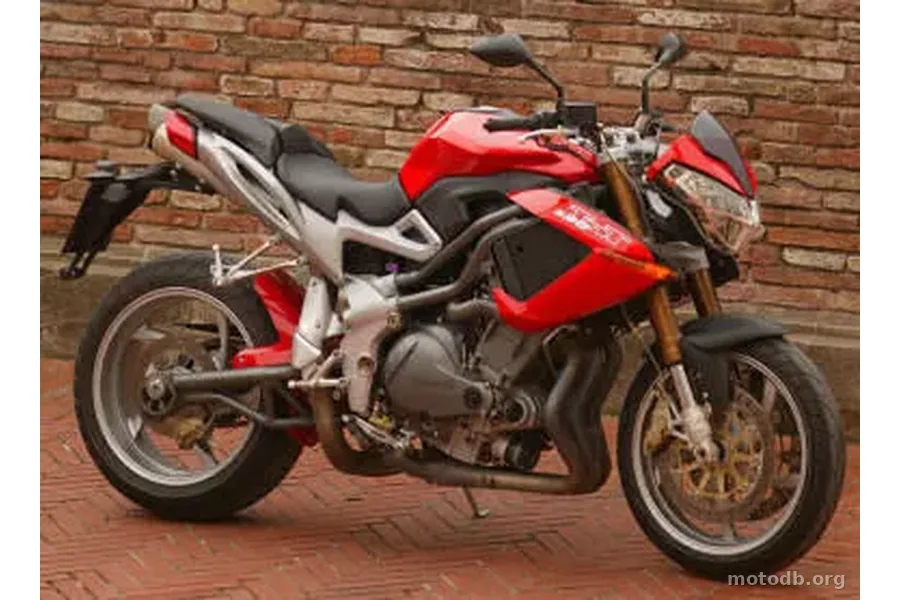
Visually, the machine doesn't try to seduce — it tries to intimidate. The lateral radiators form an asymmetrical, organic silhouette, almost entomological, that evokes an arthropod predator more than a production motorcycle. One inevitably thinks of what MV Agusta did with the Brutale starting from the F4: the parallel holds, even if Benelli has neither the history nor the prestige of the Varese marque. The 50 mm inverted fork, the eccentric-adjustable tubular swingarm, the four-piston calipers biting twin 320 mm discs up front — all of this contributes to a mechanical coherence that the launch photos didn't entirely hint at.
The engine is where the file gets serious. The 1,130 cc three-cylinder, with an 88 mm bore and 62 mm stroke, compression ratio of 11.5:1, produces 135 horsepower at 9,250 rpm. So far, nothing unusual by market standards. But the 117.7 Nm of torque at 6,500 rpm is another conversation entirely. On a naked bike weighing 199 kg dry, this availability in the low and mid rev range radically changes the character of the machine. The Yamaha R1 of the era, with its 172 horsepower, came up short on torque. The Kawasaki ZX-12R came close, but lacked this naked architecture, this direct relationship with the engine that gives the TNT its singular identity.
The downsides are predictable. A seat height of 780 mm, a compact form factor, ergonomics designed for speed rather than mile-eating, and a 17-liter tank that will limit range on open roads. The claimed top speed of 240 km/h is consistent with the power output, but nobody buys a machine like this for its versatility. The Ducati Monster S4R targeted a similar positioning at a comparable price, with a different character — more Latin in its drama, and better known. The Benelli arrives with the advantage of surprise and the handicap of a brand that the general public still struggles to place.
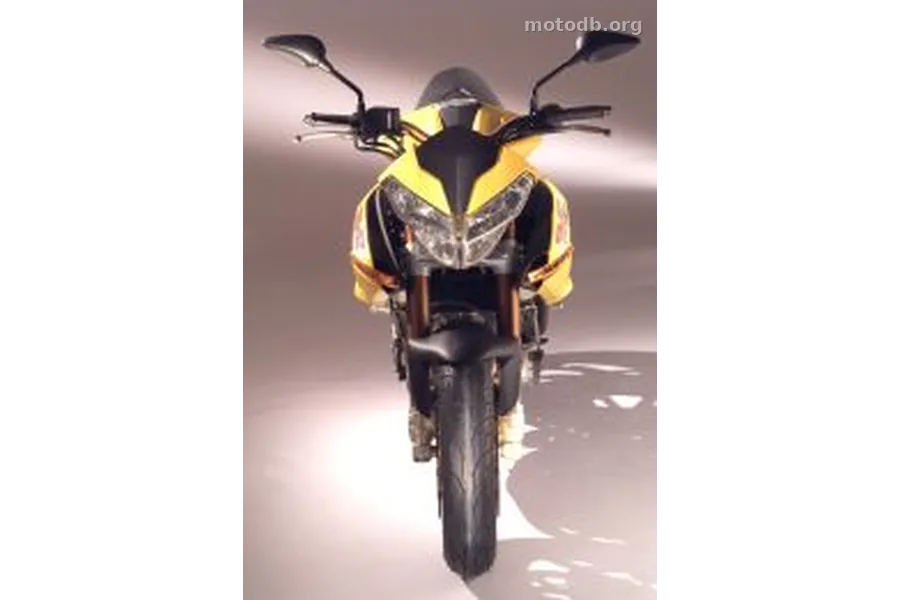
At €12,900, the TNT 1130 is aimed at an experienced rider who knows his limits and deliberately chooses to push them. Not a beginner, not a tourist, not someone looking for a docile daily companion. A rider who wants to hold something alive and demanding, and who accepts that the machine sometimes dictates its own terms. It's an industrial gamble as much as a technical one, and Benelli knows it perfectly well.
Practical info
- La moto est accessible aux permis : A
Indicators & positioning
Similar bikes
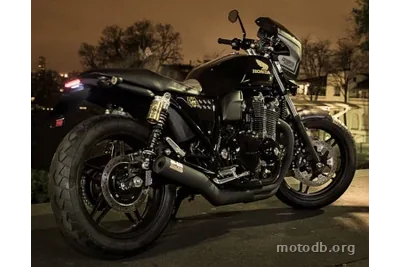
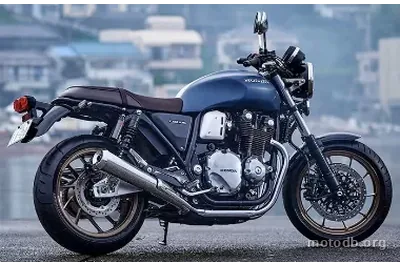
CB 1100 RS Swiss Limited Edition
Reviews & comments
No reviews yet. Be the first to share your opinion!