Key performance
Technical specifications
- Power
- 118.0 ch @ 9250 tr/min (83.2 kW) → 118.0 ch @ 9250 tr/min (86.8 kW)
- Torque
- 96.0 Nm @ 5500 tr/min → 94.1 Nm @ 7000 tr/min
- Engine type
- V2, four-stroke → Bicylindre en V à 60°, 4 temps
- Cooling
- Liquid → liquide
- Compression ratio
- 11.8:1 → 10.8:1
- Bore × stroke
- 97.0 x 67.5 mm (3.8 x 2.7 inches) → 97 x 67.5 mm
- Fuel system
- Injection. Integrated electronic engine management system. Indirect multi-point electronic injection.51 mm diameter throttle bodies. → Injection
- Lubrication
- Dry sump with separate oil reservoir. Circuit capacity 4 litres. → —
- Ignition
- Digital electronic ignition with TSI (Twin Spark Ignition) with two spark plugs per cylinder. Ignition timing integrated in the injection control system. DIAC (Dynamic Ignition Advance Control) electronically controlled ignition timing. → —
- Starter
- Electric → —
- Frame
- Sloping parallel twin-spar frame in aluminium alloy. → double poutre en alliage alu-magnésium
- Gearbox
- 1-speed → boîte à 6 rapports
- Final drive
- Chain (final drive) → Chaîne
- Clutch
- Multiple disk in oil bath with patented PPC power-assisted hydraulic control → —
- Front suspension
- Showa 43 mm upside-down fork with adjustment for compression, preload and rebound dampening. → fourche téléhydraulique inversée , déb : 120 mm
- Rear suspension
- Single member aluminium alloy swing-arm. APS (Aprilia Progressive System) linkage.Sachs hydraulic monoshock with adjustment for compression, preload and rebound dampening. → Mono-amortisseur, déb : 130 mm
- Front wheel travel
- 120 mm (4.7 inches) → —
- Rear wheel travel
- 133 mm (5.2 inches) → —
- Front brakes
- Double disc. 4-piston calipers → Freinage 2 disques Ø 320 mm, étrier 4 pistons
- Rear brakes
- Single disc. 2-piston calipers → Freinage 1 disque Ø 220 mm, étrier 2 pistons
- Front tyre
- 120/70-17 → 120/70-17
- Rear tyre
- 180/55-17 → 180/55-17
- Seat height
- 940.00 mm → 815.00 mm
- Fuel capacity
- 18.00 L → 21.00 L
- Dry weight
- 189.00 kg → 190.00 kg
Engine
- Displacement
- 998 cc
- Power
- 118.0 ch @ 9250 tr/min (86.8 kW)
- Torque
- 94.1 Nm @ 7000 tr/min
- Engine type
- Bicylindre en V à 60°, 4 temps
- Cooling
- liquide
- Compression ratio
- 10.8:1
- Bore × stroke
- 97 x 67.5 mm
- Valves/cylinder
- 4
- Camshafts
- 2 ACT
- Fuel system
- Injection
Chassis
- Frame
- double poutre en alliage alu-magnésium
- Gearbox
- boîte à 6 rapports
- Final drive
- Chaîne
- Front suspension
- fourche téléhydraulique inversée , déb : 120 mm
- Rear suspension
- Mono-amortisseur, déb : 130 mm
Brakes
- Front brakes
- Freinage 2 disques Ø 320 mm, étrier 4 pistons
- Rear brakes
- Freinage 1 disque Ø 220 mm, étrier 2 pistons
- Front tyre
- 120/70-17
- Front tyre pressure
- 2.40 bar
- Rear tyre
- 180/55-17
- Rear tyre pressure
- 2.50 bar
Dimensions
- Seat height
- 815.00 mm
- Fuel capacity
- 21.00 L
- Weight
- 219.00 kg
- Dry weight
- 190.00 kg
- New price
- 9 999 €
Overview
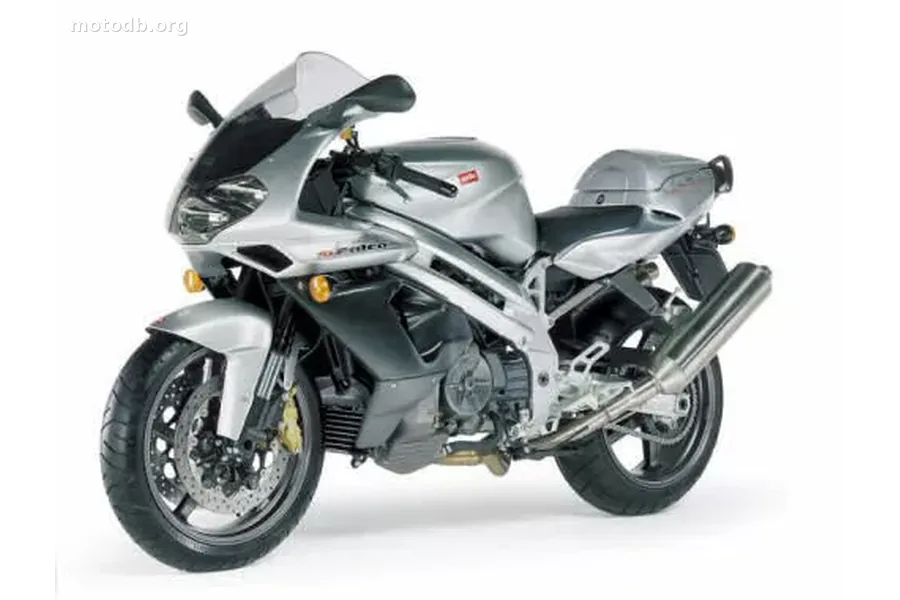
When Noale decides to recycle its finest parts, the results can sometimes be delightfully surprising. The 60° V-twin that powered the 2000-model RSV had not yet said its final word: recalibrated to broaden the mid-range torque curve, it finds in the Aprilia SL 1000 Falco a chassis built for less radical use than its track-focused sibling. The result? 118 horsepower at 9,250 rpm, 94.1 Nm at 7,000 rpm, all housed within an aluminium-magnesium twin-spar frame whose architecture inspires as much admiration as debate.
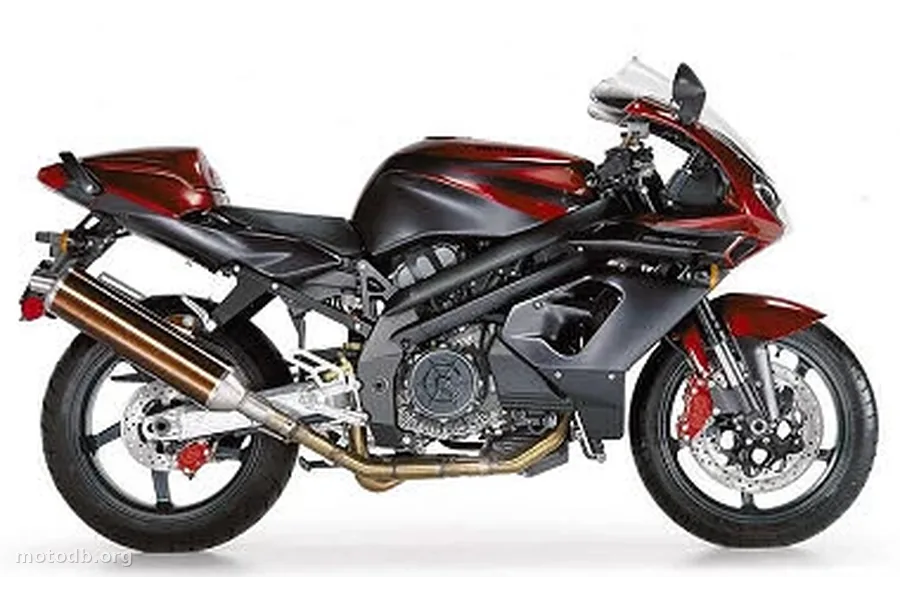
Stylistically, the Falco lives up to its name. Svelte, taut, with that extra soul the Italians weave into their lines without quite explaining how, it establishes itself as a sports bike that chose not to sacrifice everything to the track. The riding position remains committed yet sustainable over distance, where a contemporary Yamaha R1 would fold you in half after a hundred kilometres. It is precisely this mid-sport, mid-GT positioning that defines the identity of the Aprilia SL 1000 Falco 2000: neither radical nor soft, it seeks a balance that few machines of this displacement dared to embrace at the time.
The drawback comes from the passenger experience. The rear grab handles, attractive on paper, prove ungenerous in practice, and the pillion seat cannot match what a Honda VTR or a Suzuki TLS offered in terms of two-up comfort. These two direct rivals targeted the same segment, each with their own compromises. The Falco sets itself apart through its more Latin temperament and sharper chassis, but loses points whenever the fairing's protective bubble falls short at motorway speeds. For those seeking greater long-distance protection, Aprilia's own Futura offered at the time a more coherent answer for dedicated GT use.
What saves the day for long-haul riding is the 21-litre fuel tank. Combined with a well-equipped instrument cluster, the Aprilia SL 1000 Falco delivers a range that inspires confidence on long stages. At 219 kg fully fuelled versus 190 kg dry, it sits within the class norm without distinguishing itself for lightness. The six-speed gearbox shifts cleanly, the inverted fork and single shock absorber with 130 mm of travel handle road imperfections competently, and the twin 320 mm front discs bite with confidence.
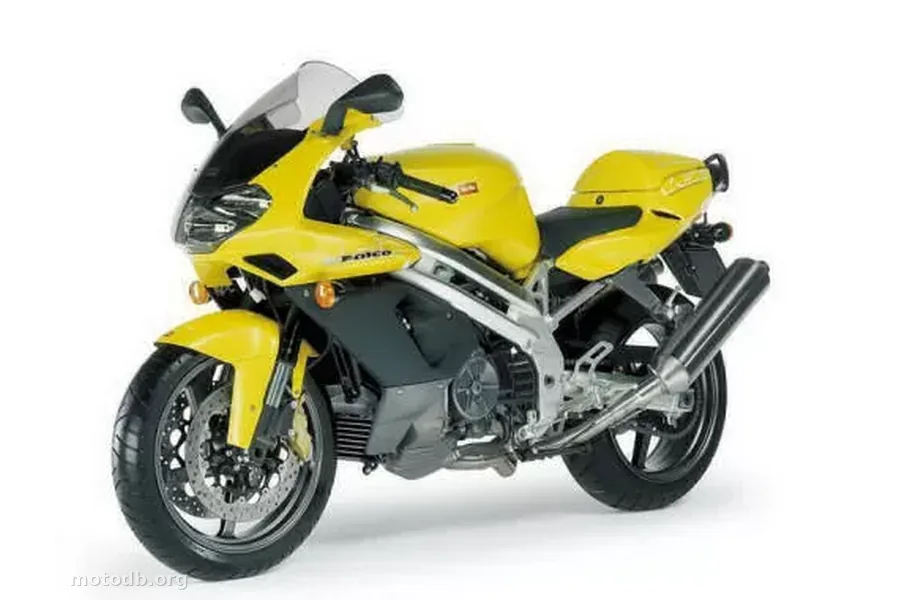
At a launch price of €9,999, the Aprilia SL 1000 Falco was aimed at the experienced rider, curious for sporting sensations without the discomfort of pure hypersports. Today on the used market, it appeals equally to café racer enthusiasts who see obvious customisation potential in its lines, and to period fans looking to rediscover this transalpine V-twin in its most accessible form. Aprilia SL 1000 Falco reviews frequently converge on one point: the engine enchants, the overall package convinces halfway, but one must accept its comfort limitations before signing on the dotted line.
Practical info
- La moto est accessible aux permis : A
Indicators & positioning
Similar bikes
CBR 1000 RR Fireblade Repsol Replica
1000 ZX-10R 30ème anniversaire
Reviews & comments
No reviews yet. Be the first to share your opinion!