Key performance
Technical specifications
Engine
- Displacement
- 998 cc
- Power
- 180.0 ch @ 12250 tr/min (132.4 kW)
- Torque
- 112.8 Nm @ 10000 tr/min
- Engine type
- 4 cylindres en V à 65°, 4 temps
- Cooling
- liquide
- Compression ratio
- 13 : 1
- Bore × stroke
- 78 x 52.3 mm
- Valves/cylinder
- 4
- Camshafts
- 2 ACT
- Fuel system
- Injection Ø 48 mm
Chassis
- Frame
- Double poutre périmétrique en aluminium
- Gearbox
- boîte à 6 rapports
- Final drive
- Chaîne
- Front suspension
- Fourche téléhydraulique Öhlins inversée 43 mm, déb : 120 mm
- Rear suspension
- Mono-amortisseur, déb : 130 mm
Brakes
- Front brakes
- Freinage 2 disques Ø 320 mm, fixation radiale, étrier 4 pistons
- Rear brakes
- Freinage 1 disque Ø 220 mm, étrier simple piston
- Front tyre
- 120/70-17
- Rear tyre
- 200/55-17
Dimensions
- Seat height
- 845.00 mm
- Fuel capacity
- 17.00 L
- Dry weight
- 179.00 kg
- New price
- 18 999 €
Overview
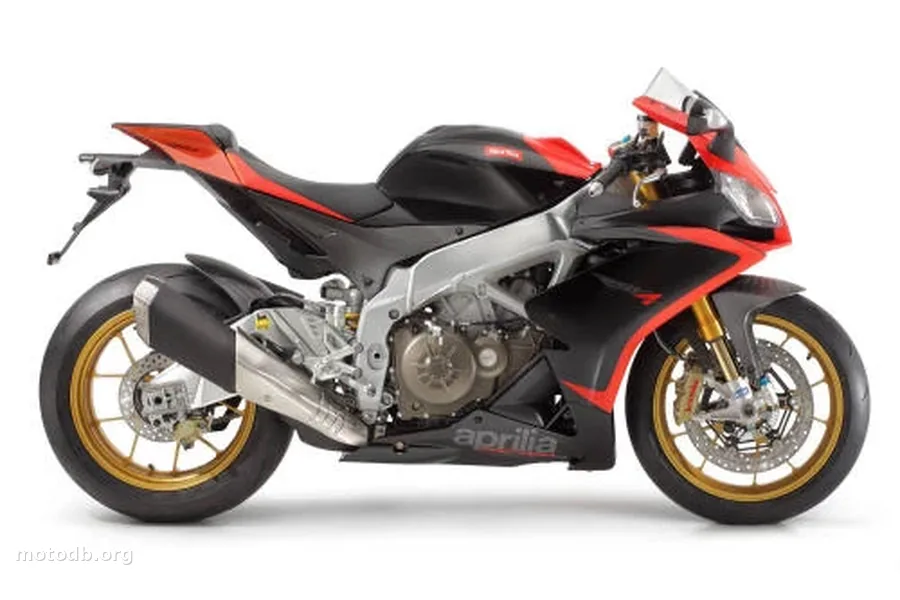
What separates a road sportbike from a genuine competition machine homologated for the road? Sometimes, not much. In 2012, Aprilia crossed this boundary with a direct and straightforward application, equipping its RSV4 Factory as standard with the APRC pack, this electronic system directly derived from the Superbike championship paddocks.
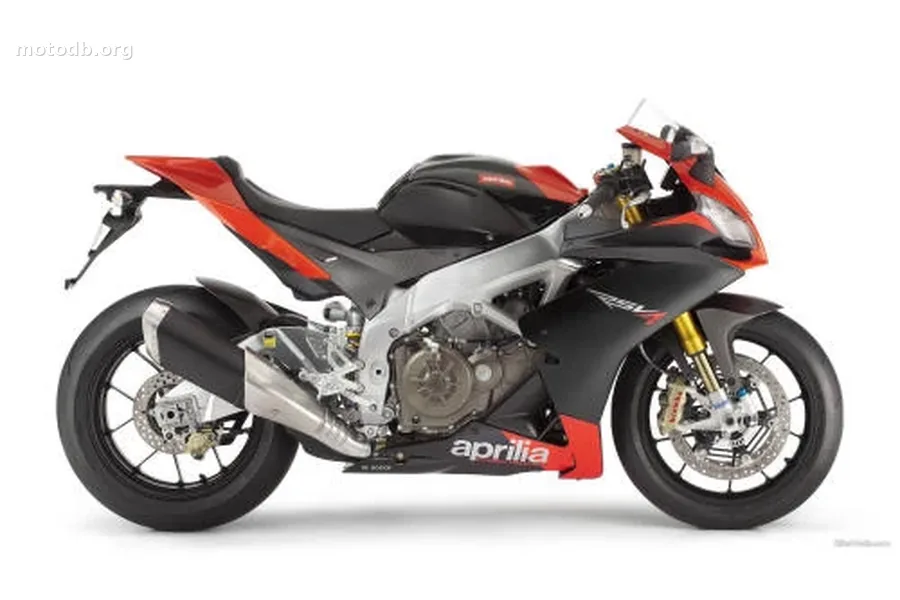
The 65-degree V4 remains the heart of the machine. Its 998 cc produces 180 horsepower at 12,250 rpm and 112.8 Nm of torque at 10,000 rpm, figures that place the Noale-based machine in the top three against the Ducati 1199 Panigale and the BMW S1000RR. But raw power is no longer the sole deciding factor at this level. What makes the difference is how it is managed. And in this respect, the APRC pack is remarkably consistent: an adjustable traction control system with eight levels, capable of learning the wear profile of a specific tire; an adjustable wheelie control system that channels the urge to wheelie on corner exits; a three-level launch control system that transforms every start into a controlled ballistics exercise; and a quickshifter, finally, that eliminates any torque interruption during gear changes. On a motorcycle that tops out at 304 km/h according to the manufacturer's data, these assists are not superfluous comfort.
The chassis is in keeping with this. Perimeter aluminum twin-spar frame, 43 mm Öhlins inverted fork at the front, Öhlins mono-shock at the rear, Sachs steering damper, Brembo Monobloc radial calipers biting on two 320 mm discs. Forged aluminum rims are also present, along with a 200 mm rear tire that provides grip and stability at high speed, and a six-speed gearbox with revised gearing for better acceleration continuity. The position of the engine in the frame remains adjustable, allowing for a few fine adjustments depending on the circuit or riding style. The dry weight of 179 kg is not the lightest in the category, but it remains reasonable for a motorcycle so technically advanced.
What distinguishes this version from previous limited editions is precisely this standardization. The APRC is no longer a bonus reserved for a numbered series; it becomes standard equipment for the high-end. Aprilia is thus clearly asserting its positioning: this RSV4 is aimed at experienced riders, those who know the track, who know how to read a stopwatch and who want a machine capable of progressing with them without imposing excessive road compromises. The 845 mm seat height and radical position leave no room for ambiguity about the motorcycle's intentions.
At under 19,000 euros in 2012, the price remains high but justifiable given the content. Direct competition, particularly from German and Italian manufacturers, is positioned in similar or higher ranges for comparable performance. The RSV4 Factory APRC is primarily convincing due to the consistency of its package: here, nothing is decorative, everything is functional. It is a motorcycle that does not pretend to be a sportbike, it is one entirely, down to the last wheel bearing.
Practical info
- La moto est accessible aux permis : A
Reviews & comments
No reviews yet. Be the first to share your opinion!