Key performance
Technical specifications
Engine
- Displacement
- 660 cc
- Power
- 48.0 ch @ 6000 tr/min (35.0 kW)
- Torque
- 59.0 Nm @ 5000 tr/min
- Engine type
- Single cylinder, four-stroke
- Cooling
- Liquid
- Compression ratio
- 10.0:1
- Bore × stroke
- 100.0 x 84.0 mm (3.9 x 3.3 inches)
- Valves/cylinder
- 4
- Camshafts
- 1 ACT
- Fuel system
- Injection. Integrated electronic engine management system. Indirect multi-point electronic injection. 44 mm throttle body.
- Valve timing
- Single Overhead Cams (SOHC)
- Starter
- Electric
Chassis
- Frame
- Steel, open cradle, single spar frame
- Gearbox
- 5-speed
- Final drive
- Chaîne
- Clutch
- Multi-plate in oil bath. Cable operated.
- Front suspension
- 45 mm fork
- Rear suspension
- High strength steel swingarm. Aprilia Progressive System (APS) rising rate linkages. Sachs hydraulic monoshock with adjustable rebound and preload.
- Front wheel travel
- 140 mm (5.5 inches)
- Rear wheel travel
- 130 mm (5.1 inches)
Brakes
- Front brakes
- Single disc. FTE stainless steel floating disc
- Rear brakes
- Single disc. Stainless steel disc
- Front tyre
- 110/70-17
- Front tyre pressure
- 2.20 bar
- Rear tyre
- 160/60-17
- Rear tyre pressure
- 2.40 bar
Dimensions
- Seat height
- 780.00 mm
- Wheelbase
- 1479.00 mm
- Ground clearance
- 250.00 mm
- Length
- 2173.00 mm
- Fuel capacity
- 16.00 L
- Dry weight
- 168.00 kg
- New price
- 7 549 €
Overview
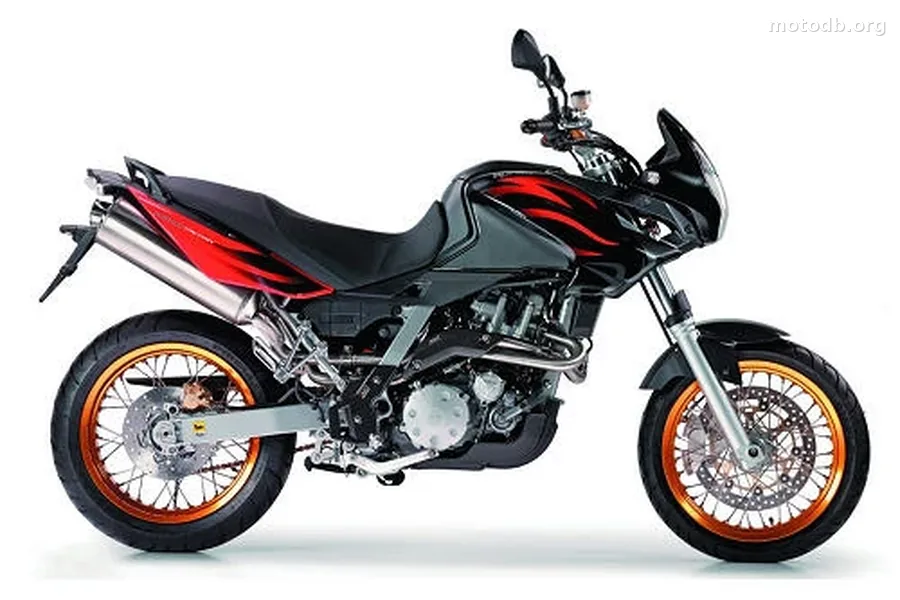
The Factory label at Aprilia is not given lightly. On the RSV 1000, it meant Öhlins suspension, corresponding prices, and sportiness taken to its paroxysm. Applying this same stamp to the Pegaso 650 is a different, almost paradoxical bet: transforming a mainstream supermotard into something more desirable without betraying its urban adventurer DNA. The result of this operation is worth taking a closer look at.
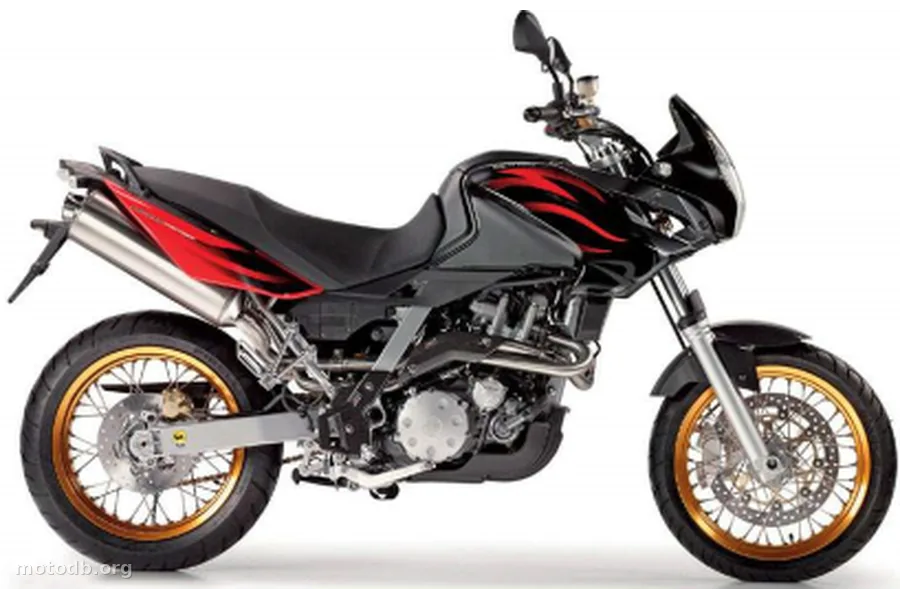
Visually, the most immediate sign of the mutation is on the rims. The 17-inch gold-spoked wheels signal membership of the Factory clan, with all the attention to detail that implies. The handlebars switch to aluminum, the front fender gains a carbon fiber trim, the frame and exhaust guards complete the picture. The seat, raised by 20 mm, brings the seat height to 780 mm, which positions the motorcycle in a reasonable range for a rider of average build. The braking system benefits from radial mounting on a 320 mm disc, a concrete evolution that improves front bite without revolutionizing the overall balance of the machine.
Underneath this refined fairing, the 660 cc single-cylinder remains true to itself, with its 48 horsepower delivered at 6000 rpm and its 59 Nm of torque available from 5000 rpm. These figures do not shake the KTM 690 SMC or the Husqvarna SM 610 of the time, but that is not really the point. What matters here is the character: the injection, described as capricious by some, paradoxically contributes to giving relief to the sensations. A single-cylinder engine of this displacement does not seek the linearity of a Japanese four-cylinder, it imposes its rhythm, its controlled jerks, its own way of grumbling on corner exits. The 168 kg dry weight is quickly forgotten once underway, and the 250 mm ground clearance reminds you that you are on a machine designed to swallow slopes and a few paths as well.
At €7549, the Pegaso 650 Factory positions itself as a mid-range supermotard with premium aspirations. This is consistent for an experienced rider looking for a versatile machine capable of doing the commute with panache, stringing together a few roundabouts on the weekend, without the pretension of a competition machine. On the other hand, for a beginner attracted by the Factory aesthetics, the high seat and the sometimes lively behavior of the single-cylinder require learning. This Pegaso is not a school bike disguised as a sportbike, it is a real motorcycle with a real temperament.
What this Factory version brings to the base Pegaso is mainly a consistency of presentation. The gold finishes, the aluminum, the carbon fiber, all converge towards a more refined image that justifies the price difference without falling into excess. The open steel cradle frame, the Sachs adjustable preload and rebound suspension at the rear, the 45 mm fork, form a balanced assembly that does not seek to impress on paper but works on the road. Perhaps that’s the true definition of Factory on this machine: not a radical transformation, but a careful refinement of an already healthy product.
Practical info
- La moto est accessible aux permis : A
Reviews & comments
No reviews yet. Be the first to share your opinion!