Key performance
Technical specifications
Engine
- Displacement
- 124 cc
- Power
- 10.1 ch @ 8000 tr/min (7.3 kW)
- Engine type
- Single cylinder, four-stroke
- Cooling
- Air
- Bore × stroke
- 54.0 x 54.0 mm (2.1 x 2.1 inches)
- Fuel system
- Carburettor
- Valve timing
- Overhead Cams (OHC)
- Ignition
- Coil CDI
- Starter
- Electric & kick
Chassis
- Gearbox
- 5-speed
- Final drive
- Chain (final drive)
- Clutch
- Wet, multiplate
- Front suspension
- Telescopic fork
- Rear suspension
- Adjustable load, oil damped twin shocks
Brakes
- Front brakes
- Single disc
- Rear brakes
- Expanding brake (drum brake)
- Front tyre
- 2.75-18
- Rear tyre
- 90/90-18
Dimensions
- Seat height
- 760.00 mm
- Wheelbase
- 1080.00 mm
- Fuel capacity
- 10.00 L
- Weight
- 122.00 kg
- Dry weight
- 114.00 kg
Overview
It takes quite a bit of nerve to launch a 125 single-cylinder engine in 2011, an era already obsessed with ABS and electronic fuel injection. AJS, a brand with historical roots, nevertheless chose this path with the Eco Commuter, a name that sounds like a manifesto. There’s no talk of performance or thrills, but of economical and uneventful transportation. The specifications seem to have been dictated by an accountant: a simple, lightweight motorcycle was needed, and above all, an inexpensive one. The result is a machine that faces the century with the mechanical innocence of the 1980s.
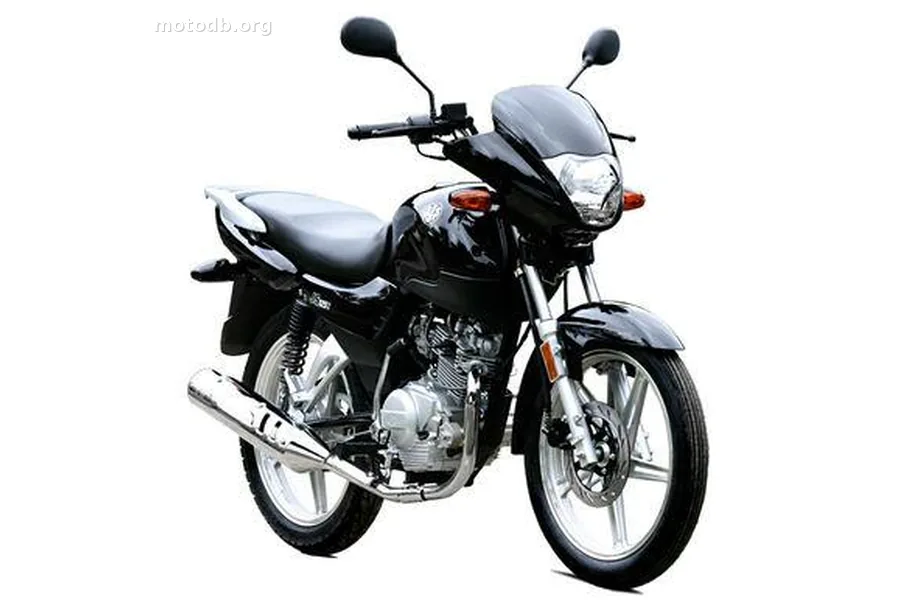
Its engine is a declaration of intent. A 124 cc four-stroke single-cylinder engine, fed by a carburetor, air-cooled, and delivering 10 horsepower at 8000 rpm. These figures evoke more a beginner’s mechanics manual than a racing workshop. With a square bore and stroke of 54 x 54 mm, this is an architecture that prioritizes reliability and smoothness over a burst of power. The announced top speed of 100 km/h is an admission: this motorcycle is designed for the city and short trips, end of story. It will never seek to approach the rev limiter, it will simply purr along.
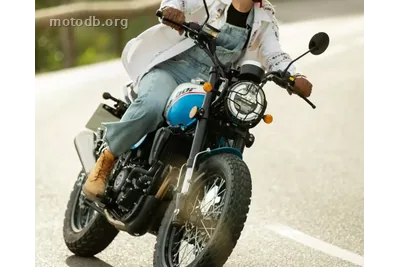
The chassis follows the same logic of austerity. With 114 kg dry weight and 122 kg fully fueled, it is so lightweight that it is delightfully manageable, even for a complete novice. The 76 cm seat height is an invitation to short legs and precarious parking. The suspension, a simple telescopic fork at the front and two rear shock absorbers with preload adjustment, is there to handle curbs more than to attack corners. The braking, with a single disc at the front and a drum at the rear, recalls a time when stopping was a suggestion more than a physical imperative. The 18-inch tires and narrow dimensions complete the utilitarian and reassuring profile.
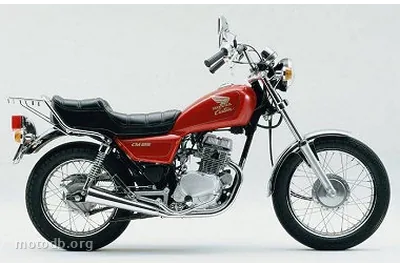
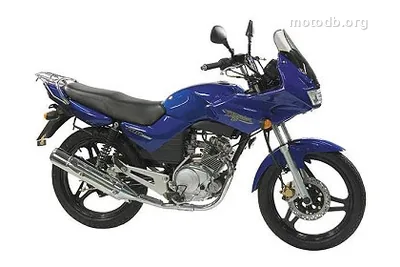
So who is the rider of the AJS 125 Eco Commuter? It’s neither the young hotshot eager for thrills, nor the seasoned long-distance rider in search of wide-open spaces. It’s the student who needs an economical vehicle to get to class, the merchant looking for an agile delivery solution, or the novice terrified by the complexity of modern machines. It positions itself as a rudimentary alternative to the Honda CBF 125 or Yamaha YBR 125, which already offer a little more sophistication. Its major asset is its archaic simplicity: no electronics to understand, basic mechanics to maintain, and probably a very contained purchase price. Its weakness is just as obvious: on open roads or facing a headwind, its theoretical 100 km/h can quickly resemble an exercise in patience. It doesn’t aspire to be loved for its performance, but appreciated for its lack of pretension. In an increasingly complex world, this can sometimes be a virtue.
Reviews & comments
No reviews yet. Be the first to share your opinion!