Key performance
Technical specifications
Engine
- Displacement
- 998 cc
- Power
- 223.0 ch @ 14000 tr/min (164.0 kW)
- Engine type
- 4 cylindres en ligne, 4 temps
- Cooling
- liquide
- Compression ratio
- 12.7:1
- Bore × stroke
- 78 x 52.2 mm
- Valves/cylinder
- 4
- Camshafts
- 2 ACT
- Fuel system
- Injection Ø 45 mm
Chassis
- Frame
- Deltabox en aluminium
- Gearbox
- boîte à 6 rapports
- Final drive
- Chaîne
- Front suspension
- Fourche téléhydraulique inversée Öhlins TTX36 Ø 43 mm, déb : 120 mm
- Rear suspension
- Monoamortisseur Öhlins TTX25, déb : 120 mm
Brakes
- Front brakes
- Freinage 2 disques Ø 320 mm, fixation radiale, étrier 4 pistons
- Rear brakes
- Freinage 1 disque Ø 203 mm, étrier simple piston
- Front tyre
- 120/70-17
- Rear tyre
- 190/65-17
Dimensions
- Fuel capacity
- 23.00 L
- Dry weight
- 159.00 kg
- New price
- 100 000 €
Overview
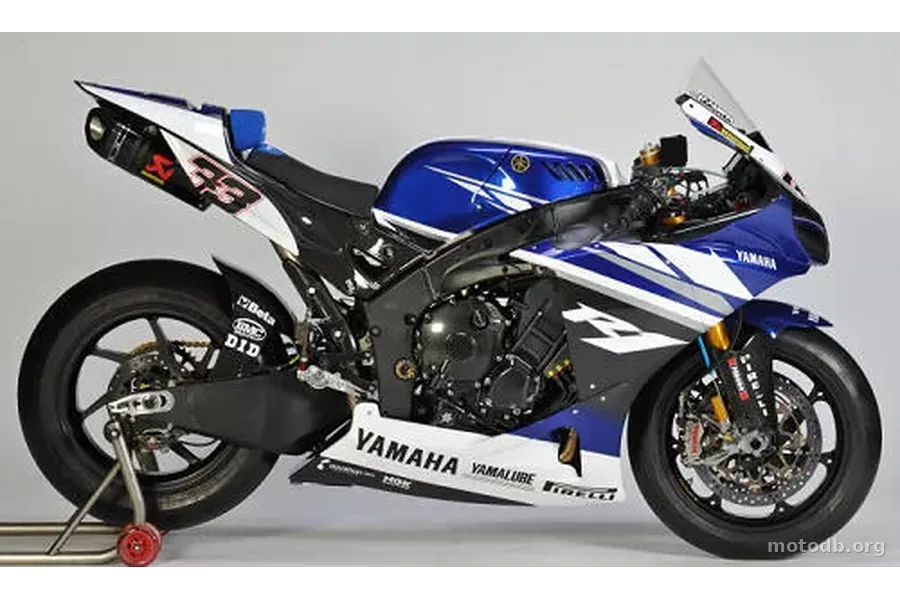
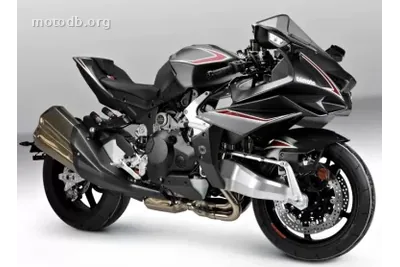
Who would have bet, at the turn of the 2010s, that a production machine could transform into such a war machine? The Yamaha YZF-R1 Factory of that era is not a simple evolution, it is a transfiguration. It arrives crowned with the 2009 SBK world title, but Ben Spies has moved to MotoGP. To defend it, Yamaha fields heavyweights: Cal Crutchlow, fresh Supersport champion, and James Toseland, former SBK king. The message is clear, the intention remains belligerent.
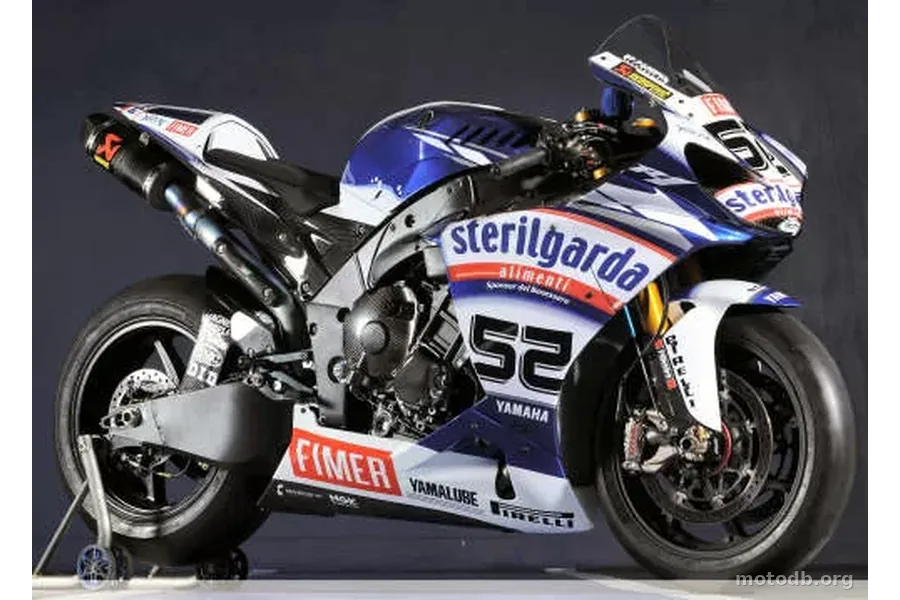
Visually, it plays the card of aggressive discretion, with its Sterilgarda livery and a redesigned lower fairing. But don't be fooled, under this entirely carbon fairing lies a profound overhaul. The fuel tank has migrated under the seat to centralize the mass, freeing up space for electronics worthy of a spaceship. We are talking here of an engine management system that adjusts traction control and mapping according to the circuit, the weather, or even a GPS signal. The left handlebar switch assembly becomes a piloting station, with launch control and pit limiter. The era of pure feeling cedes ground to embedded intelligence.
And the engine in all of this? The 998 cm3 inline four-cylinder engine undergoes a shock treatment. Between the reworked camshafts, the optimized intake, and the Akrapovic exhaust, it now exhales more than 220 horsepower at 14,000 rpm, a substantial gain compared to the road version. The maximum rev limit approaches 15,000 rpm. The raw power, although slightly behind the audacious Aprilia RSV4 of the time, is channeled by already very fine electronics. To cool this fury, Yamaha has grafted an oversized radiator whose price alone could be exchanged for a small used sportbike.
The chassis, for its part, is a lesson in competition. Only the original Deltabox frame is retained, as required by regulations. Everything else is replaced by absolute top-of-the-range components. The swingarm gains 15% in stiffness. The Öhlins fork and shock absorber are directly from Valentino Rossi’s M1 MotoGP bike. Brembo monoblock calipers are mounted on machined supports, with quick-release fittings. The whole thing is shod with 16.5-inch magnesium rims of disconcerting lightness. Result? A declared dry weight of 159 kg, extreme aggression, and a surprising detail for such a racing beast: it retains its electric starter. A funny paradox on this machine that has only experienced pilots or wealthy collectors as its audience, ready to spend the equivalent of 100,000 euros for this exceptional superbike.
This R1 Factory is more than a motorcycle, it is a statement. It marks an era when racing technology began to become wildly sophisticated, while still demanding drivers to have a phenomenal amount of… nerve. It is not the most powerful in the lineup, but it is probably one of the most refined and intelligent of its generation. An absolute precision tool, far too radical for the road, but which writes a page of history on the track.
Reviews & comments
No reviews yet. Be the first to share your opinion!