Key performance
Technical specifications
- Power
- 23.0 ch @ 6500 tr/min (16.7 kW) → 23.0 ch @ 6500 tr/min (16.9 kW)
- Torque
- 27.4 Nm @ 3000 tr/min → 27.5 Nm @ 3000 tr/min
- Engine type
- Single cylinder, four-stroke → Monocylindre, 4 temps
- Cooling
- Air → par air
- Compression ratio
- 8.5:1 → 8.5 : 1
- Bore × stroke
- 87.0 x 67.2 mm (3.4 x 2.6 inches) → 87 x 67.2 mm
- Valve timing
- Overhead Cams (OHC) → —
- Lubrication
- Wet-sump → —
- Starter
- Kick → —
- Frame
- Steel Double Cradle → simple berceau semi-dédoublé en acier
- Gearbox
- 5-speed → boîte à 5 rapports
- Final drive
- Chain (final drive) → Chaîne
- Clutch
- Wet, Multiple Disc → —
- Front suspension
- Telescopic fork → Fourche téléscopique Ø nc, déb : 150 mm
- Rear suspension
- Dual shocks → 2 amortisseurs latéraux, déb : 125 mm
- Front wheel travel
- 150 mm (5.9 inches) → —
- Rear wheel travel
- 125 mm (4.9 inches) → —
- Front brakes
- Single disc. 2-piston calipers → Freinage 1 disque Ø 298 mm, étrier 2 pistons
- Rear brakes
- Expanding brake (drum brake) → Freinage tambour
- Front tyre
- 90/100-18 → 90/100-18
- Rear tyre
- 110/90-18 → 110/90-18
- Seat height
- 790.00 mm → 785.00 mm
- Wheelbase
- 1410.00 mm → —
- Ground clearance
- 140.00 mm → —
- Length
- 2085.00 mm → —
- Width
- 750.00 mm → —
- Height
- 1100.00 mm → —
- New price
- 5 999 € → 5 499 €
Engine
- Displacement
- 399 cc
- Power
- 23.0 ch @ 6500 tr/min (16.9 kW)
- Torque
- 27.5 Nm @ 3000 tr/min
- Engine type
- Monocylindre, 4 temps
- Cooling
- par air
- Compression ratio
- 8.5 : 1
- Bore × stroke
- 87 x 67.2 mm
- Valves/cylinder
- 2
- Camshafts
- 1 ACT
- Fuel system
- Injection
Chassis
- Frame
- simple berceau semi-dédoublé en acier
- Gearbox
- boîte à 5 rapports
- Final drive
- Chaîne
- Front suspension
- Fourche téléscopique Ø nc, déb : 150 mm
- Rear suspension
- 2 amortisseurs latéraux, déb : 125 mm
Brakes
- Front brakes
- Freinage 1 disque Ø 298 mm, étrier 2 pistons
- Rear brakes
- Freinage tambour
- Front tyre
- 90/100-18
- Rear tyre
- 110/90-18
Dimensions
- Seat height
- 785.00 mm
- Fuel capacity
- 12.00 L
- Weight
- 174.00 kg
- Dry weight
- 152.00 kg
- New price
- 5 499 €
Overview
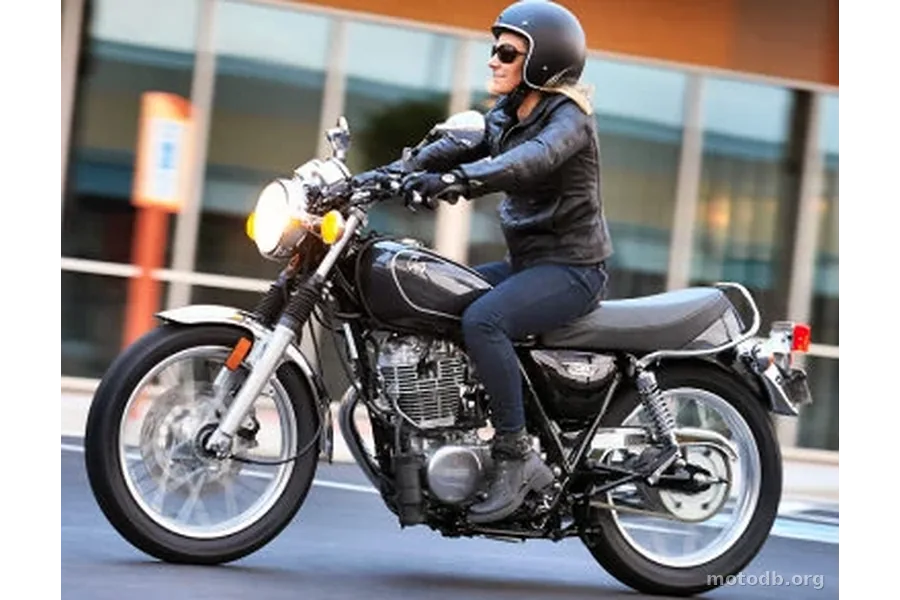
What if tomorrow, you could find a Renault 4L, a Peugeot 205, a VCR… brand new and straight from the factory!? Yamaha is offering something along those lines with the return of a renowned model from the late 1970s. The SR 400 hasn't aged a bit, and since the revival trend remains popular, there’s no reason not to enjoy it.
However, this isn't a neo-retro interpretation like the BMW R 1200 Nine T or a vintage model such as the Guzzi V7 or Triumph Thruxton. No, the 2015 SR 400 is virtually the same as its 1978 ancestor. And that’s because it’s not a true novelty but a re-introduction to the French market. The SR 400 has never stopped being sold in Japan, where it is a star, especially since it lends itself readily to all types of modifications. Only a few essential evolutions have been incorporated into its design over the decades. Fuel injection replaced the carburetors, and a catalytic converter was installed in the muffler. But the essence remains: this isn't a modern motorcycle with a retro style… it’s a retro motorcycle sold today as it was 10, 20, 35 years ago!
The single-cylinder engine, derived from the 500 XT engine, is therefore virtually the same as at its debut. With dimensions of 87 x 67.2 mm, it prioritizes torque and responsiveness at low RPM. The technical specifications seem to come from a yellowed catalog that you would have unearthed from the treasure chest of a great uncle. 2 valves, 1 OHC, a compression ratio of 8.5:1; technology in the Giscard d'Estaing style. An effort was nevertheless made to improve its torque with a larger airbox and a larger 47 mm intake valve. The finishing touch is the starting process, which is the same as before: with a kick starter. Nostalgics will love it. Young people will have to learn to kick-start, find the compression point (there's a witness mark on the cylinder head to facilitate the job), use the decompression lever, or taste the joy of getting a kick in the shin.
If, if, it’s a chassis that is as original as can be (don't confuse with original) that holds the SR 400. A semi-double cradle steel frame, with the particularity that engine oil passes through the main vertical tube. The suspension components consist of a classic fork and 2 lateral shock absorbers. The SR 400 has also retained its 18-inch spoked rims, a front disc brake, and a rear drum brake.
Back then, the SR 400 was considered a utility motorcycle. With the vintage trend, its chrome and retro charm, the SR 400 becomes a Sport Heritage and makes a noticeable return… while it’s still the same type of machine, with a ridiculous power of 23 horsepower, forgotten technology, and a design that hasn't changed a hair since the disappearance of Claude François. And that’s why it will be popular, and all those who strive to vocalize that "it was better before" will have a perfect example at their disposal. In fact, with the SR 400, you’re not really buying a motorcycle, you’re buying its soul, and the pleasure of simple things. The price is laughable, and seems inadequate for the SR to find its place in the sun.
Recall Campaign: In late October 2018, Yamaha initiated a recall campaign for its SR 400 due to an issue with the oil return hose. Due to insufficient torque on the securing nut of this hose, there was a possibility of engine oil leakage at the tightening nut.
Machines concerned:
• SR400 models 2014 - 2016 (2RD1/2RDB) whose serial numbers are between RH051 0000301 and RH051 0002787.
That is, a total of 464 machines concerned for the French market.
Customers owning these machines have been notified by registered mail to have this intervention carried out free of charge.
M.B - Constructeur photos
Practical info
- La moto est accessible aux permis : A
Indicators & positioning
Similar bikes
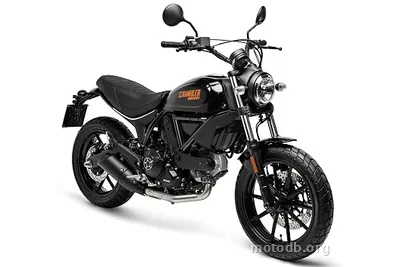
SCRAMBLER 400 # Hashtag
Reviews & comments
No reviews yet. Be the first to share your opinion!