Key performance
Technical specifications
- Weight
- 168.00 kg → 167.00 kg
Engine
- Displacement
- 321 cc
- Power
- 42.0 ch @ 10750 tr/min (30.9 kW)
- Torque
- 29.4 Nm @ 9000 tr/min
- Engine type
- Bicylindre en ligne, 4 temps
- Cooling
- liquide
- Compression ratio
- 11.2 : 1
- Bore × stroke
- 68 x 44.1 mm
- Valves/cylinder
- 4
- Camshafts
- 2 ACT
- Fuel system
- Injection
Chassis
- Frame
- en acier de type diamond
- Gearbox
- boîte à 6 rapports
- Final drive
- Chaîne
- Front suspension
- Fourche téléhydraulique inversée Ø 37 mm, déb : 130 mm
- Rear suspension
- Mono-amortisseur, déb : 125 mm
Brakes
- Front brakes
- Freinage 1 disque Ø 298 mm, étrier 2 pistons
- Rear brakes
- Freinage 1 disque Ø 220 mm, étrier simple piston
- Front tyre
- 110/70-17
- Front tyre pressure
- 2.00 bar
- Rear tyre
- 140/70-17
- Rear tyre pressure
- 2.50 bar
Dimensions
- Seat height
- 780.00 mm
- Fuel capacity
- 14.00 L
- Weight
- 167.00 kg
- New price
- 6 499 €
Overview
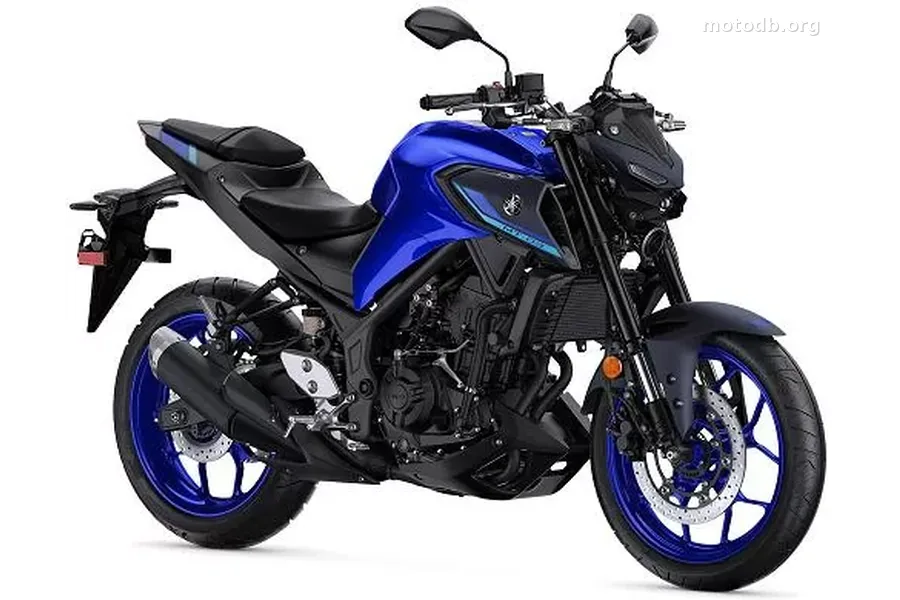
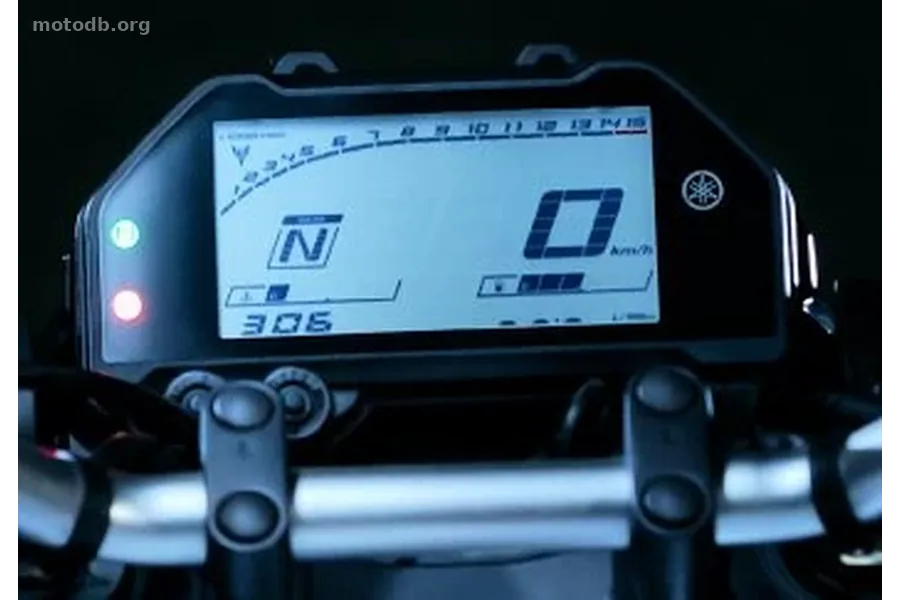
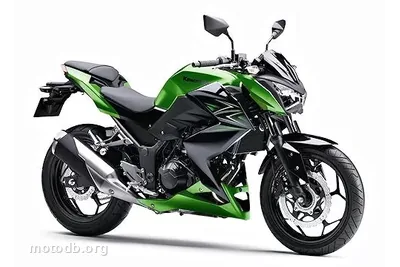
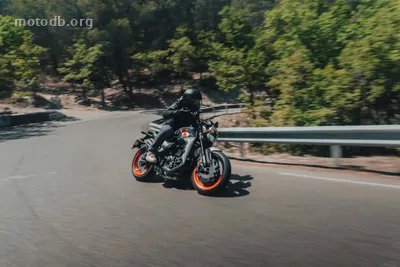
Who remembers the first Yamaha MT-03 320, the one that played the quiet extra in a family of brutes? Next to the battle-scarred faces of the MT-09 and MT-10, the little 300 almost came across as a well-behaved but bland student. Yamaha clearly took the criticism to heart, because the 2025 model year arrives with an entirely different attitude. The design has hardened, the gaze has sharpened, and the little roadster now sports an unapologetically thuggish look. You'll spot lines borrowed from its big sisters, notably those side scoops reminiscent of the MT-09, and a digital dashboard inspired by the former MT-10's, simplified but flattering. The slim LED turn signals finish off the modernized package. The only style letdown: that lower headlight, still just as unsightly, and a horn that nobody has yet managed to hide properly.
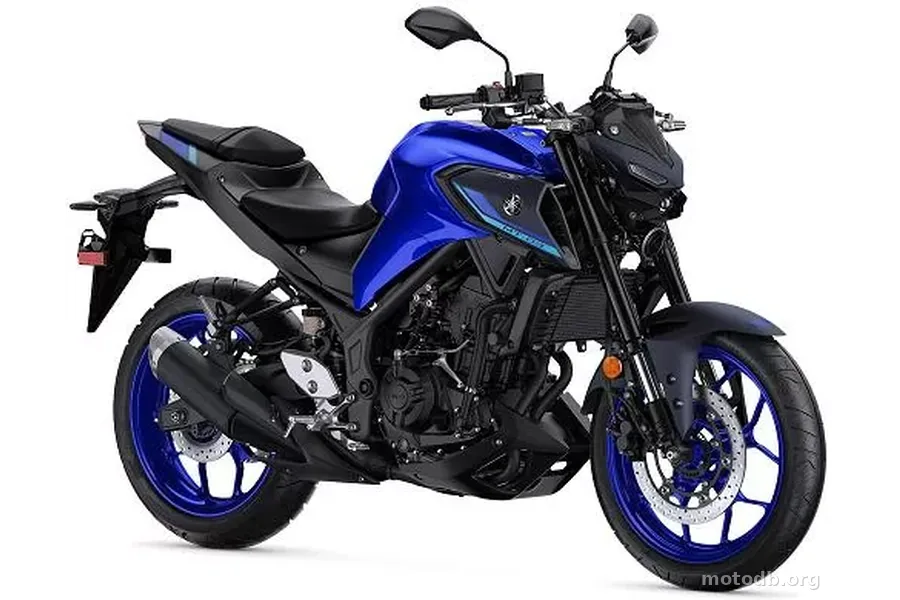
Beneath the bodywork, the real progress lies in the front end. The conventional fork gives way to a 37 mm inverted fork with 130 mm of travel. On paper, that's a gain in rigidity and precision that should make the ride livelier, more committed through sequences of corners. The steel diamond-type frame stays the same, but the rear shock has been revised with firmer settings. Braking remains restrained: a 298 mm front disc with a twin-piston caliper, a 220 mm rear disc, all backed by ABS. Nothing superfluous, nothing spectacular either. The 110/70-17 and 140/70-17 tires stick to segment standards. At 167 kg wet and with a seat height of 780 mm, the Yamaha MT-03 320 remains an approachable machine, easy to get to grips with for A2 license holders.
The 321 cc inline twin produces 42 horsepower at 10,750 rpm and 29.4 Nm of torque at 9,000 rpm. Honest figures, enough to enliven the daily urban grind and enjoy a few runs on back roads without frustration. Top speed caps out at 160 km/h, placing the machine in the lower-middle range against the KTM 390 Duke, which hits harder on overtakes, or the BMW G 310 R, which plays a similar card with a single. The move to Euro 5+ for 2025 has brought neither weight gain nor power loss, which is rather good news. The 14-liter tank allows decent range without constantly watching the fuel gauge. The six-speed gearbox does the job, and the chain drive remains conventional. What's the price of a Yamaha MT-03 320 in 2025? Expect to pay €6,499, a price increase over previous generations, putting the Japanese contender in direct competition with rivals that offer more equipment for the money.
Yamaha isn't revolutionizing the formula with this update but corrects the points that made the MT-03 look like the shy little sister of the clan. More visually assertive, better equipped up front, it gains character without betraying its purpose as a learner-friendly roadster. For a newly licensed rider who wants a sharp-looking machine without breaking the bank, it remains a solid choice. But with competitors constantly beefing up their arguments, Yamaha will need to keep an eye on the price-to-equipment ratio if it wants its little MT to keep winning hearts beyond the tuning-fork badge alone.
Standard equipment
- Assistance au freinage : ABS de série
- Jantes aluminium
- Indicateur de vitesse engagée
Practical info
- La moto est accessible aux permis : A
Reviews & comments
No reviews yet. Be the first to share your opinion!