Key performance
Technical specifications
- New price
- 5 499 € → 6 499 €
Engine
- Displacement
- 321 cc
- Power
- 42.0 ch @ 10750 tr/min (30.9 kW)
- Torque
- 29.4 Nm @ 9000 tr/min
- Engine type
- Bicylindre en ligne, 4 temps
- Cooling
- liquide
- Compression ratio
- 11.2 : 1
- Bore × stroke
- 68 x 44.1 mm
- Valves/cylinder
- 4
- Camshafts
- 2 ACT
- Fuel system
- Injection
Chassis
- Frame
- en acier de type diamond
- Gearbox
- boîte à 6 rapports
- Final drive
- Chaîne
- Front suspension
- Fourche téléhydraulique inversée Ø 37 mm, déb : 130 mm
- Rear suspension
- Mono-amortisseur, déb : 125 mm
Brakes
- Front brakes
- Freinage 1 disque Ø 298 mm, étrier 2 pistons
- Rear brakes
- Freinage 1 disque Ø 220 mm, étrier simple piston
- Front tyre
- 110/70-17
- Front tyre pressure
- 2.00 bar
- Rear tyre
- 140/70-17
- Rear tyre pressure
- 2.50 bar
Dimensions
- Seat height
- 780.00 mm
- Fuel capacity
- 14.00 L
- Weight
- 168.00 kg
- New price
- 6 499 €
Overview
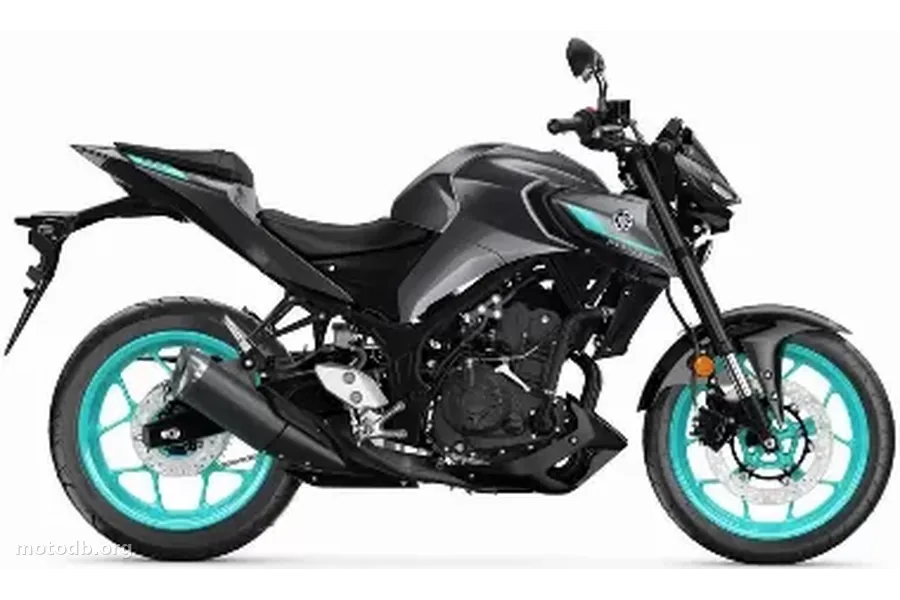
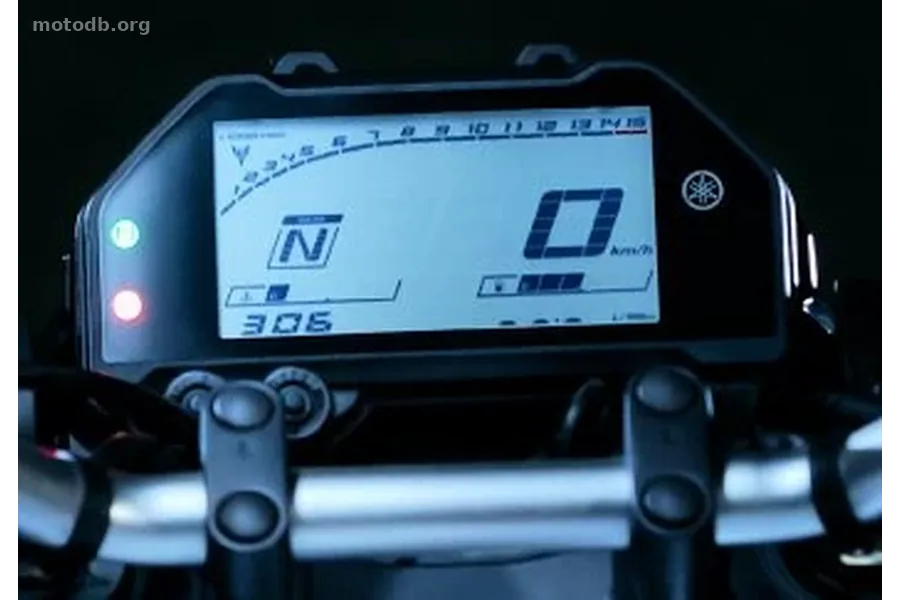
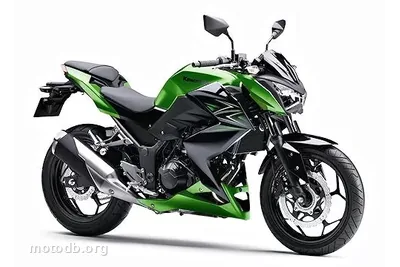
Can you really scare the segment rivals when you only have 321 cc under the tank? Yamaha thinks so, and this 2024 Yamaha MT-03 320 makes its intentions clear. Gone is the well-behaved face of the first generation, the one that played the quiet little sister behind the MT-09 and MT-10. The new version shows up with an aggressive front end, a sharp gaze that borrows its styling cues from the family's elder siblings. The air scoops are a direct nod to the previous MT-09, and the LCD dashboard draws inspiration from the cluster that adorned the MT-10. Yamaha wanted to give its entry-level model some character. On paper, it's a success, even if the lower headlight lacks refinement and the horn remains exposed for all to see — a detail that irritates design purists.
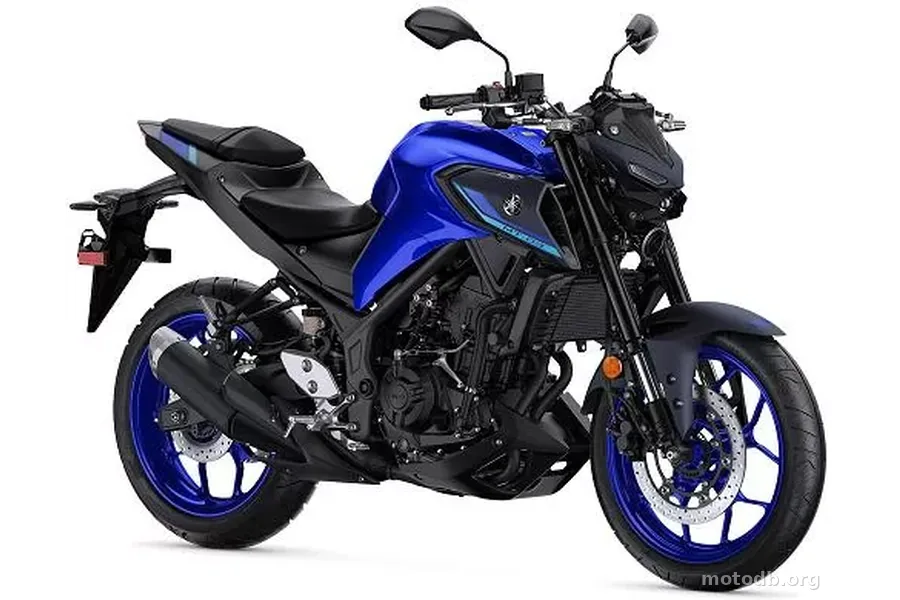
On the chassis side, the most notable change sits up front. The conventional fork gives way to a 37 mm inverted telehydraulic fork, with 130 mm of travel. A choice that goes beyond mere cosmetics. The inverted setup filters out imperfections better, stiffens the front end, and gives the steering increased precision. The steel Diamond-type frame stays true to form, solid and proven. At the rear, the monoshock gains firmness with revised settings for 125 mm of travel. Braking remains modest — a 298 mm disc up front clamped by a two-piston caliper, a 220 mm disc at the rear. ABS stands guard. Nothing oversized, but consistent with the machine's 168 kg wet weight.
The inline twin-cylinder four-stroke produces 42 horsepower at 10,750 rpm and 29.4 Nm of torque at 9,000 rpm. Figures that place the MT-03 320 squarely in the middle of its class, facing the KTM 390 Duke and the BMW G 310 R. The Duke retains an edge in torque and responsiveness, while the BMW plays the easy-to-tame single-cylinder card. The Yamaha, for its part, banks on its twin's smoothness and a well-spaced six-speed gearbox. The Yamaha MT-03 320's top speed caps out around 160 km/h, enough to swallow national roads and slip onto the motorway without constant over-revving. The move to Euro5 compliance cost nothing in performance or weight, which deserves a mention.
The seat, perched at 780 mm, accommodates average-sized riders without issue, and the 14-litre tank allows decent range for mixed city-road use. The slim LED turn signals modernize the silhouette, and the whole package gives off an impression of coherence that the previous generation sometimes struggled to convey. Then there's the question of price: €6,499 in France for the 2024 version is a figure that's climbing, putting the Japanese contender neck and neck with European competition. For those looking for the price of a 2019 Yamaha MT-03 320, the used market offers considerably easier options on the wallet, often under the €4,500 mark.
This MT-03 doesn't revolutionize anything, and Yamaha has never claimed otherwise. It refines, it sharpens the lines, it gives its A2-licence entry-level roadster a visual personality it was missing. The 321 cc twin won't drop the jaws of raw-sensation seekers, but it knows how to be pleasant, consistent, and lively enough not to bore on a daily commute or a Sunday ride. It's a learner bike that doesn't embarrass its rider, and in this segment, that already counts for a lot.
Standard equipment
- Assistance au freinage : ABS de série
- Jantes aluminium
- Indicateur de vitesse engagée
Practical info
- La moto est accessible aux permis : A
Reviews & comments
No reviews yet. Be the first to share your opinion!