Key performance
Technical specifications
No spec differences between these two model years.
Engine
- Displacement
- 645 cc
- Power
- 74.0 ch @ 9000 tr/min (54.4 kW)
- Torque
- 62.8 Nm @ 7500 tr/min
- Engine type
- Bicylindre en L à 90°, 4 temps
- Cooling
- liquide
- Compression ratio
- 11.5 : 1
- Bore × stroke
- 81 x 62.6 mm
- Valves/cylinder
- 4
- Camshafts
- 2 ACT
- Fuel system
- Injection Ø 39 mm
Chassis
- Frame
- treillis aluminium
- Gearbox
- boîte à 6 rapports
- Final drive
- Chaîne
- Front suspension
- Fourche téléhydraulique Ø 41 mm, déb : 120 mm
- Rear suspension
- Mono-amortisseur, déb : 138 mm
Brakes
- Front brakes
- Freinage 2 disques Ø 290 mm, étrier 2 pistons
- Rear brakes
- Freinage 1 disque Ø 220 mm, étrier 2 pistons
- Front tyre
- 120/60-17
- Front tyre pressure
- 2.25 bar
- Rear tyre
- 160/60-17
- Rear tyre pressure
- 2.50 bar
Dimensions
- Seat height
- 800.00 mm
- Fuel capacity
- 17.00 L
- Weight
- 183.00 kg
- Dry weight
- 165.00 kg
- New price
- 5 499 €
Overview
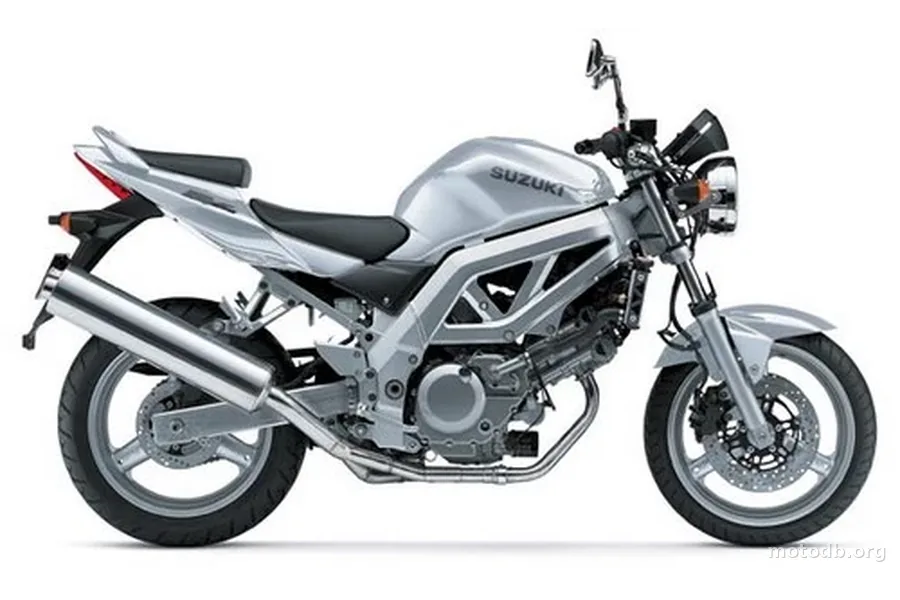
Do you remember that feeling, the first time you twisted the throttle on a big twin? That hollow in your stomach, that frank and sonorous surge that seems to come from the machine's gut. The 2003 Suzuki SV 650 N is exactly that promise kept, but not quite as expected. Suzuki took a myth, the accessible and burly twin, and tried to put a new suit on it. The result is a motorcycle in the midst of an identity crisis, as endearing as it is frustrating, a concentrate of contradictions that still brings happiness to those searching for a used Suzuki SV 650 N.
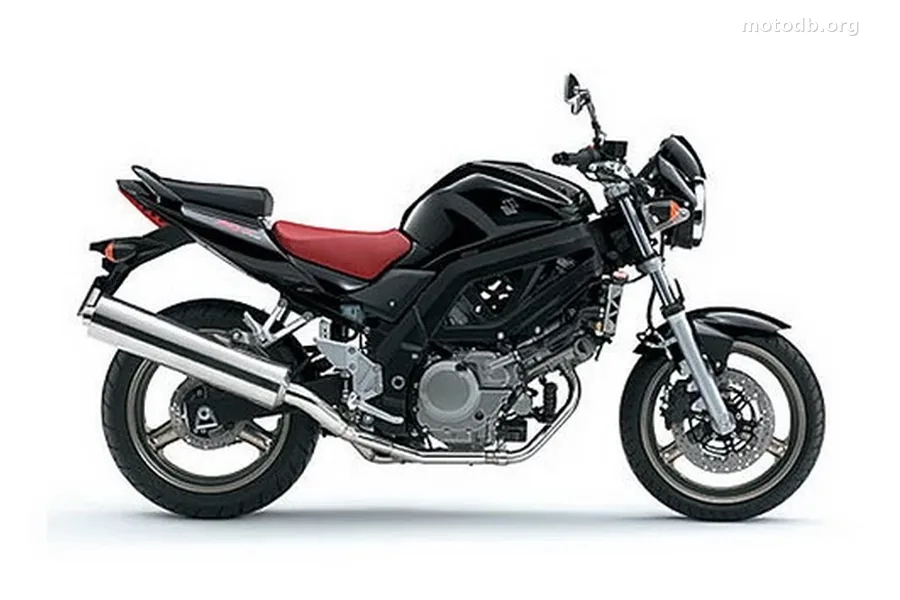
Under the 17-liter tank, the soul remains magnificent. The 90° V-twin, now fed by injection, delivers its 74 horsepower with a ruffianly generosity. The torque is everywhere, dense and usable from low RPMs, making you forget the featherweight curb weight of 183 kg fully fueled. This is where the SV 650 N still crushes its liquid-cooled competitors: it has character, a voice, a mechanical presence that aseptic parallel twins cannot offer. The driveability is imperial, the pickup is crisp, and the six-speed gearbox seems tailored to play with this engine. At its core, it’s still the same magic recipe.
But it’s on the form that the trouble lies. Suzuki wanted to harden the game. The trellis aluminum frame is stiffer, the 41 mm fork has firmer springs. On paper, the chassis of this 2003 Suzuki SV 650 N announced a progression. On our roads, it’s another story. The steering is precise, certainly, but comfort has suffered. The seat is thinner, the riding position slightly more sporty, and the suspension desperately lacks finesse and damping on imperfections. Compared to a Honda Hornet 600 of the time, more civilized, or even the older generation of SV, more supple, this 2003 version gives the impression of having forgotten that we also ride for pleasure, not just for performance. The front braking system with its two 290 mm discs remains effective, but the rear is dull, almost decorative.
And then there’s the style. Farewell to the organic curves of the first SV. Enter "edge design," a stacking of broken lines and angular surfaces that divides opinion. You either love it or hate it. For the passenger, it’s simple: you hate it. The rear space is a real punishment, a simple slice of bench that confirms that this motorcycle is an egoistic tool, made for a single rider. This is where its true public is found: the rider looking for a first large displacement engine full of character, the sporty touring rider who prioritizes feel over specifications, or the urban rider who wants a vibrant engine and an agile motorcycle.
So, what is it worth today? By browsing the listings for a 2002 Suzuki SV 650 N or a more recent model, the verdict is clear. You buy it for its engine, one of the best V2s on the used market, reliable and exhilarating. You close your eyes to its basic comfort, its soft rear braking, and its dated design. At just over 5000 euros new at the time, it struggled to justify its compromises against the competition. But today, for a few thousand euros, it represents a formidable mechanical crush, a motorcycle that speaks more to the rider than to the accountant. It’s a matter of passion, not reason.
Practical info
- Moto bridable à 34 ch pour l'ancien permis A MTT1 - pas garanti pour le permis A2
- La moto est accessible aux permis : A, A (MTT1)
Reviews & comments
No reviews yet. Be the first to share your opinion!