Key performance
Technical specifications
Engine
- Displacement
- 1340 cc
- Power
- 190.0 ch @ 9700 tr/min (139.7 kW)
- Torque
- 150.0 Nm @ 7000 tr/min
- Engine type
- 4 cylindres en ligne, 4 temps
- Cooling
- liquide
- Compression ratio
- 12.5 : 1
- Bore × stroke
- 81 x 65 mm
- Valves/cylinder
- 4
- Camshafts
- 2 ACT
- Fuel system
- Injection Ø 43 mm
Chassis
- Frame
- périmétrique à double longerons en aluminium
- Gearbox
- boîte à 6 rapports
- Final drive
- Chaîne
- Front suspension
- Fourche téléhydraulique inversée Ø 43 mm
- Rear suspension
- Mono-amortisseur
Brakes
- Front brakes
- Freinage 2 disques Brembo Ø 320 mm, étrier 4 pistons
- Rear brakes
- Freinage 1 disque
- Front tyre
- 120/70-17
- Front tyre pressure
- 2.90 bar
- Rear tyre
- 190/50-17
- Rear tyre pressure
- 2.90 bar
Dimensions
- Seat height
- 800.00 mm
- Fuel capacity
- 20.00 L
- Weight
- 264.00 kg
- New price
- 19 799 €
Overview
A quarter century on the clock and still not put out to pasture. In 1999, the Suzuki GSX 1300 R Hayabusa shattered conventions by flirting with 300 km/h, a symbolic milestone that earned it a permanent place in the pantheon of speed. Twenty-five years later, Suzuki celebrates the legend with a limited anniversary edition, priced at 19,799 euros. The question deserves to be asked: does the peregrine falcon still have talons sharp enough to justify such a tribute?
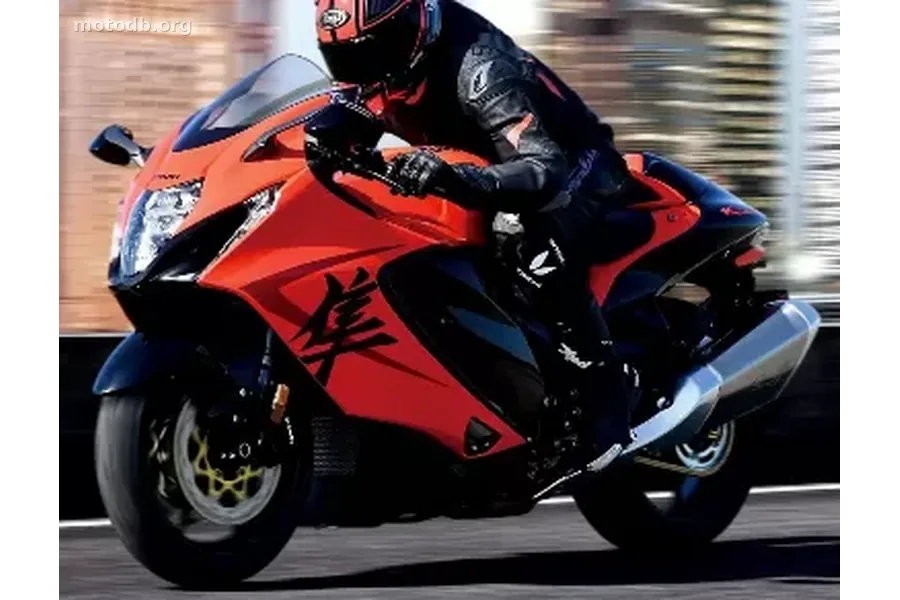
On paper, the engine remains a compelling argument. The 1340 cc inline four-cylinder develops 190 horsepower at 9,700 rpm and, more importantly, 150 Nm of torque from just 7,000 rpm. It's this massive torque, available early in the rev range, that sets the Hayabusa apart from a pure sportbike. Think cruise missile rather than track scalpel. Its 264 kg wet weight won't be forgotten in a parking lot, but once underway, the GSX 1300 R devours tarmac with supreme stability, aided by its twin-spar aluminum perimeter frame and 43 mm inverted fork. Against its direct rival, the Kawasaki H2 SX, it offers a more linear temperament, less brutally supercharged, and a seat height of 800 mm that suits long-haul riding. The 20-litre tank also provides a respectable range for this level of performance.
This 25th Anniversary edition stands out with an orange-red and black livery that echoes the colour scheme of the second generation introduced in 2008. Suzuki has attended to the details: commemorative marking on the tank, engraved silencers, gold-anodised front discs and chain adjusters, a dedicated seat cowl, and Hayabusa kanji on the chain guide. It's unashamedly cosmetic — nothing mechanical — but the result is easy on the eye and should appeal to collectors. Production remains exclusive: only 25 units initially planned for France, a figure slightly revised upward in response to demand. Globally, distribution covers just seven countries, whereas the Hayabusa has sold over 200,000 units across 48 countries since its birth.
On the electronics front, Suzuki has caught up over the years. Six riding modes, traction control, anti-wheelie, launch control, bi-directional quickshifter, cornering ABS, combined braking, hill-start assist, engine brake management, cruise control and speed limiter. The dashboard resembles an airliner cockpit. One can debate the usefulness of this entire arsenal on a motorcycle electronically limited to 299 km/h, but credit where it's due — the Hayabusa has evolved without betraying its DNA. The Brembo braking system with its two 320 mm discs gripped by four-piston calipers inspires confidence, a critical point when hauling over 260 kilos at high speed.
Ultimately, this Hayabusa 25th Anniversary is aimed at a very specific audience: the sport-GT enthusiast who wants to devour hundreds of kilometres without giving up the adrenaline rush of a generous four-cylinder engine. It is neither a track weapon nor a mere tourer. It occupies a niche that almost no one defends anymore. That is both its strength and its vulnerability. At close to 20,000 euros for a limited edition with no mechanical gains, Suzuki is banking on emotion over reason. But reason has never really had a place in the Hayabusa's story.
Standard equipment
- Assistance au freinage : ABS en curvas
- Nombre de mode de conduite : 6
- Shifter
- Amortisseur de direction
- Indicateur de vitesse engagée
- Régulateur de vitesse
- Freinage combiné
- Aide au démarrage
- Aide au démarrage en côte (Hill Hold Control)
- Aide au départ arrêté (Launch Control)
- Aide à la manoeuvre
- Contrôle de traction
- Contrôle anti wheeling
- Contrôle du frein moteur
Practical info
- La moto est accessible aux permis : A
Indicators & positioning
Similar bikes
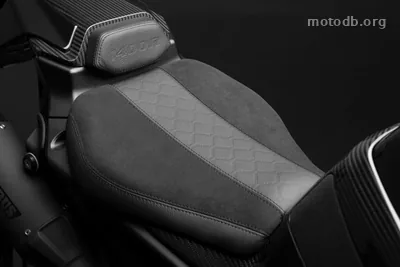
Brabus 1400 R Signature Edition
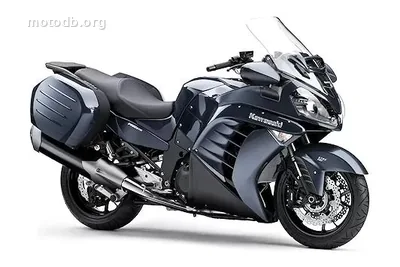
1400 GTR
Reviews & comments
No reviews yet. Be the first to share your opinion!