Key performance
Technical specifications
Engine
- Displacement
- 989 cc
- Power
- 200.0 ch (147.1 kW)
- Engine type
- 4 cylindres en L à 90°, 4 temps
- Cooling
- liquide
- Bore × stroke
- 86 x 42.56 mm
- Valves/cylinder
- 4
- Camshafts
- 2 ACT
- Fuel system
- Injection Ø 50 mm
Chassis
- Frame
- treillis tubulaire en tube d'acier
- Gearbox
- boîte à 6 rapports
- Final drive
- Chaîne
- Front suspension
- Fourche téléhydraulique inversée Öhlins FGR 000 Ø 43 mm
- Rear suspension
- Mono-amortisseur Öhlins TTX
Brakes
- Front brakes
- Freinage Brembo
- Rear brakes
- Freinage 1 disque Brembo
- Front tyre
- 120/70-17
- Rear tyre
- 190/55-17
Dimensions
- Fuel capacity
- 15.00 L
- Dry weight
- 145.00 kg
- New price
- 135 000 €
Overview
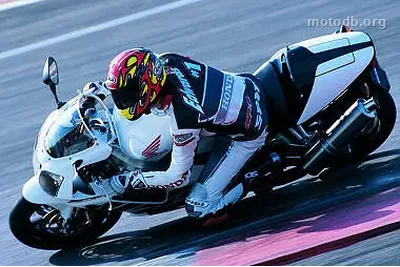
When Ducati launched the Desmosedici RR, it drew a red line in the sand: a MotoGP homologated for the road, 200 horsepower, competition chassis, stratospheric price. For almost all preparers, it was a glass ceiling. For NCR, it was a starting point.
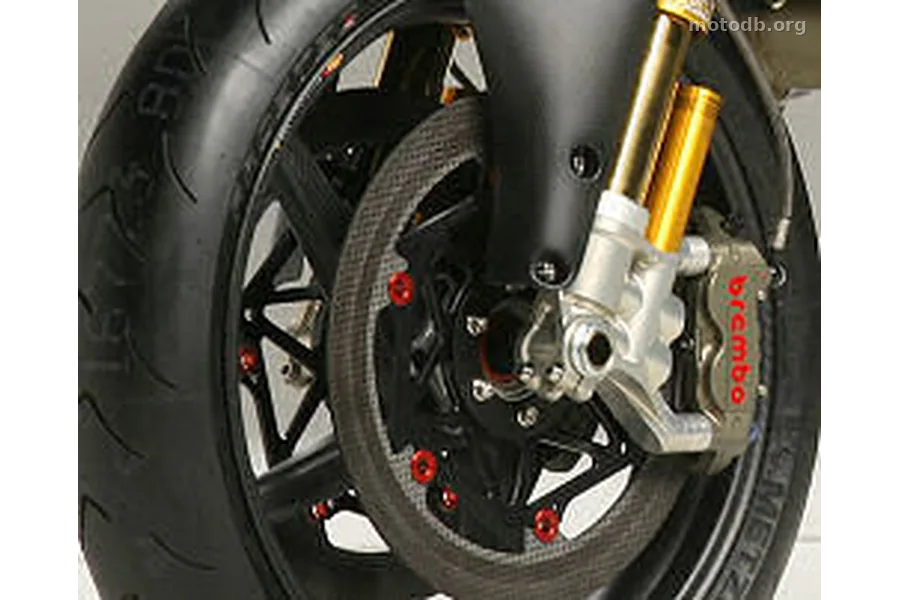
The Bolognese workshop took the Desmosedici as a base and subjected it to a draconian regime. The result: the Millona 16, a machine that approaches 300 km/h with only 145 kg on the scale dry. To place this figure in context, MotoGP regulations prohibit descending below 150 kg. NCR has therefore built, for the road, something lighter than a Grand Prix prototype. This is not a marketing argument, it is a physical fact that changes everything about how this motorcycle behaves when entering a corner.
The engine remains the 90° L-four cylinder of 989 cc, bored to 86 mm for a stroke of 42.56 mm, four valves per cylinder. NCR has worked on it to extract 200 horsepower, a level of power now found in the most muscular production superbikes. What really distinguishes the Millona 16 is the list of what was thrown away and redone from scratch. The swingarm, the wheels, the fairing, the tank, the self-supporting seat: all in carbon, manufactured in-house. The tubular steel frame receives careful preparation, and all the fasteners, clip-ons, fork headstock, steering column and exhaust line are made of titanium. This is a list that looks like a purchase order for a high-level endurance machine, not for a production motorcycle.
The suspensions are Swedish, as is appropriate at this level. The 43 mm Öhlins FGR 000 inverted fork comes directly from world competition, stiffer and lighter than the FGR 900 it replaces. The rear shock is an Öhlins TTX, adjustable in all conceivable parameters. Brembo manages deceleration with four-piston titanium monoblock radial calipers and carbon discs. The 15-liter tank provides reasonable range for track use, and the six-speed gearbox remains that of the Desmosedici, which is not a concession. The onboard electronics are developed by NCR itself, with wiring from competition: traction control, data acquisition, management of multiple maps.
The question of the target audience is barely raised. At €135,000, built to order only, the Millona 16 is not aimed at motorcyclists, it is aimed at collectors who know how to ride. The typical buyer knows the Desmosedici inside and out, has probably ridden on the track, and is looking for something that no one else owns. NCR sells him exactly that: a unique piece, or almost, carved from competition materials, with specifications that have no production equivalent. The only real question concerns accessibility to the limit: a machine as rigid, as light and as powerful as this requires a very precise riding level to avoid turning into a trap. This is not a defect, it is simply the nature of the object.
Practical info
- La moto est accessible aux permis : A
Indicators & positioning
Similar bikes
Lawrence Ultimate
999 Scout Bobber Sixty NEON
Reviews & comments
No reviews yet. Be the first to share your opinion!