Key performance
Technical specifications
- Displacement
- 954 cc → 996 cc
- Power
- 99.0 ch @ 9500 tr/min (72.3 kW) → 166.0 ch @ 11750 tr/min (121.2 kW)
- Torque
- — → 109.0 Nm @ 10200 tr/min
- Cooling
- Air → Liquid
- Compression ratio
- 10.5:1 → 13.0:1
- Bore × stroke
- 70.0 x 62.0 mm (2.8 x 2.4 inches) → —
- Valves/cylinder
- 2 → 4
- Fuel system
- — → Injection. Weber Marelli
- Starter
- — → Electric
- Frame
- — → CrMo Steel tubulat trellis
- Gearbox
- 5-speed → 6-speed
- Clutch
- — → Wet, mulit-disc
- Front brakes
- Dual disc → Double disc
- Front tyre
- 3.50-18 → 120/70-ZR17
- Rear tyre
- 4.00-18 → 190/50-ZR17
- Fuel capacity
- 26.00 L → —
- Weight
- 228.00 kg → —
- Dry weight
- — → 190.00 kg
Engine
- Displacement
- 996 cc
- Power
- 166.0 ch @ 11750 tr/min (121.2 kW)
- Torque
- 109.0 Nm @ 10200 tr/min
- Engine type
- In-line four, four-stroke
- Cooling
- Liquid
- Compression ratio
- 13.0:1
- Valves/cylinder
- 4
- Fuel system
- Injection. Weber Marelli
- Valve timing
- Double Overhead Cams/Twin Cam (DOHC)
- Starter
- Electric
Chassis
- Frame
- CrMo Steel tubulat trellis
- Gearbox
- 6-speed
- Final drive
- Chain (final drive)
- Clutch
- Wet, mulit-disc
Brakes
- Front brakes
- Double disc
- Rear brakes
- Single disc
- Front tyre
- 120/70-ZR17
- Rear tyre
- 190/50-ZR17
Dimensions
- Dry weight
- 190.00 kg
Overview
In 2005, while the market was drowning in imitations of overly polished Japanese series, MV Agusta pulled a weapon from its arsenal. The 1000 Ago was not a dealership motorcycle; it was a manifesto on wheels, a frontal and uncompromising tribute to the era when Giacomo Agostini dominated the World Championship. Beneath its hood beats an inline four-cylinder engine of 996 cc, a mechanical heart that screams its pedigree. With 166 horsepower released at 11,750 rpm and a torque of 109 Nm at 10,200 rpm, the message is clear: the comfort zone does not exist, the power zone begins after 8000 rpm. The 13:1 compression ratio and Weber Marelli injection guarantee an explosive response, a mechanical urgency that transforms every acceleration into a surge.
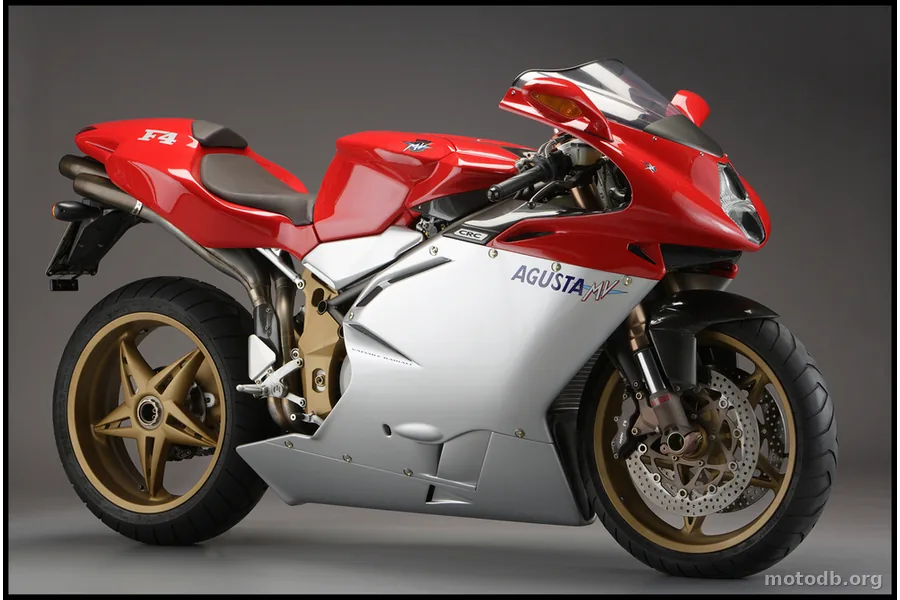
The tubular steel CrMo trellis frame, an MV signature, offers rigidity that first speaks to the rider. It hugs this liquid-cooled four-cylinder as a second skin, creating an ensemble of rare density. On the scale, the advertised dry weight of 190 kg brings a smile to the faces of modern sportbikes bogged down in their electronics. This lightness, combined with the weight distribution, explains why the Ago does not just go fast in a straight line; it slices through corners with a scalpel’s precision. The tires, in 120 at the front and a monumental 190/50 rear tire, announce an appetite for lean angle that is anything but a bluff.
The technical specifications lack details about the suspension and brakes, but it doesn’t matter. We know that at MV at that time, the components were signed by the best subcontractors, chosen for their pure efficiency. The dual front disc and single rear disc braking system was sufficient to master a fury capable of reaching 301 km/h. This figure was not a marketing argument; it was the logical consequence of a philosophy. The Ago did not negotiate with physics; it defied it. Chain transmission on a short and lively six-speed gearbox completed the picture of a machine made to be exploited, not to be flattered.
Riding a 1000 Ago is accepting a Faustian pact. It demands everything: your attention, your audacity, your technique. It forgives no softness, no hesitation. But in return, it offers a feeling of absolute control, a direct connection with the asphalt that few motorcycles have ever matched. It was not designed for urban traffic or Sunday rides. It was a rider's machine, a brutal and magnificent reminder that motorcycle sport thrives on intransigence. Today, it addresses the demanding collector and the experienced rider seeking less a vehicle than a total physical experience, a piece of raw history that has not been softened by the compromises of its time.
Indicators & positioning
Similar bikes
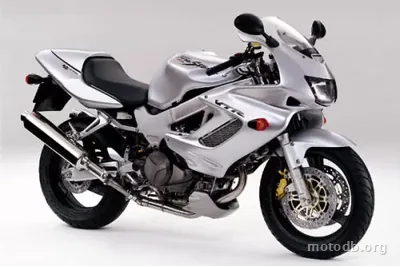
VTR 1000 F FireStorm
Reviews & comments
No reviews yet. Be the first to share your opinion!