Key performance
Technical specifications
Engine
- Displacement
- 397 cc
- Power
- 29.0 ch @ 7000 tr/min (21.3 kW)
- Torque
- 29.9 Nm @ 5500 tr/min
- Engine type
- Monocylindre, 4 temps
- Cooling
- par air
- Valves/cylinder
- 4
- Camshafts
- 1 ACT
- Fuel system
- Injection
Chassis
- Frame
- Cadre tubulaire en acier
- Gearbox
- boîte à 5 rapports
- Final drive
- Chaîne
- Front suspension
- Fourche téléhydraulique Ø 38 mm, déb : 210 mm
- Rear suspension
- Mono-amortisseur, déb : 200 mm
Brakes
- Front brakes
- Freinage
- Rear brakes
- Freinage 1 disque
- Front tyre
- 90/90-21
- Front tyre pressure
- 2.00 bar
- Rear tyre
- 130/80-18
- Rear tyre pressure
- 2.30 bar
Dimensions
- Fuel capacity
- 19.00 L
- Dry weight
- 151.00 kg
- New price
- 3 990 €
Overview
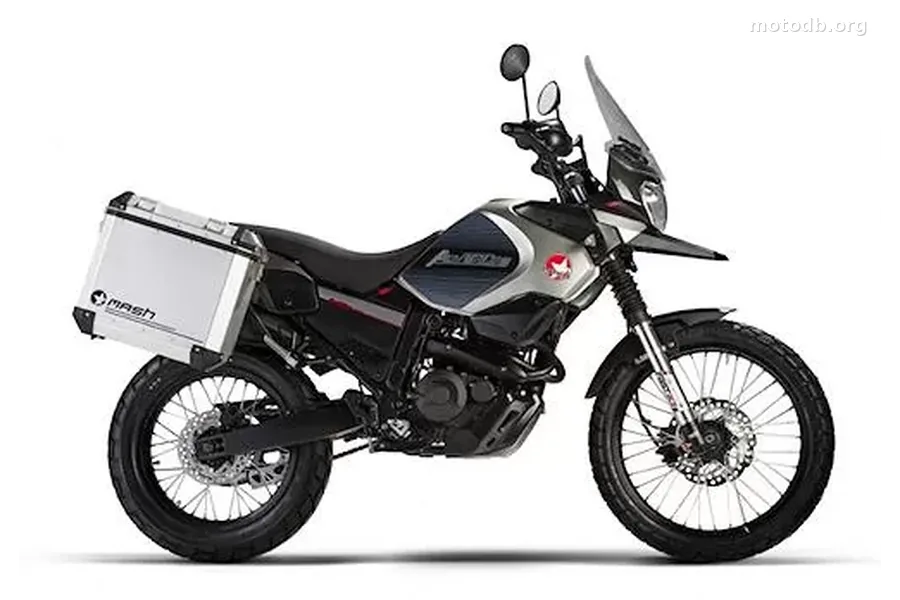
When everyone else is competing over who can build the biggest electronics-laden adventure bike, Mash takes the opposite approach and offers something surprisingly refreshing: a motorcycle that trusts the rider. The 400 R Adventure was born in this particular context — a market where premium adventure bike prices have climbed as fast as their horsepower figures, leaving an entire segment of enthusiasts behind, riders who want dirt tracks without mortgaging their future.
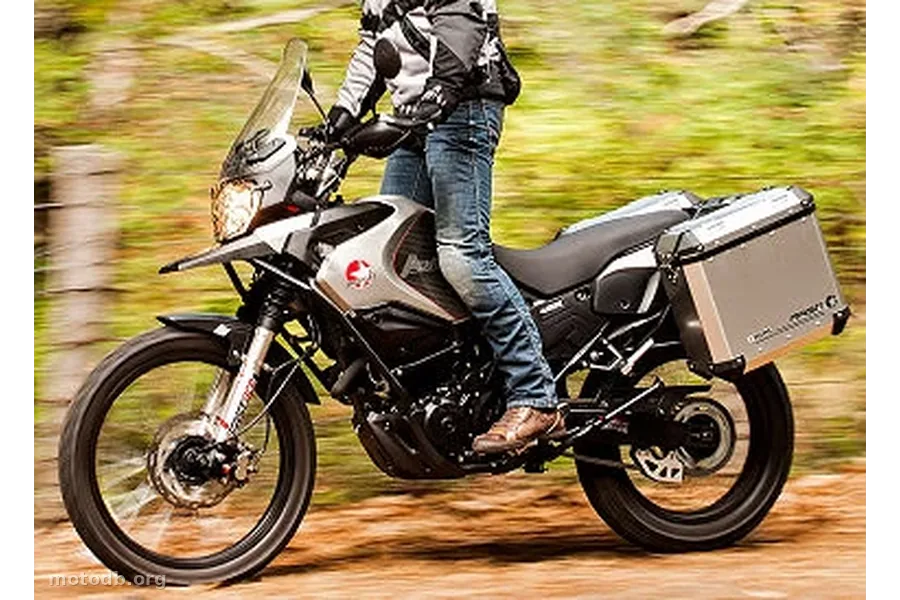
The engine comes from an older platform derived from a Honda architecture, and nobody hides that fact. A 397cc air-cooled single-cylinder, single overhead camshaft, fuel injection to stay current. The engineers tickled it enough to reach 29 horsepower at 7,000 rpm and 29.9 Nm of torque at 5,500 rpm. Comparing these numbers to an Africa Twin or a Tiger 900 would be as absurd as measuring a Citroën Méhari against a Defender. The 400 R Adventure tops out at 150 km/h, which comfortably covers the needs of a rider looking for forest tracks rather than standing-quarter-mile runs. This no-nonsense single, paired with a well-spaced five-speed gearbox, is docile and easy to live with — which is precisely the right philosophy for this category of machine.
151 kg dry — that's the figure that changes everything. For comparison, a BMW R 1250 GS exceeds 250 kg fully fuelled. On broken terrain, in mud, or when picking the bike up after a botched off-camber section, that 100 kg difference becomes a decisive argument. The steel tubular frame stays true to the genre's traditions, no surprises, no frills. The 38 mm telescopic fork offers 210 mm of travel, the rear shock provides 200 mm — serious figures for a small-displacement machine, and they justify the 90/90-21 front and 130/80-18 rear tyres. Those dimensions speak for themselves to anyone who knows how to read an adventure bike spec sheet.
The standard equipment deserves attention, because this is where Mash scores points against low-end Chinese competition. Tall windscreen, hand guards, engine bash plate, enduro-style footpegs, fork gaiters, and two 35-litre aluminium panniers: the machine is ready to load up and leave the next morning. The downside comes from those same panniers, which are fitted without a hinge system, turning every opening into a balancing act. A shame, because the rest of the equipment holds up well. The suspension is adjustable for rebound and compression, and the shock also accepts preload adjustment. However, there is no ABS, which remains a genuine shortcoming on a machine sold to less experienced riders.
€3,990 for a equipped, lightweight trail bike capable of leaving the beaten path and swallowing country roads — that's a positioning that hits the mark. The target audience is not the seasoned globe-trotter counting kilometres across Mongolia, but the rider discovering the pleasure of adventure biking without wanting to spend a fortune in the premium segment. For that buyer, the 400 R Adventure is an honest proposition, free of excessive promises. It will never be a technical benchmark, but it offers what many five-figure adventure bikes have forgotten along the way: lightness, in every sense of the word.
Practical info
- La moto est accessible aux permis : A
Reviews & comments
No reviews yet. Be the first to share your opinion!