Key performance
Technical specifications
Engine
- Displacement
- 636 cc
- Power
- 131.0 ch @ 13500 tr/min (96.4 kW)
- Torque
- 71.6 Nm @ 11500 tr/min
- Engine type
- 4 cylindres en ligne, 4 temps
- Cooling
- liquide
- Compression ratio
- 12.9 : 1
- Bore × stroke
- 67 x 45.1 mm
- Valves/cylinder
- 4
- Camshafts
- 2 ACT
- Fuel system
- Injection Ø 38 mm
Chassis
- Frame
- périmétrique en aluminium
- Gearbox
- boîte à 6 rapports
- Final drive
- Chaîne
- Front suspension
- Fourche téléhydraulique inversée Ø nc, déb : 120 mm
- Rear suspension
- Mono-amortisseur, déb : 134 mm
Brakes
- Front brakes
- Freinage 2 disques Ø 310 mm, fixation radiale, étrier 4 pistons
- Rear brakes
- Freinage 1 disque Ø 220 mm, étrier simple piston
- Front tyre
- 120/70-17
- Rear tyre
- 180/55-17
Dimensions
- Seat height
- 830.00 mm
- Fuel capacity
- 17.00 L
- Weight
- 192.00 kg
- New price
- 12 199 €
Overview
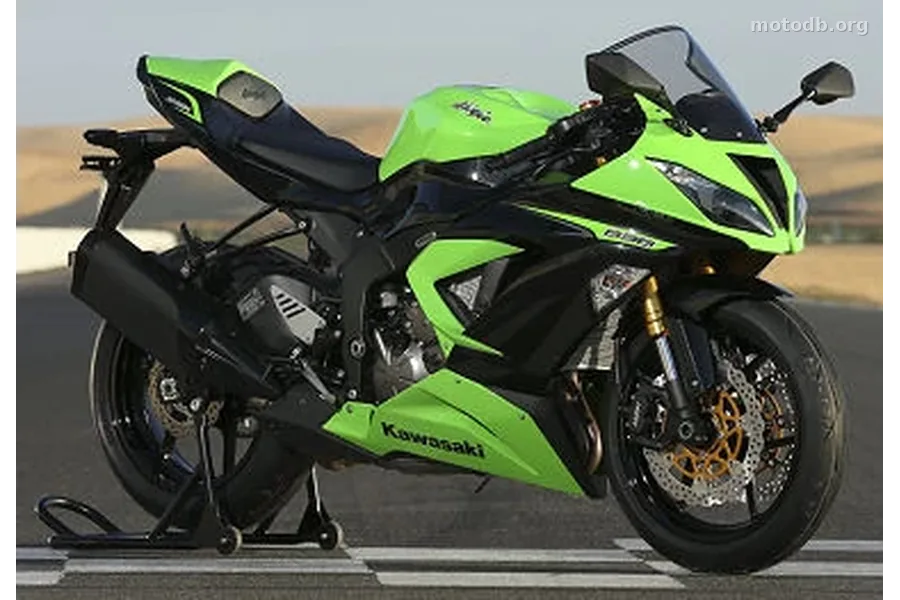
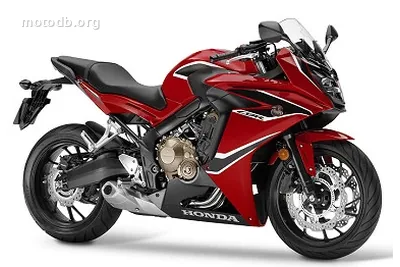
Does a sportbike have to be a track weapon, or can it also shine on everyday roads? Kawasaki answered in 2013, and its response is called the ZX-6R 636. Behind this iconic number lies a strategic choice: increasing the displacement to 636 cc to offer a more robust engine, while the competition often remains focused on high RPMs. The result? A four-cylinder engine that delivers 131 horsepower at 13,500 rpm, but more importantly, 71.6 Nm of torque available much earlier, around 11,500 rpm. It is this generosity at mid-range that makes all the difference on the road, making the bike less demanding and more playful without forcing the redline.
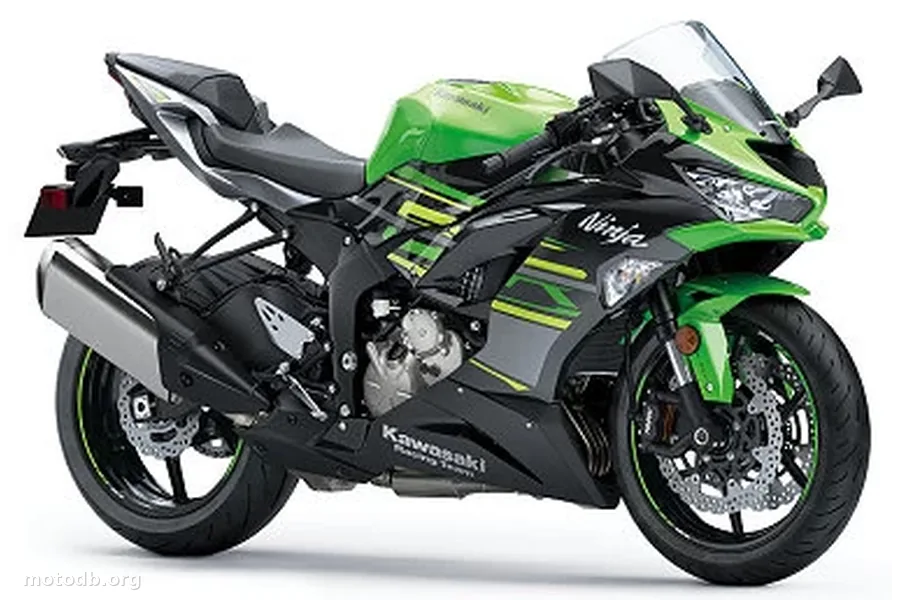
On the saddle, you immediately feel that Kawasaki has targeted the demanding user but not necessarily a track rider. The chassis, with its perimeter aluminum frame and a wet weight of 192 kg, is surgically precise, inherited from the previous generation. The real revolution comes from the electronics, borrowed from the larger ZX-10R. The three-mode KTRC traction control and the KIBS anti-lock braking system, an intelligent ABS, transform the riding experience. You can attack a slightly harsh braking or open the throttle wide on corner exits without that constant apprehension. The Showa SFF-BPF fork provides its share of progressiveness, and the radial brakes bite without fail on 310 mm discs at the front. It is a civilized sportbike, almost tame, but which has lost nothing of its temperament.
However, this choice of 636 cc displacement comes at a price. With its 17-liter tank and a 83 cm seat height, it aims to be more touring-oriented than its rivals like the Yamaha YZF-R6 or the Honda CBR600RR. But this engine generosity disqualifies it from the Supersport championships, limited to 600 cc. Kawasaki has therefore maintained in parallel a strictly 600 version for the circuits, an admission that this 636 targets a different audience: the sporty rider who mainly rides on the road, the enthusiast of sensations without wanting to play acrobats in the city, or even the experienced motorcyclist looking for a versatile machine without compromising on character.
So, how many horsepower does the Kawasaki ZX-6R 636 have? The question, purely administrative, seems almost incongruous in the face of such mechanics. Because the essence of this motorcycle lies in its pragmatism. At 12,199 euros at the time, it offered an electronic package of rare sophistication in the segment, an engine that is easier to live with, and that little extra soul that its 37 cc additional displacement confers. For those looking for the technical specifications of the 2006 Kawasaki ZX-6R 636, the parallel is striking: the philosophy is identical. Kawasaki repeats with the same recipe, but adding a decade of technical progress. It is a sportbike that assumes it is no longer a pure track tool, to become a daily accomplice, capable of making you smile without sacrificing your license. A bold, and rather successful, bet.
Practical info
- La moto est accessible aux permis : A
Reviews & comments
No reviews yet. Be the first to share your opinion!