Key performance
Technical specifications
Engine
- Displacement
- 903 cc
- Power
- 49.6 ch @ 5700 tr/min (36.2 kW)
- Torque
- 78.0 Nm @ 3700 tr/min
- Engine type
- V2, four-stroke
- Cooling
- Liquid
- Compression ratio
- 9.5:1
- Bore × stroke
- 88.0 x 74.2 mm (3.5 x 2.9 inches)
- Valves/cylinder
- 4
- Fuel system
- Injection. DFI® 34mm throttle bodies (2), with sub-throttle valves
- Valve timing
- Single Overhead Cams (SOHC)
- Ignition
- TCBI with digital advance
- Starter
- Electric
Chassis
- Frame
- Double-cradle, steel
- Gearbox
- 5-speed
- Final drive
- Belt (final drive)
- Clutch
- Wet multi-disc
- Front suspension
- 41mm hydraulic telescopic fork
- Rear suspension
- Triangle swingarm with Uni-Trak single shock
- Front wheel travel
- 150 mm (5.9 inches)
- Rear wheel travel
- 104 mm (4.1 inches)
Brakes
- Front brakes
- Single disc
- Rear brakes
- Single disc. Hydraulic.
- Front tyre
- 80/90-21
- Rear tyre
- 180/70-15
Dimensions
- Seat height
- 685.00 mm
- Wheelbase
- 1645.00 mm
- Ground clearance
- 140.00 mm
- Length
- 2405.00 mm
- Width
- 895.00 mm
- Height
- 1120.00 mm
- Fuel capacity
- 20.00 L
- Weight
- 276.70 kg
Overview
When Kawasaki decided to steer its Vulcan 900 toward a darker territory, the brand didn't seek to reinvent the mechanics. The 903 cm³ V-twin engine is strictly the same as the one that powers the Classic: 48 horsepower at 5700 rpm, 77.5 Nm of torque available from 3700 rpm, a five-speed gearbox, and belt drive. On paper, nothing distinguishes the two cousins. Under the fairing, it’s a different story.
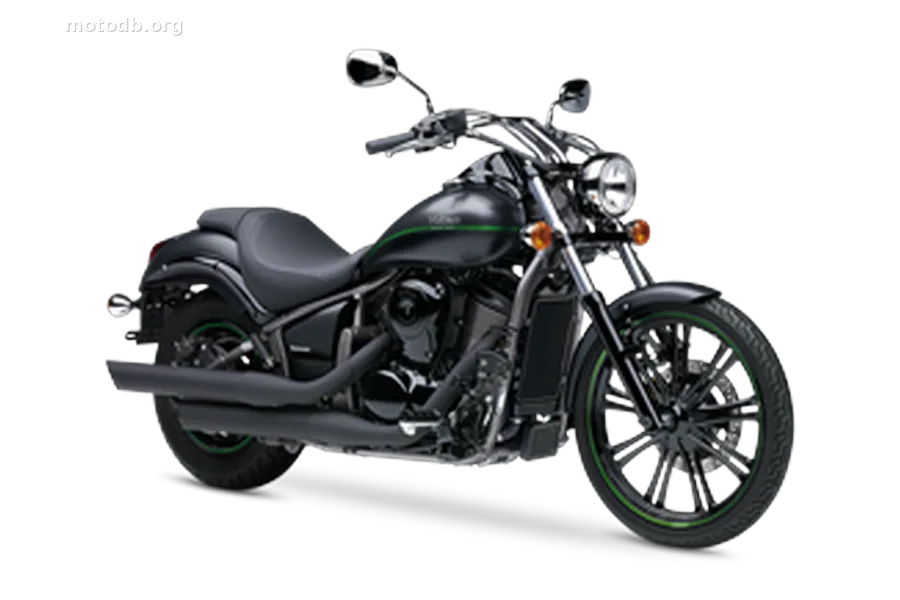
What immediately strikes you about the Kawasaki Vulcan 900 Custom is the stylistic intention. The matte black exhausts, the red stripe that contrasts with the dark bodywork, the short rear fender that exposes the line: everything here aims to harden the proposition. The 21-inch double-spoke front wheel is the showstopper. On the Classic, there are 16-inch spoked wheels, something more sensible, more retro. Here, the front end takes on a distinctly more aggressive, almost menacing posture. It’s precisely this change in diameter that gives the motorcycle its own personality, far more than any sticker.
The drag-bar handlebar, the replaced seat, the footpegs pulled back: the ergonomics push the rider into a less reclined position than on the Classic. It's not a racer's position, obviously. With 278 kg fully fueled and a seat height of 685 mm, it remains in the register of accessible custom, one that suits an experienced rider without excluding average builds. The 20-liter tank ensures range, and the top speed announced at 170 km/h does not encourage prolonged highway bravery, but no one buys this type of machine to break records.
Facing the Harley-Davidson Iron 883, an essential reference in this segment, the used or new Kawasaki Vulcan 900 Custom presents a significant argument: a price identical to that of the Classic, namely €8399. Harley asks considerably more for a smaller displacement. The Kawasaki responds with a more generous V-twin in terms of torque and a solid steel double cradle frame. The suspension, 41 mm fork at the front and a single shock at the rear, is not delicate but remains consistent with the usage. The braking, a 300 mm disc at the front and 270 mm at the rear, is sufficient without being brilliant.
Whether you are looking for a Kawasaki Vulcan 900 Custom 2016, 2019, 2021 or any vintage of this lineage, the proposition remains remarkably stable over time: a restrained custom, visually muscular, with a surprising engine and careful finish. It's not the machine that will make beautiful mechanics enthusiasts dream. It is an honest, well-dressed motorcycle that plays the card of character rather than performance. For the urban rider or weekend traveler who wants style without mortgaging their apartment, it is a consistent choice.
Indicators & positioning
Similar bikes
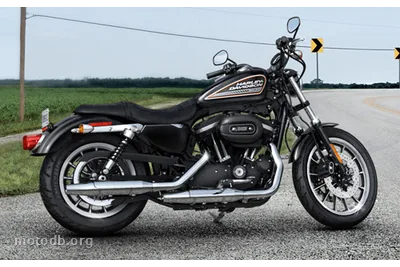
Sportster 883 Roadster
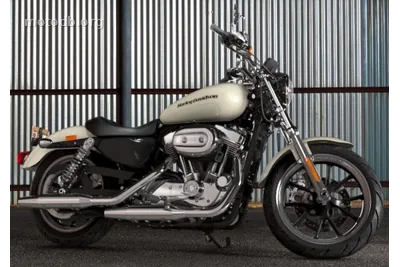
XL 883 L Superlow
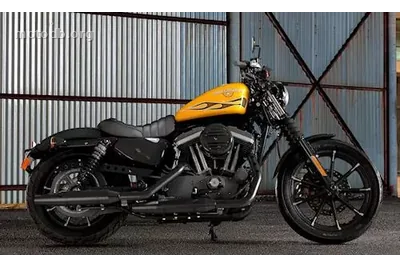
XL 883 Sportster Iron
XL 883 Sportster Iron
Reviews & comments
No reviews yet. Be the first to share your opinion!