Key performance
Technical specifications
Engine
- Displacement
- 1043 cc
- Power
- 142.0 ch @ 10000 tr/min (104.4 kW)
- Torque
- 110.8 Nm @ 8000 tr/min
- Engine type
- 4 cylindres en ligne, 4 temps
- Cooling
- liquide
- Compression ratio
- 11.8 : 1
- Bore × stroke
- 77 x 56 mm
- Valves/cylinder
- 4
- Camshafts
- 2 ACT
- Fuel system
- Injection ø 38 mm
Chassis
- Frame
- Double poutre en aluminium
- Gearbox
- boîte à 6 rapports
- Final drive
- Chaîne
- Front suspension
- Fourche téléhydraulique inversée Ø 41 mm, déb : 120 mm
- Rear suspension
- Mono-amortisseur, déb : 144 mm
Brakes
- Front brakes
- Freinage 2 disques Ø 300 mm, fixation radiale, étrier 4 pistons
- Rear brakes
- Freinage 1 disque Ø 250 mm, étrier simple piston
- Front tyre
- 120/70-17
- Rear tyre
- 190/50-17
Dimensions
- Seat height
- 835.00 mm
- Fuel capacity
- 19.00 L
- Weight
- 235.00 kg
- New price
- 15 399 €
Overview
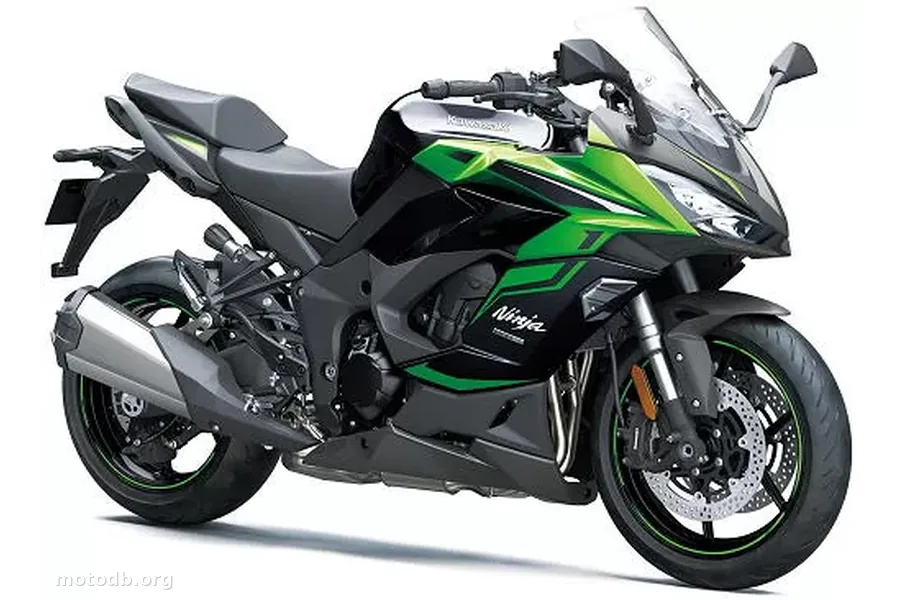
After three generations of the Z 1000 SX, the Kawasaki’s faired roadster received a technical and aesthetic update. Whether for standardization or to assert a sporty affiliation, the Z becomes Ninja, which corresponds to its American name. There, the Z 1000 SX has been called the Ninja 1000 since 2011.
The merging of names results in the Ninja 1000 SX, a modernized version enriched with an exhilarating Sport-GT roadster offering homogeneity and efficiency. This explains the caution evident in its 2020 evolution. Rather than a complete overhaul, Kawasaki preferred to refine numerous elements, a little at a time.
No risks were taken regarding the bodywork. The subtle, even timid, renewal of this taut-lined fairing simply sharpens it. Equipped with LEDs since the last generation, the headlights become even more acute, just like the eyes. A makeover for the flanks, a retouch for the engine guard, all to add a touch of sharpness to its silhouette without any sense of displacement. The Ninja delicately follows the Z 1000 SX.
The rear end is more intriguing. After years and years of a double exhaust with dual outlets, Kawasaki returns to simplicity with a single exhaust. The appendage is notably long, exceeding the eccentric chain adjustment system (a rarity). The interest lies elsewhere, and doubles. It represents a 2 kg weight reduction and provides the finishing touch to the engine specialists’ work to make the 4-cylinder cleaner. Euro5 has been implemented; Kawasaki had prepared for it with revisions to the camshaft profiles, 45 mm shorter intake ducts for cylinders 1 and 4, a revised mapping, and a 3-way catalytic converter in the collector. There are no technical consequences for the 1043 cm3 engine, which is still happy to announce its 142 horsepower and 11.3 mkg of torque. Eager to test the new Bridge’ S22 tires, it knows that some electronic helpers will change its job. Some friends have joined the party.
By splitting into SX (2011), the Z 1000 almost became a road-going roadster, or something approaching the sport-touring realm. Its sportiness is affirmed further with the series installation of an Up&Down shifter. The touring aspect is not left behind with the installation of a cruise control system, made possible by ride-by-wire. More comfortable seats and an adjustable bubble on now 4 positions are of the same vein. It adjusts without tools, we recall. We will appreciate in everyday use what the Z 1000 SX already had, such as the assisted and anti-dribble clutch, the discreet attachment panels for the cases, and the remote-mounted damper adjustment knob. A center stand? Still not on the program. A USB port? Optional. However, and this allows us to return to the electronics, there is something new on the dashboard side.
TFT technology is rapidly gaining ground in the Kawasaki range. While KTM has been able to install it on its 125 Duke to the 1290 Adventure, it is only a matter of time before the needles and liquid crystals disappear, except for vintage and neo-retro models. For the moment, let’s look at this 10.9 cm / 4.3-inch screen. A kind of standard since we find it on the Z 650 & 900, Ninja 650 and Z H2. If the size is the same for the recipients, the content and options are richer depending on the displacement. Featuring a black or white background, the screen here has two types of displays. Road style with a beautiful layout and all the necessary information; or Sport with the presence of indicators for the lean angle, the forces exerted during acceleration or braking, and the G forces.
With a Bluetooth chip, the cockpit can communicate with the phone via the "Rideology" app. This allows you to pilot basic functions (calls, messages, music), consult your routes via GPS, parameterize the settings or obtain information about the vehicle. The on-board electronics also act on the driving. The Z 1000 SX had two Power Modes, a 3-level Traction Control (KTRC), Intelligent Braking System (KIBS), an Inertial Measurement Unit (IMU), and the Cornering Management Function (KCMF). The Ninja adds four Riding Modes, governing the KTRC and Power Mode. It's not complicated, just a combination of settings: - Sport Mode: Traction Control in mode 1 (the least intrusive) and full power - Road Mode: KTRC on 2 and full power - Rain Mode: KTRC on 3 and Low power - Rider Mode: The user sets the KTRC to their choice (1 / 2 / 3 / Off) as well as the Power Mode (F or L).
It’s nice to have these cables and real-time analyses. But it won’t be much use if the chassis can’t handle it. Just so, as the one from the Z 1000 SX suited without flaws, the Ninja 1000 SX retains the same technical solution. The aluminum backbone frame retains Kawasaki’s confidence, as do the 4-piston radial brake calipers and their pads, the 300 mm discs. The 41 mm inverted fork receives a slight modification to the internal piston to soften reactions during compression phases. For it as for the rear mono-shock absorber, the settings have been recalibrated. From the old to the new SX, the tires will bring the essential differences – the S22 have a considerable potential.
The SX evolves, on points of modernization without touching the essentials. A slightly cleaner engine, a "necessary" dose of electronics, a small facelift, a pinch of extra comfort – this line summary cannot suffice to relate the majority expression that this Kawasaki maintains. A gradual mutation into Sport-GT that really suits it.
M.B - Photos constructeur
Standard equipment
- Assistance au freinage : ABS
- Nombre de mode de conduite : 4
- Taille de l'écran TFT couleur : 10,92 cm / 4.3 pouces
- Shifter
- Indicateur de vitesse engagée
- Régulateur de vitesse
- Bluetooth
- Contrôle de traction
- Pare brise réglable
- Embrayage anti-dribble
Practical info
- La moto est accessible aux permis : A
Indicators & positioning
Similar bikes
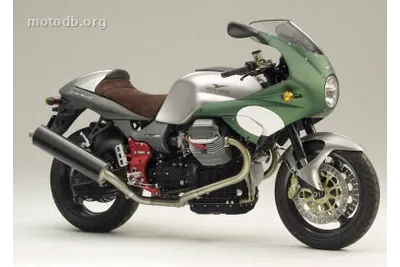
V11 Le Mans Tenni
Reviews & comments
No reviews yet. Be the first to share your opinion!