Key performance
Technical specifications
Engine
- Displacement
- 649 cc
- Power
- 77.0 ch (56.6 kW)
- Torque
- 68.6 Nm
- Engine type
- Bicylindre en ligne, 4 temps
- Cooling
- liquide
- Compression ratio
- 10.8 : 1
- Bore × stroke
- 83 x 60 mm
- Valves/cylinder
- 4
- Camshafts
- 2 ACT
- Fuel system
- Injection ø 38 mm
Chassis
- Frame
- Périmétrique en tubes d'acier
- Gearbox
- boîte à 6 rapports
- Final drive
- Chaîne
- Front suspension
- Fourche téléhydraulique Ø 41 mm, déb : 125 mm
- Rear suspension
- Monoamortisseur déporté, déb : 130 mm
Brakes
- Front brakes
- Freinage 2 disques Ø 300 mm, étrier 2 pistons
- Rear brakes
- Freinage 1 disque Ø 200 mm, étrier simple piston
- Front tyre
- 120/70-17
- Front tyre pressure
- 2.25 bar
- Rear tyre
- 160/60-17
- Rear tyre pressure
- 2.50 bar
Dimensions
- Seat height
- 805.00 mm
- Fuel capacity
- 16.00 L
- Weight
- 200.00 kg
- New price
- 8 000 €
Overview
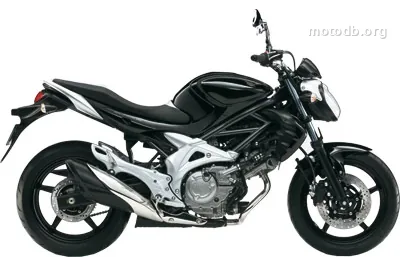
Kawasaki has this slightly annoying habit of making you salivate for nothing. The Performance range is a well-worn recipe: take an already convincing motorcycle, bolt on a tasteful sports kit, and there you have a version that makes you want to sign on the dotted line. The ZZR, the ZX-10R, the ZX-636R, the Z 800 have all received this treatment. The ER-6n too, eventually. Except that this time, the French subsidiary did things its own way, and the result will stay in a warehouse.
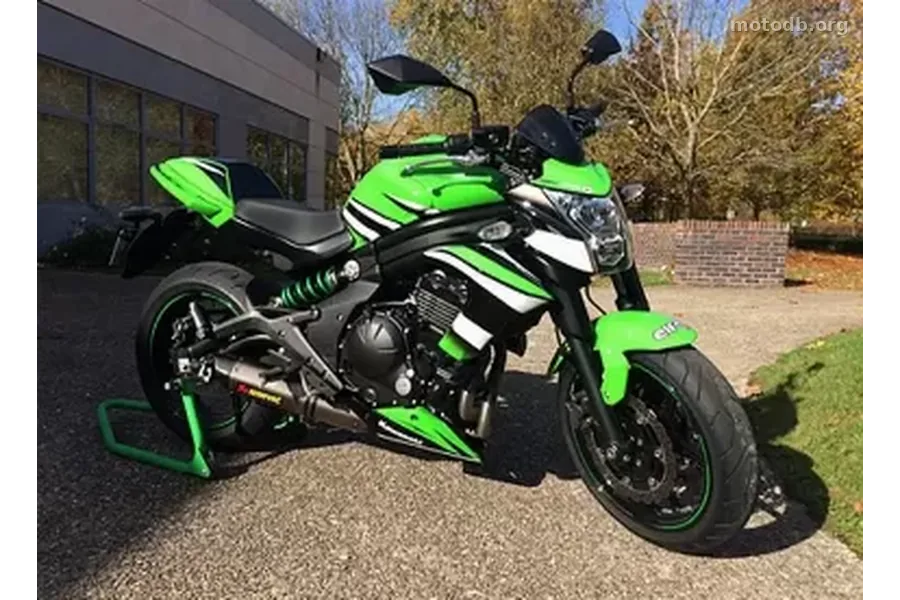
On paper, the foundation is solid. The 649 cc inline twin produces 77 horsepower and 68.6 Nm of torque, housed in a steel perimeter frame that never claimed to rival the aluminium structures of its direct competitors, the MT-07 or the Versys 650. At 200 kg fully fuelled it sits in the middle of the segment, and the 805 mm seat height remains accessible for a standard build. It's an honest, mid-range naked that will top 200 km/h at the end of a straight without asking for justification.
What makes this Performance version particular is the involvement of Akrapovic in the equation. The titanium silencer shaves 4 kilograms off the scales, pushes power to approximately 82 horsepower, and adds a little bite in the mid-range. It's not a radical transformation, but on a motorcycle of this size, lightening the top end and gaining a few horsepower changes the feeling of the rev range. The livery picks up the 30th anniversary colours of the Ninja series, with a matching seat cowl and belly pan. It's clean, it's coherent, it would have made a fine showroom poster.
Except here lies the crux of the problem: Kawasaki France built a single example. Just one. Never put on sale, never homologated for the road. A styling exercise, a demonstration of know-how, a show prototype that will remain a prototype. You can see it as a fine declaration of love for a machine that deserved better than a standard catalogue, or as neatly packaged frustration for the enthusiast who would have reached for their chequebook. At 8,000 euros, the price of the standard ER-6n, a version prepared in this way would have found buyers without any effort. The direct competition sits in the same price bracket with comparable credentials, and factory Akrapovic equipment would have been a serious commercial argument.
What this motorcycle ultimately says is that the ER-6n had the potential to play in a higher league. A little less weight, refined suspension, tyres worthy of the chassis dynamics, and the Kawasaki naked became a genuinely accessible sporting proposition. A shame the demonstration remained just a demonstration. The audience for this segment — experienced riders looking for a sharp second bike or returning to two wheels after a few years away — would have appreciated such a package. Instead, we're left with a nice studio photograph and the frustrating desire for what could have been.
Practical info
- La moto est accessible aux permis : A
Reviews & comments
No reviews yet. Be the first to share your opinion!