Key performance
Technical specifications
Engine
- Displacement
- 300 cc
- Power
- 23.8 ch @ 6500 tr/min (17.4 kW)
- Torque
- 18.5 Nm @ 6500 tr/min
- Engine type
- Twin, four-stroke
- Cooling
- Liquid
- Compression ratio
- 10.2:1
- Bore × stroke
- 57.0 x 53.0 mm (2.2 x 2.1 inches)
- Valves/cylinder
- 2
- Fuel system
- Carburettor. Dual 26mm Keihin Vacuum Carburetor
- Valve timing
- Double Overhead Cams/Twin Cam (DOHC)
- Lubrication
- Forced Lubrication
Chassis
- Gearbox
- 5-speed
- Front suspension
- 39 mm conventional forks
- Rear suspension
- Dual shocks, fully-adjustable.
Brakes
- Front brakes
- Double disc. 2-piston
- Rear brakes
- Single disc. 2-piston
- Front tyre
- 90/90-21
- Rear tyre
- 160/90-18
Dimensions
- Seat height
- 610.00 mm
- Wheelbase
- 1626.00 mm
- Ground clearance
- 152.00 mm
Overview
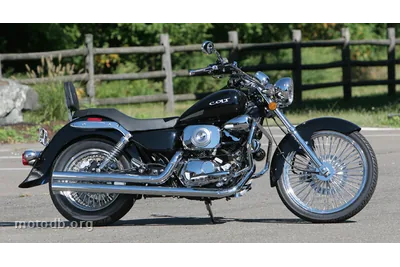
In 2010, while Harley-Davidson and Honda Shadow reigned unchallenged over the realm of small cruisers, an American-Chinese brand named Johnny Pag attempted a gamble with this Barhog 300. The idea was simple: to offer an authentic big twin look, with its slender front tire in 90/90-21 and its obese rear tire in 160/90-18, but powered by an accessible and economical 300 cc engine. The bet was daring, almost provocative.
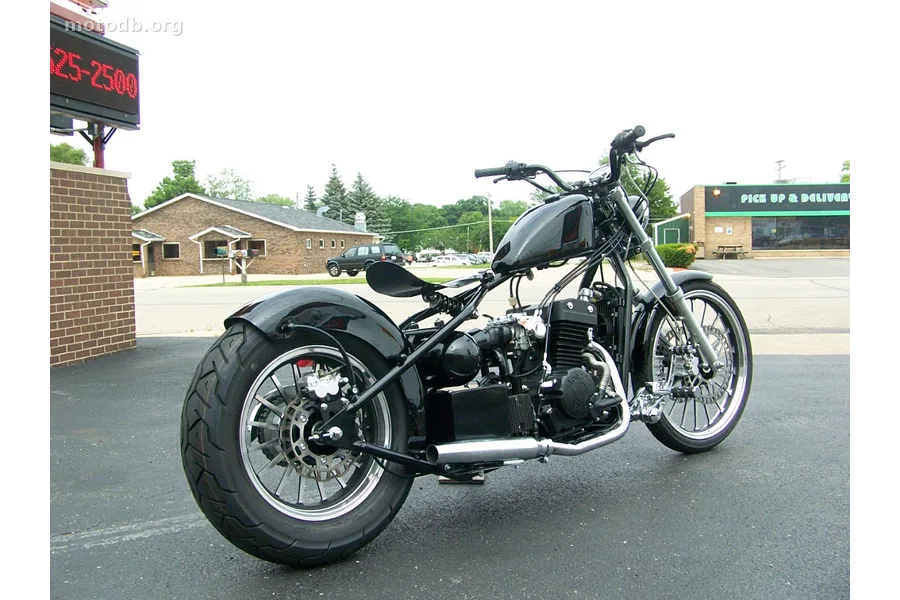
Under this teardrop-shaped fuel tank and low frame lies an inline, four-stroke, liquid-cooled twin cylinder. With a bore of 57 mm and a stroke of 53 mm, its square architecture suggested a certain liveliness. In fact, the 23.8 horsepower delivered at 6500 rpm and the torque of 18.5 Nm at the same rpm will not shake the tarmac. Carburation is ensured by two 26 mm Keihin carburetors, a classic choice for the time that confers a frank character but requires more rigorous maintenance than electronic injection. The announced fuel consumption of 3.6 liters per 100 km is, however, a significant argument for the neo-customist on a tight budget.
The chassis plays the card of cruiser authenticity with a very long wheelbase of 1626 mm and a seat height of only 61 cm, promising a low and relaxed seating position. The ground clearance of 152 mm quickly reminds you of the machine's limits as soon as a slightly committed turn appears. The front suspension adopts conventional 39 mm diameter forks, while the rear relies on two double-adjustable shock absorbers, a surprising endowment in this segment. The braking system, with two discs at the front and one at the rear, each with two-piston calipers, seems correct on paper for a motorcycle of this size and power.
Faced with a Honda Shadow 600 or even a Hyosung GV 650, the Johnny Pag Barhog 300 clearly positioned itself as an entry point with a distinctive look. It was aimed at the beginner attracted by custom aesthetics but frightened by the heavyweights of the genre, or the experienced rider looking for a second relaxed machine for Sunday rides without breaking the bank at the gas station. Its legacy is now mixed: while it opened a path for accessible small cruisers, it also showed the necessary compromises between pure style and real performance. We recommend it to those who primarily ride for pleasure at low speeds, along coastal roads or in the city, and who consider each stop at the gas station a personal victory.
Reviews & comments
No reviews yet. Be the first to share your opinion!