Key performance
Technical specifications
Engine
- Displacement
- 998 cc
- Power
- 125.0 ch @ 10000 tr/min (91.9 kW)
- Torque
- 99.0 Nm @ 7750 tr/min
- Engine type
- 4 cylindres en ligne, 4 temps
- Cooling
- liquide
- Compression ratio
- 11.2 : 1
- Bore × stroke
- 75 x 56.5 mm
- Valves/cylinder
- 4
- Camshafts
- 2 ACT
- Fuel system
- Injection
Chassis
- Frame
- Monobackbone en aluminium moulé
- Gearbox
- boîte à 6 rapports
- Final drive
- Chaîne
- Front suspension
- Fourche téléhydraulique inversée Ø 43 mm, déb : 120 mm
- Rear suspension
- Mono-amortisseur, déb : 128 mm
Brakes
- Front brakes
- Freinage 2 disques Ø 310 mm, fixation radiale, étrier 4 pistons
- Rear brakes
- Freinage 1 disque Ø 256 mm, étrier 2 pistons
- Front tyre
- 120/70-17
- Front tyre pressure
- 2.50 bar
- Rear tyre
- 180/55-17
- Rear tyre pressure
- 2.90 bar
Dimensions
- Seat height
- 825.00 mm
- Fuel capacity
- 17.00 L
- Weight
- 222.00 kg
- New price
- 14 357 €
Overview
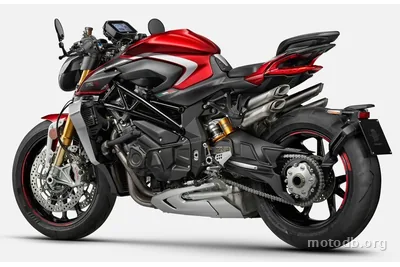
Ten units. Not one more. Honda Switzerland didn't do things by halves when the Helvetic subsidiary decided to transform its roadster into a collector's item, and the result deserves attention before these rare machines disappear into hushed garages.
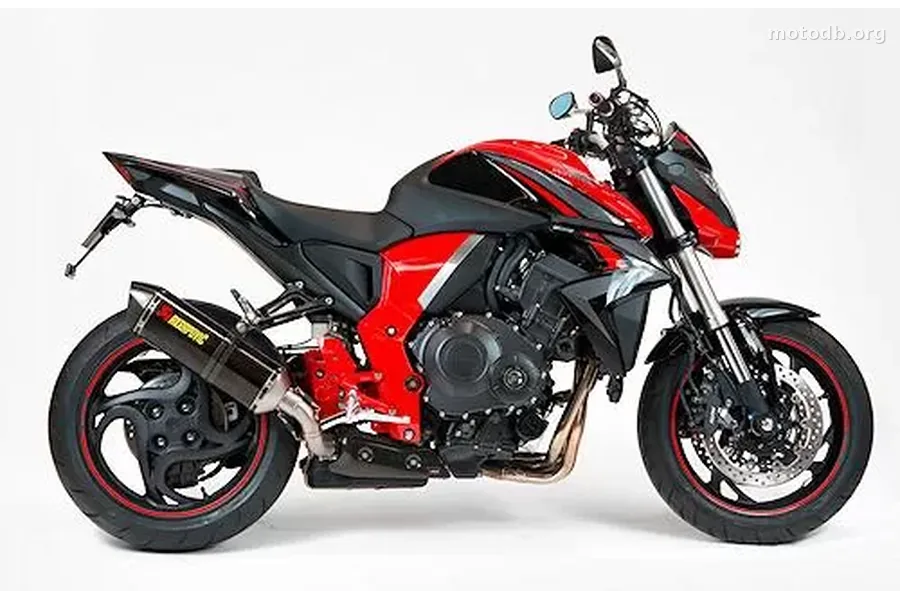
The CB 1000 R has always occupied a slightly uncomfortable position in the roadster landscape: too restrained visually to compete with a Speed Triple of the era or a Z1000 in terms of visual presence, yet equipped with a 998 cc inline four-cylinder engine that means business. This engine, derived from the race-bred CBR 1000 RR, was tamed to deliver 125 horsepower at 10,000 rpm and 99 Nm of torque at 7,750 rpm. On paper, the power seems modest against 2016 standards, and the 222 kg wet weight doesn't favour pure agility. But Honda has always known how to build machines that function as a single entity, and the CB 1000 R is no exception to this rule.
What makes the Swiss Limited Edition singular is the breadth of the accessories catalogue it comes with as standard. The most immediately audible addition is the carbon Akrapovic exhaust, with its matching heat shield, which radically transforms the sonic signature of the four-cylinder. The rest amounts to precision personalisation: grey aluminium Rhombe turn signals, Veloce mirrors, Urlo grips, Switch bar ends, metal brake and clutch fluid reservoirs, specific levers, along with wheel stickers and a seat cowl. Honda Switzerland clearly spent time in the HPM catalogue assembling a coherent kit rather than a heterogeneous assortment of parts by the kilogram.
The result is a motorcycle that finally embraces a visual character the standard version only hinted at. The single-sided swingarm, the machine's aesthetic signature, gains even greater relief with this careful treatment. At 14,357 euros for ten numbered units, this is no longer the purchase of a motorcycle but of a limited object, with all that implies in terms of potential heritage value. The target audience is not the young rider looking to prove themselves on circuit, but the experienced enthusiast who wants a reliable, well-bred Honda, dressed with more exacting standards than current production allows.
The one criticism that can be levelled remains the engine output, which appears restrained relative to the 125 hp offered by Germanic or British competition on noticeably lighter machines at the same period. Honda clearly prioritised smoothness of use and progressiveness over brutality. For some, that is a deal-breaking flaw. For others, it is precisely what lends charm to a machine you can exploit without fighting it through every corner.
Standard equipment
- Assistance au freinage : C-ABS
Practical info
- La moto est accessible aux permis : A
Reviews & comments
No reviews yet. Be the first to share your opinion!