Key performance
Technical specifications
Engine
- Displacement
- 1300 cc
- Power
- 180.0 ch @ 9700 tr/min (132.4 kW)
- Torque
- 131.4 Nm @ 7600 tr/min
- Engine type
- Bicylindre en V à 60°, 4 temps
- Cooling
- liquide
- Compression ratio
- 14 : 1
- Bore × stroke
- 105 x 75 mm
- Valves/cylinder
- 4
- Camshafts
- 2 ACT
- Fuel system
- Injection Ø 58 mm
- Starter
- électrique
Chassis
- Frame
- double berceau / périmétrique en acier
- Gearbox
- boîte à 5 rapports
- Final drive
- Courroie
- Front suspension
- Fourche téléhydraulique Ø 49 mm
- Rear suspension
- Suspension supprimée
Brakes
- Front brakes
- Freinage 1 disque Ø 300 mm, étrier 4 pistons
- Rear brakes
- Freinage 1 disque Ø 292 mm, étrier 4 pistons
- Front tyre
- 120/70-19
- Rear tyre
- 240/40-18
Dimensions
- Seat height
- 648.00 mm
- Fuel capacity
- 14.00 L
- Dry weight
- 232.00 kg
- New price
- 30 000 €
Overview
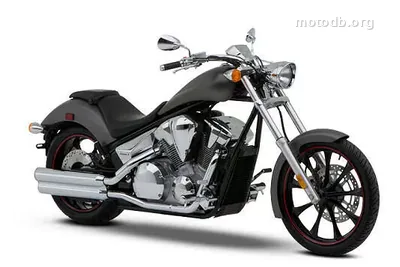
Six examples for France. Six. While Milwaukee etched this number into its order books for 2006, enthusiasts had already signed checks without even having laid eyes on the beast. That’s all there is to know about the particular status of the V-Rod Destroyer: a motorcycle that sells before it is seen, at 30,000 euros apiece, produced in 600 units worldwide. Harley-Davidson did not build a production motorcycle. The brand packaged a ticket for the quarter mile and offered it to the public.
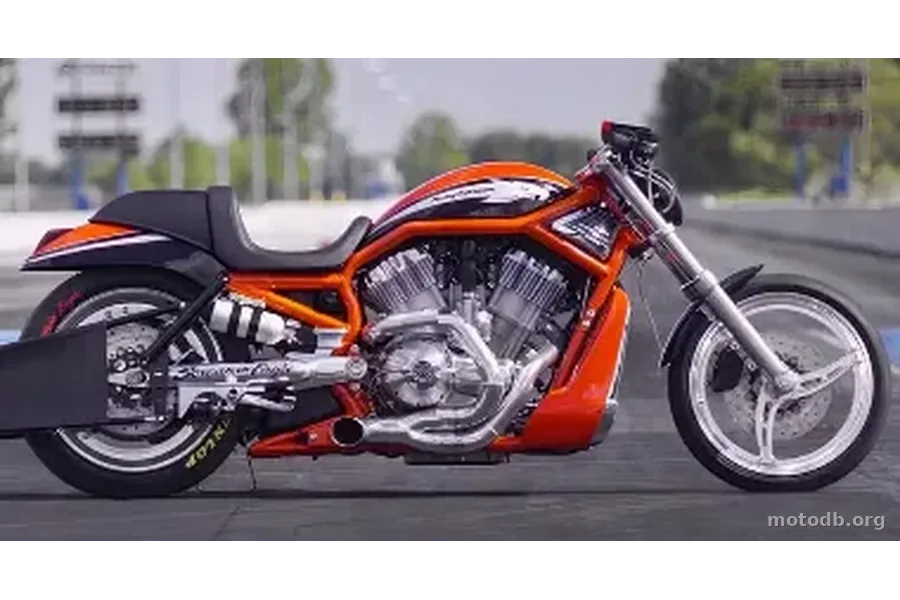
The starting point is the liquid-cooled twin of the V-Rod, this mixed-blood ancestor developed with Porsche Engineering. For the Destroyer, engineers lengthened the stroke and widened the bore to 105 x 75 mm, bringing the displacement to 1,300 cm3. Compression ratio revised to 14:1, reworked cylinder heads, forged pistons in place of standard parts: each modification points in the same direction. The announced result exceeds 180 horsepower at the crankshaft, or more than 165 horsepower measured at the rear wheel. For a 60-degree V-twin, it’s a slap. Torque of 131 Nm arrives at 7,600 rpm, and maximum power peaks at 9,700 rpm, engine speeds that the standard V-Rod does not know. The clutch has been reinforced accordingly, as has the belt transmission. An electro-pneumatic shifter manages gear changes on the 5-speed gearbox: in drag racing, lifting your foot to change gear is heresy.
The preparation philosophy is brutally consistent. Anything that doesn’t serve to move quickly over a straight half-kilometer has been removed. Turn signals, lighting, homologated exhaust, rear suspension: eliminated. The gain on the scale approaches 45 kilograms compared to the base V-Rod. The Destroyer weighs 232 kg dry, which remains substantial, but the machine carries a wheelie-bar, this dragster strut that prevents the front wheel from permanently leaving the ground under the effect of power. The seat, recessed at 648 mm from the ground, secures the rider in a position designed to withstand acceleration, not to cross a mountain pass. The 49 mm fork at the front and nothing at the rear summarize the ambition of the machine: to go straight, as fast as possible, with the throttle wide open up to the announced 240 km/h.
This Destroyer is not for everyday motorcyclists, nor even for lovers of versatile sportbikes. Faced with a Suzuki Hayabusa or a Kawasaki ZX-14, the Destroyer does not play in the same category: it does not turn, does not brake to relaunch, does not fit into any curve. Its terrain is a marked airport runway, stopwatch in hand. It is precisely what makes it a unique object, almost unclassifiable in large-scale production. Harley had the audacity to sell what other preparers build one at a time in specialized garages, attaching a serial number and a manufacturer's plate to it. The price of 30,000 euros does not reflect a particularly advantageous power-to-euro ratio. It reflects the rarity, the character and the legitimacy of the brand in a segment where no one really expected it.
Practical info
- La moto est accessible aux permis : A
- Fabriqué en 600 exemplaires
Indicators & positioning
Similar bikes
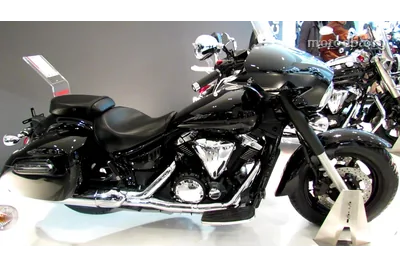
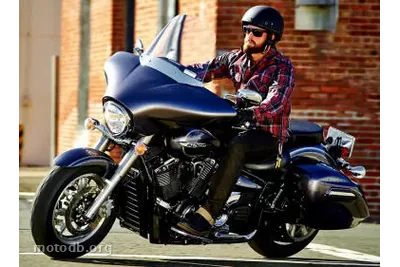
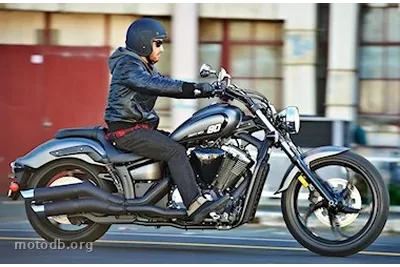
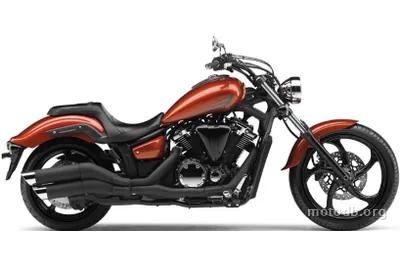
XVS 1300 Custom Stryker
Reviews & comments
No reviews yet. Be the first to share your opinion!