Key performance
Technical specifications
Engine
- Displacement
- 998 cc
- Power
- 166.0 ch @ 11750 tr/min (122.1 kW)
- Torque
- 108.9 Nm @ 10200 tr/min
- Engine type
- 4 cylindres en ligne, 4 temps
- Cooling
- liquide
- Compression ratio
- 13 : 1
- Bore × stroke
- 76 x 55 mm
- Valves/cylinder
- 4
- Camshafts
- 2 ACT
- Fuel system
- Injection
Chassis
- Frame
- treillis en tubes d'acier au chrome molybdène
- Gearbox
- boîte à 6 rapports
- Final drive
- Chaîne
- Front suspension
- Fourche téléhydraulique inversée Ø 50 mm, déb : 118 mm
- Rear suspension
- Mono-amortisseur, déb : 120 mm
Brakes
- Front brakes
- Freinage 2 disques Ø 310 mm, étrier 6 pistons
- Rear brakes
- Freinage 1 disque Ø 210 mm, étrier 4 pistons
- Front tyre
- 120/70-17
- Rear tyre
- 190/50-17
Dimensions
- Seat height
- 810.00 mm
- Fuel capacity
- 21.00 L
- Weight
- 220.00 kg
- Dry weight
- 192.00 kg
- New price
- 31 495 €
Overview
Fifteen world titles, fourteen of them under the colors of MV Agusta. Giacomo Agostini is not merely a list of achievements — he is the rider who etched the Schiranna manufacturer's name into the collective memory of motorcycling. In 2006, the Italian factory decided to pay him a mechanical tribute worthy of the man, producing a special edition of its legendary F4 1000 limited to 300 units. A number sufficient to turn every single example into a collector's item before the first wheel had even turned.
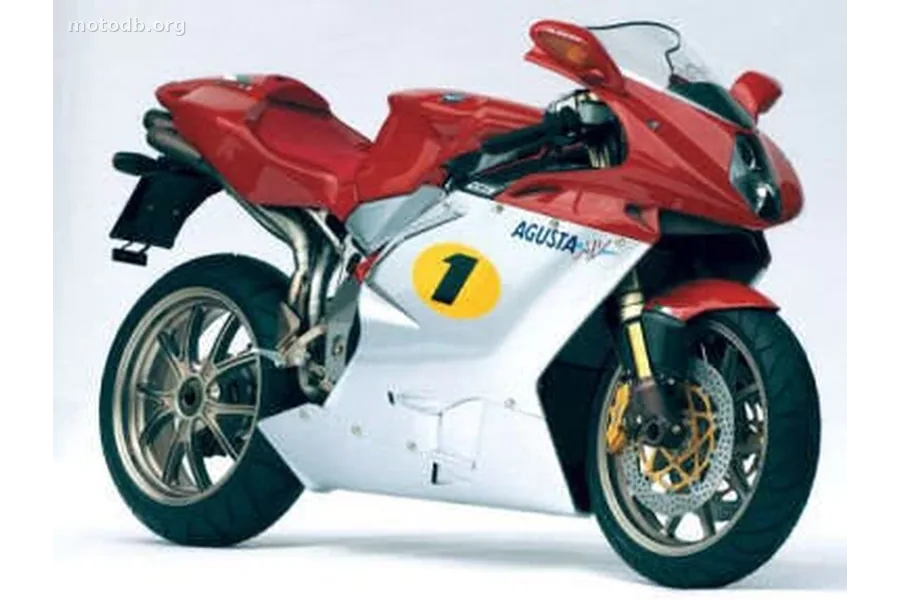
On the technical side, the MV Agusta F4 1000 S AGO is built around the 998 cc inline four-cylinder, 16-valve engine, with a 13:1 compression ratio and an ultra-short-stroke 76 x 55 mm bore and stroke that betray a powerplant designed to rev. The results speak for themselves: 166 hp at 11,750 rpm and 108.9 Nm of torque available at 10,200 rpm. Enough to propel the 192 kg dry weight beyond 300 km/h in a straight line. This puts it squarely in the territory of the Japanese hypersports of the era — the Suzuki GSX-R 1000 or the Yamaha YZF-R1 — but with a radically different philosophy. Where the Japanese machines play the card of raw efficiency, the F4 AGO banks on emotion, prestige, and a form of craftsmanship that only Italy knows how to produce.
And that craftsmanship is visible everywhere. The 50 mm Marzocchi inverted fork receives a titanium nitride coating, a refinement typically reserved for competition machinery. Six-piston Nissin Racing calipers bite 310 mm discs up front, while the rear makes do with a single 210 mm disc squeezed by a four-piston caliper. Marchesini wheels, carbon fiber components, and an Alcantara seat round out an equipment list that goes some way toward justifying the price gap with the competition. Each owner's name is engraved alongside the serial number on an 18-karat gold plate, itself adorned with Agostini's signature. The chrome-molybdenum steel trellis frame — the hallmark of the F4 lineage penned by Massimo Tamburini — houses a rear monoshock offering 120 mm of travel. The whole package rolls on 120/70-17 and 190/50-17 tires, a standard fitment for the era but perfectly suited to a sportbike that favors fast road riding over outright lap times.
The livery deserves a closer look. The fairing sides display the number 1 on a yellow background, a direct nod to Ago's years of Grand Prix domination. The tail section reprises the colors of the Italian flag with a restraint that stands in sharp contrast to the sometimes garish decorations of certain limited editions. MV Agusta had the good taste not to overload a design already regarded as one of the finest in the history of motorcycle styling.
Then there is the question of price. At 31,495 euros in 2006, the F4 1000 S AGO was aimed at wealthy collectors far more than weekend track-day riders. For that sum, you could have bought two Japanese sportbikes and still had enough left over to cover the insurance. But comparing this MV to a GSX-R purely on price-to-performance grounds is to miss the point entirely. This motorcycle was never designed to set lap records. It exists to celebrate a man and an era when motorcycle racing was built around heroic figures. Twenty years on, well-preserved examples change hands at prices that vindicate those who signed the check without hesitation. The F4 AGO is a museum piece that rides, a mechanical homage to a champion whose name still resonates with every start of this Italian four-cylinder engine.
Practical info
- La moto est accessible aux permis : A
Indicators & positioning
Similar bikes
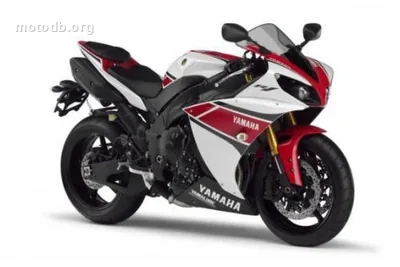
YZF-R1 1000 WGP 50th Anniversary
Reviews & comments
No reviews yet. Be the first to share your opinion!