Key performance
Technical specifications
- Power
- 123.0 ch @ 11800 tr/min (92.0 kW) → 123.0 ch @ 11500 tr/min (92.0 kW)
- Torque
- 80.0 Nm @ 9300 tr/min → 78.5 Nm @ 9300 tr/min
- Gearbox
- 6-speed → boîte à 6 rapports
- Final drive
- Chain (final drive) → Chaîne
Engine
- Displacement
- 748 cc
- Power
- 123.0 ch @ 11500 tr/min (92.0 kW)
- Torque
- 78.5 Nm @ 9300 tr/min
- Engine type
- In-line four, four-stroke
- Cooling
- Liquid
- Compression ratio
- 11.5 : 1
- Bore × stroke
- 73 x 44.7 mm
- Valves/cylinder
- 4
- Camshafts
- 2 ACT
- Starter
- Electric
Chassis
- Frame
- type Kis Frame à deux longerons en alu
- Gearbox
- boîte à 6 rapports
- Final drive
- Chaîne
- Front suspension
- Fourche téléhydraulique inversée Ø 43 mm, déb : 120 mm
- Rear suspension
- Mono-amortisseur, déb : 130 mm
Brakes
- Front brakes
- Dual disc
- Rear brakes
- Single disc
- Front tyre
- 120/70-17
- Front tyre pressure
- 2.50 bar
- Rear tyre
- 190/50-17
- Rear tyre pressure
- 2.90 bar
Dimensions
- Seat height
- 790.00 mm
- Fuel capacity
- 18.00 L
- Weight
- 235.00 kg
- Dry weight
- 203.00 kg
- New price
- 10 517 €
Overview
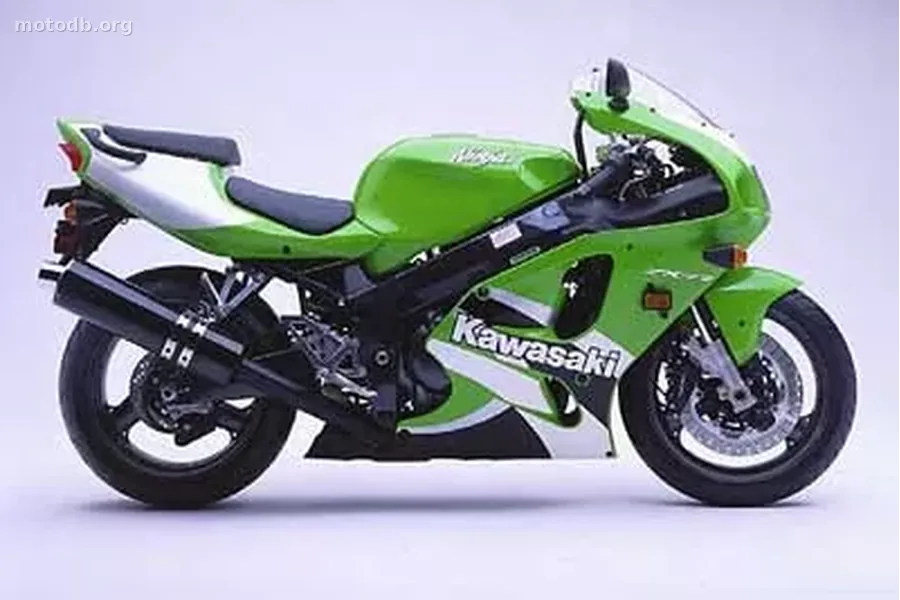
Who still remembers the time when a 750 was the top category, the machine that shook circuits and defined pure sport? The Kawasaki ZX-7R, especially the 2002 version, is a relic of that glorious era. It’s not just a motorcycle; it’s a statement, an affirmation of what Kawasaki considered to be the sporting ideal before the world was overrun by thousand-horsepower machines and ultra-sharp 600s.
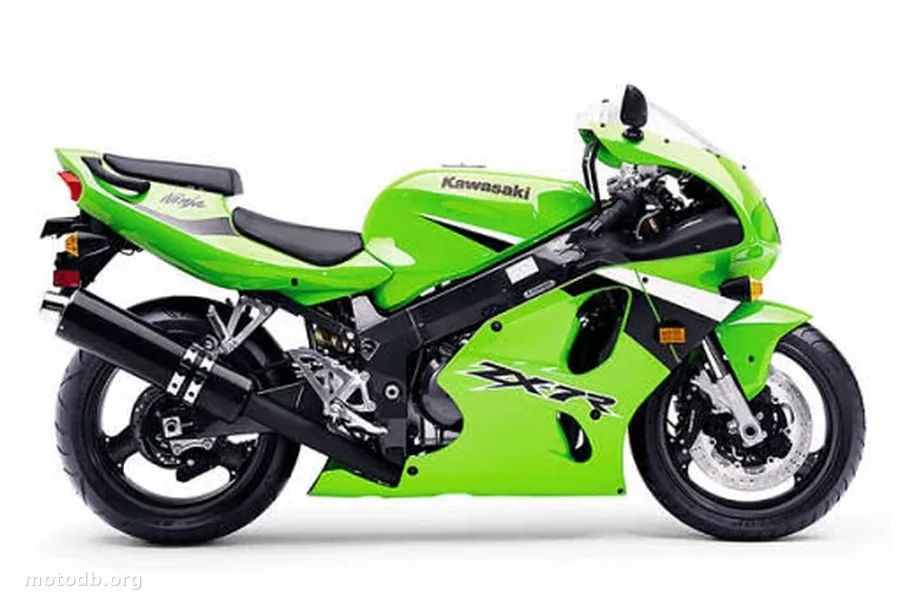
We’re talking about a classic architecture, a 748 cc inline four-cylinder engine that delivers 123 horsepower at 11,500 rpm. These figures, today, don’t shake Excel spreadsheets. But that’s where the problem lies, or rather where the magic operates. This engine is a temperamental boilermaker, with torque present from the mid-range and an expressiveness that is sorely lacking in many modern machines, too strangled by electronics. It sings, it growls, it asks to be worked. It’s a mechanical device that teaches, not that obeys. The six-speed gearbox is a model of precision, a metallic click-clack that is part of the pleasure.
The frame, that famous “Kis Frame” in aluminum, and the quality suspension – 43 mm inverted fork and a mono-shock at the rear – give this Kawasaki ZX-7R straight-line stability that is almost intimidating. It’s a machine that imposes its law, that traces its path with absolute authority. The downside? A wet weight of 235 kg that is felt as soon as you want to lean it over. It’s not quick to change direction; it requires physical commitment. But once placed, its neutrality and the quality of the suspension make you almost forget this heaviness. It’s a motorcycle that rewards technique, not aggression.
And then there are the brakes. A system that, even at the time, was considered a benchmark. Raw power, impeccable feel, and fade resistance that seems endless. Coupled with the suspension, this allows for violent and precise cornering, total control. It’s this coherent ensemble that means that, even facing the diabolical GSX-R 750 of the same generation or the more nervous 600s, the ZX-7R retains its status. It doesn’t beat you with technology or lightness; it beats you with mastery and balance.
Today, searching for a Kawasaki ZX-7R, especially a model like the 2002, is an act of passion. It’s not the motorcycle for a beginner, nor even for a touring rider seeking convenience. It’s the machine of the classic racer, the one who values raw mechanical feel, linear progression, and physical engagement. With an 18-liter tank and a 790 mm seat height, it can even lend itself to sporty touring, but its essence lies elsewhere. It is a bridge between the era of temperamental sportbikes and the modern world. And in a market where even current models like a hypothetical Kawasaki ZX-7R 2023 would be drowned in electronics, this old warrior reminds us that sometimes, the weight of the years is also the weight of glory.
Practical info
- La moto est accessible aux permis : A
Reviews & comments
No reviews yet. Be the first to share your opinion!