Key performance
Technical specifications
Engine
- Displacement
- 998 cc
- Power
- 200.0 ch @ 13000 tr/min (147.1 kW)
- Torque
- 114.7 Nm @ 11500 tr/min
- Engine type
- 4 cylindres en ligne, 4 temps
- Cooling
- liquide
- Compression ratio
- 13 : 1
- Bore × stroke
- 76 x 55 mm
- Valves/cylinder
- 4
- Camshafts
- 2 ACT
- Fuel system
- Injection Ø 47 mm
Chassis
- Frame
- double poutre périmétrique en alu
- Gearbox
- boîte à 6 rapports
- Final drive
- Chaîne
- Front suspension
- Fourche téléhydraulique inversée BPF Ø 43 mm, déb : 120 mm
- Rear suspension
- Mono-amortisseur, déb : 125 mm
Brakes
- Front brakes
- Freinage 2 disques Ø 310 mm, fixation radiale, étrier 4 pistons
- Rear brakes
- Freinage 1 disque Ø 220 mm, étrier simple piston
- Front tyre
- 120/70-17
- Rear tyre
- 190/55-17
Dimensions
- Seat height
- 813.00 mm
- Fuel capacity
- 17.00 L
- Weight
- 201.00 kg
- New price
- 16 349 €
Overview
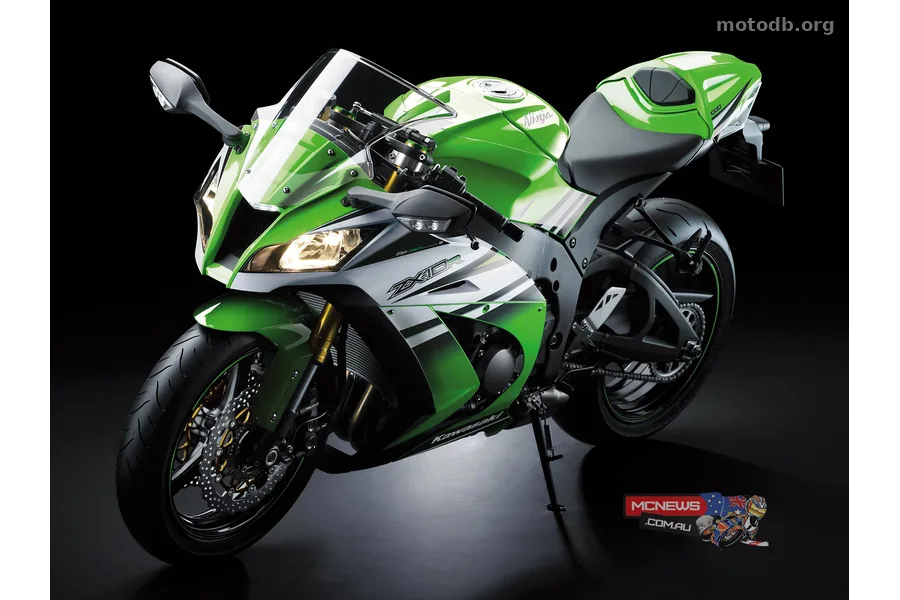
Kawasaki celebrates the 30th anniversary of a pivotal event in the world of sportbikes: the GPZ 900 R. It was the first of the Ninja models, the first to achieve a power-to-weight ratio below 2, and the first of a long line of uncompromising sportbikes. To commemorate this milestone, the Akashi manufacturer presents a limited-edition ZX-10R series.
The Ninja ZX-10 R 1000 is dressed in a specific color scheme reminiscent of machines from the Superbike Mondial. Subtle details are reserved for discerning eyes: a 'Ninja 30th Anniversary' logo behind the headlight and green accents on the suspension. More precisely, on the shock spring and fork adjustment components. What will be the most exhilarating aspect for the lucky owners of this hypersport? The aura of three decades of performance, the taste of multiple victories at the 24 Hours of Le Mans and the Bol d'Or, or the flavor of Sykes and Baz’s performance at the helm… all without restraint.
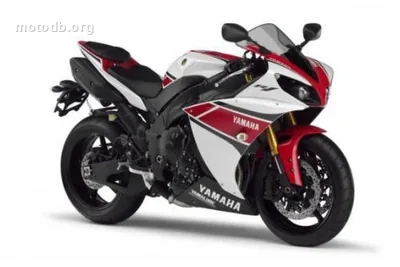
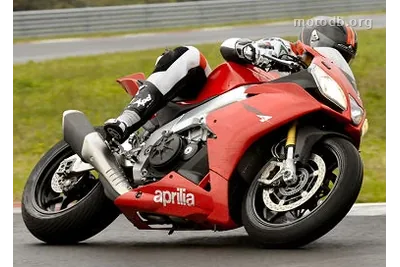
The Kawasaki ZX-10R continues its career with aplomb, ready to remain ultra-high-performing in 2015. But this year, the competition has stepped up a notch and is advancing enough to shake the Ninja. The Yamaha R1 makes a grand return with 200 horsepower and an ultra-responsive chassis; the Aprilia RSV4 becomes RR with 200 horsepower as well; the Ducati 1299 pushes all gauges towards madness; the BMW S 1000 RR has gained even more potential. It won’t be easy, but the Kawa has strong arguments. A world Endurance powerhouse (four consecutive victories at the 24 Hours of Le Mans, three at the Bol, and the Bol d’Or + Le Mans double in 2012 and 2013), untouchable in WSBK Superpole, it brought Tom Sykes the 2013 World Superbike Championship title. Powerful and extremely efficient, adopted by drivers from MRT and Ecurie ChronoSport, the Kawasaki ZX-10R is the reference Japanese sportbike. Released in 2011, the big Ninja has refined its chassis for 2013. The evolution mainly concerns the steering damper.
Still entrusted to Öhlins, this small appendage regulating the front-end behavior is now managed electronically (Suzuki has used a similar method for its GSX-R for a few years). Depending on speed, acceleration, and deceleration, the onboard unit adjusts the damper settings. This softens the steering at low speed or makes it much firmer at high speed without the driver intervening (and losing concentration).
Each year, the Ninja 1000 asserts itself as a blend of threat, efficiency, and competitiveness. Its gaze is framed by a new air intake, which means a lot on its own: the triangular “mouth,” a characteristic trait of the Ninja since its renewal in 2003, has lasted almost a decade but yields here to a strange duct. The front turn signals have finally left the side panels and are now mounted directly on the fairing. Bingo, an ABS… and a traction control system, the S-KTRC (Sport Kawasaki Traction Control). This combines several parameters (wheel speed, engine speed, throttle opening, body position) to optimize acceleration. The system can even distinguish between a “controllable” wheelie and a brutal, unsolicited wheelie. Performing a control every 5 milliseconds, the S-KTRC directly affects the ignition when it starts to zip. The anti-lock brake system is called KIBS, Kawasaki Intelligent anti-lock Brake System. It is a sport ABS capable of regulating and optimizing braking on the front and/or rear – in other words, it thinks for the driver on the action of the braking.
So, we have a queen of electronics under hand, with 200 horses in the basket and a killer face. Keep it in mind because the Ninja still has a lot to promise you. Like the 208 it erased. That was the weight of the ZX-10R of 2010. A bit annoying because the girlfriends all displayed less embonpoint. Dry weight, very dry. And that’s 10 kg of lost weight! Not bad. With 198 kilos when fully fueled (201 with ABS), the Kawa hypersport becomes the lightest in the group. In 2004, the 1000s managed to reach 1 kg per horsepower with the weight at dry. Today, the ratio is the same, but all are fully fueled. The pursuit of power exceeds the threshold of the frightening.
There’s no secret, it was necessary to trim gram after gram, sometimes in an impressive way. The battery is simply twice as light. From 4130 g, it goes to 2040 g; except in ABS version where the energy needs are more important. But even with a 3080 g battery, the weight loss is still there. The onboard electronics have melted by 63 g, the front wheel by 330 g, the rear by 490g, the fuel pump is lightened, the ABS is a version 800 g lighter than current market units, and the entire chassis also contributes to the drastic diet.
And the chassis? To make it an unshakable weapon, Kawa redesigned, reshaped, and reinforced the frame in 2011. Consisting of only 7 pieces, it is designed to offer more control, maneuverability, and feel while losing weight. The swingarm undergoes the same optimization law. Only three elements to assemble and a positioning favoring maximum traction. Fewer elements also mean fewer welds and a sense of increased quality. Don’t stray from the rear. Look at how the mono-shock is mounted! Surprising, isn’t it!? You haven’t often seen a shock anchored horizontally above the swingarm on a sportbike… Neither have I. This process was inaugurated on the latest generation of Z 1000 and is now installed on the most violent of Kawas. The interest? Always the centralization of masses, more stability, more progressiveness, and with the space cleared, we can accommodate a larger damper, and thus a shorter exhaust, and further centralize masses. The Akashi manufacturer renews the confidence given to the BPF type fork. Inaugurated on the 600 in 2009 (and on the Suzuki GSX-R 1000), this model has an almost twice as large piston as on a classic cartridge fork. Consequently, the fluid pressure is much less important while the damping force remains the same. We thus have better control of the front-end during compression phases. The geometry of this 2011 Ninja being even more raked on the front, the driving should be more incisive. Bonus: with fewer internal parts due to its design, the fork is also lighter; and hop, even more grams saved. The suspensions are of course adjustable in compression, preload, and rebound, with a double adjustment of the compression (slow and fast) for the rear damper.
You are therefore on a 200 hp machine for 198 kilos. On board, some adjustments have been planned. An ergonomic tank, adjustable footrests on 15 mm, and for the passenger… as usual, a slice of white bread. The braking is still in the high level of the radial, pump and calipers with 4 pistons each flirting with 310 mm petal discs. But we are still waiting for the monoblock and aviation hoses.
More ferocious than ever in this edition, the ZX-10 R establishes a reference of power and clears the field within the hypersports. The 24 Hours of Le Mans sharpened the appetites of Kawa – this Ninja is now set to bleed the competition on the majority of theaters of operations.
M.B - Photos manufacturer
Standard equipment
- Assistance au freinage : ABS sport and optional
Practical info
- La moto est accessible aux permis : A
Reviews & comments
No reviews yet. Be the first to share your opinion!