Key performance
Technical specifications
Engine
- Displacement
- 1834 cc
- Power
- 126.0 ch (92.7 kW)
- Torque
- 181.4 Nm @ 3800 tr/min
- Engine type
- Bicylindre en V à 60°, 4 temps
- Cooling
- liquide
- Compression ratio
- 11.4 : 1
- Bore × stroke
- 110 x 96,5 mm
- Valves/cylinder
- 4
- Camshafts
- 2 ACT
- Fuel system
- Injection Ø 52 mm
- Starter
- électrique
- Euro standard
- Euro 5+
Chassis
- Frame
- en aluminium moulé
- Gearbox
- boîte à 6 rapports
- Final drive
- Courroie
- Front suspension
- Fourche téléhydraulique inversée Ø 43 mm, déb : 130 mm
- Rear suspension
- Mono-amortisseur, déb : 114 mm
Brakes
- Front brakes
- Freinage 2 disques Brembo Ø 320 mm, étrier 4 pistons
- Rear brakes
- Freinage 1 disque Ø 300 mm, étrier 2 pistons
- Front tyre
- 130/60-19
- Front tyre pressure
- 2.48 bar
- Rear tyre
- 180/60-16
- Rear tyre pressure
- 2.83 bar
Dimensions
- Seat height
- 672.00 mm
- Seat type
- Selle biplaces
- Fuel capacity
- 22.70 L
- Weight
- 366.00 kg
- Dry weight
- 366.00 kg
- New price
- 33 390 €
Overview
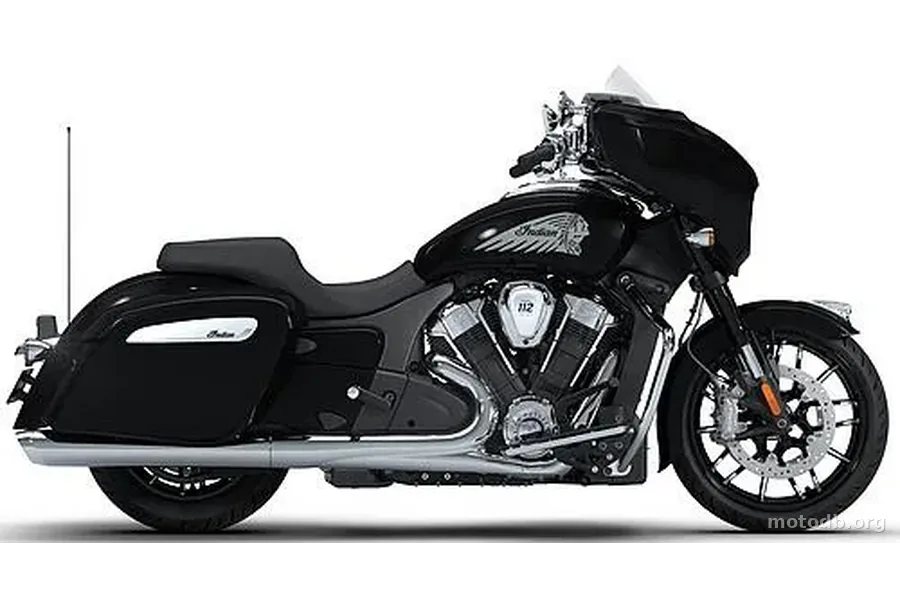
The renewal of Indian dates back to 2014, when Polaris gave it the true breath to rekindle its embers. From this fire, a new generation of Chief was born and the brand's first foray into the bagger category. The Chieftain was born.
Since then, the manufacturer's touring lineup has notably expanded. The Chieftain remains a part of it, renewing its presence in 2025 with fine evolutions and a profound change. Which one? Why? Was it necessary? Is it serious? All in a short and unwavering answer: a shock.
Not on the bodywork. This dressed cruiser still has a beautiful look, imposing at the bow and fleeting at the stern. Its face becomes more serious with a more asserted sense, a more elaborate optical unit and more dynamic vents. For the third time in its existence, the Chieftain gets a facelift. For a result worthy of American tradition.
But quickly, its belly occupies all our attention. How charged, how dense, how it is...... without the Thunderstroke! The majestic engine block and its magnificent company of fins, pushrods, and chrome have abdicated in favor of the recent PowerPlus engine. The orchestra fades to make way for the synthesizer. The eye will no longer be able to savor each of its curves, but performance is taken to another dimension.
The twin is of a different breed. Liquid-cooled, double ACT, 4 valves per cylinder – the Challenger introduced it in 2020, with a displacement of 1769 cm3. Five years later, the staff at Springfield injects 65 cm3 into its entrails. This allows it to gain a few horsepower and Nm but, above all, to mark a spectacular increase in watts to propel the Chieftain. From 90 horsepower with the old engine, it now rears and smirks with 126 horsepower. With a different feel, more shooter than bourbon. On the torque side, the gain is less spectacular but well present. The vintage block produced 171 Nm from its 1890 cm3; its replacement increases the maximum to 181.4 Nm from its 1834 cm3, or 112 ci. New times change bodies, but what about souls?
Offering (or enduring?) this new engine induces a revision of the chassis. New frame, adoption of an inverted fork, welcome to more muscular braking with Brembo 4-piston calipers, reshaped tank - unprecedented elements for the Chieftain but ultimately not new, as it is the platform of the Challenger. So, why choose one or the other of these twins? For the style, here less extravagant, and for a technical specificity: the fork head is mounted on the steering column, carrying its gaze in the direction of the road. Whereas it is fixed to the chassis on the Challenger.
What more to give to this Indian? Electronics, as the trends require. There was yet plenty to do: triple Riding Modes (Tour / Standard / Sport), keyless start and remote luggage locking, cruise control, rear cylinder deactivation, Ride Command infotainment system with 7-inch color TFT screen, electric windshield, USB port, Bluetooth, tire pressure monitoring, ABS, 100-watt audio system... What a spread! It thickens with the installation of radar on the rear taillight bracket. Here is what to give a “view” to the Chieftain. It warns you of the presence of a vehicle in the blind spot, if another is approaching too closely, even preventing the latter from avoiding the rollover. A small update also on the side of brake management, with an interconnected system between the front and rear and hill start assist.
Questions will revolve around the “Powerplus” Chieftain... Which will answer with the power of its desire to ride. Its 382 kilograms will remind you of its construction made of metal and rock, for cruising in rhythm and blues.
M.B - Manufacturer Media
Standard equipment
- Assistance au freinage : ABS
- Nombre de mode de conduite : 3
- Volume de rangement : 68 litres
- Taille de l'écran TFT couleur : 17,78 cm / 7 pouces
- ABS Cornering
- Indicateur de vitesse engagée
- Régulateur de vitesse
- Freinage combiné
- Radio
- Bluetooth
- GPS
- Prise USB
- Démarrage sans clé
- Contrôle de traction
- Poignées chauffantes
- Pare brise réglable électriquement
- Valises
- Crash Bars / Top Blocks
- Système radar
- Selle chauffante
- Centrale inertielle
- Surveillance de la pression des pneus
Practical info
- La moto est accessible aux permis : A
- Pays de fabrication : Etats-Unis
Indicators & positioning
Similar bikes
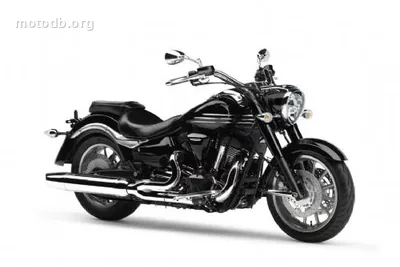
XV1900A Midnight Star
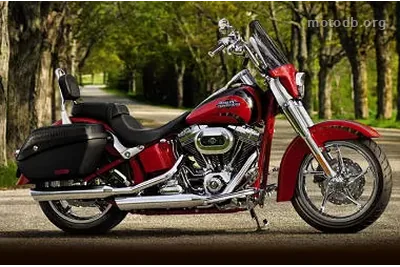
CVO 1800 SOFTAIL CONVERTIBLE FLSTSE
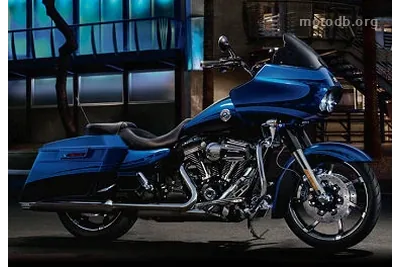
CVO 1800 ROAD GLIDE CUSTOM 110th Anniversary FLTRXSE2
Reviews & comments
No reviews yet. Be the first to share your opinion!