Key performance
Technical specifications
- New price
- 31 990 € → 29 900 €
Engine
- Displacement
- 1832 cc
- Power
- 118.0 ch @ 5500 tr/min (86.8 kW)
- Torque
- 166.7 Nm @ 4000 tr/min
- Cooling
- liquide
- Compression ratio
- 9.8:1
- Bore × stroke
- 74 x 71 mm
- Valves/cylinder
- 2
- Camshafts
- 2 ACT
- Fuel system
- Injection PGM-FI
Chassis
- Frame
- Double poutre alu, type Diamant
- Gearbox
- boîte à 5 rapports
- Final drive
- Cardan
- Front suspension
- Fourche téléhydraulique Ø 45 mm, déb : 140 mm
- Rear suspension
- monobras Pro-Arm mono-amortisseur Pro-link, déb : 105 mm
Brakes
- Front brakes
- Freinage 2 disques Ø 296 mm, étrier 3 pistons
- Rear brakes
- Freinage 1 disque Ø 316 mm, étrier 3 pistons
- Front tyre
- 130/70-18
- Front tyre pressure
- 2.50 bar
- Rear tyre
- 180/60-17
- Rear tyre pressure
- 2.80 bar
Dimensions
- Seat height
- 740.00 mm
- Fuel capacity
- 25.00 L
- Weight
- 417.00 kg
- Dry weight
- 363.00 kg
- New price
- 29 900 €
Overview
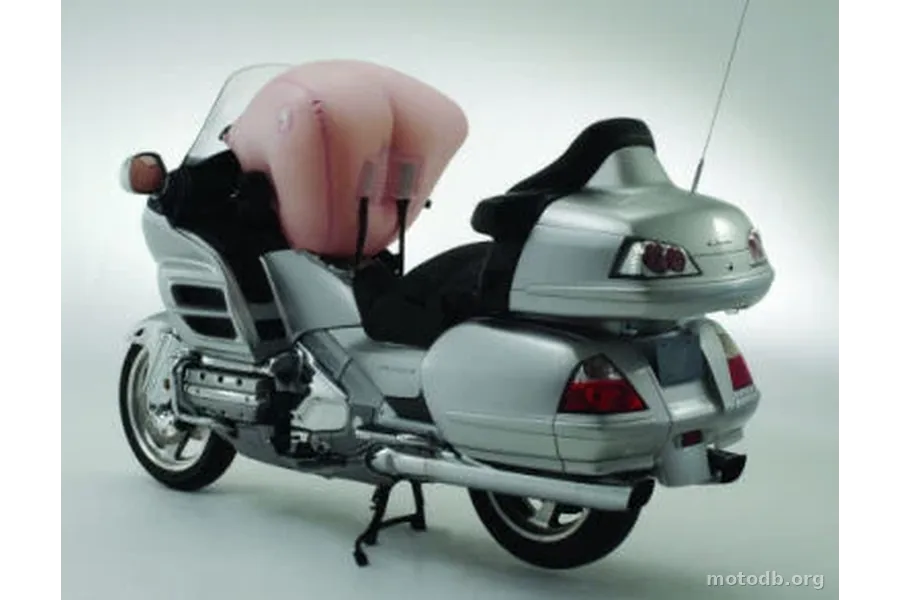
Remember 2007. While the European competition polished its chrome and piled watts into onboard sound systems, Honda pulled out an argument no one had dared deploy on two wheels: an airbag. Not a prototype ridden on a closed circuit in front of three hand-picked journalists, but production equipment, fitted to the heaviest tourer in the catalog. The GL 1800 Goldwing thus became the first production machine to carry an inflatable cushion, and this single detail is enough to write this vintage into the modern history of two-wheelers.
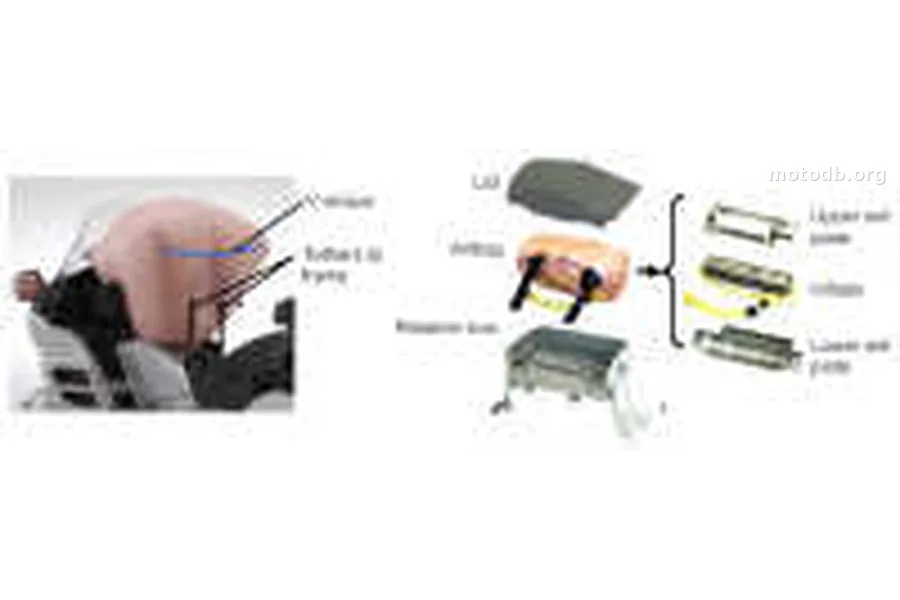
The project didn't come out of nowhere. Honda had been working on the subject since the mid-90s, after dissecting accident statistics and noting that the vast majority of serious crashes involve a frontal impact. A first prototype was grafted onto a Goldwing 1500 at the end of the decade, then tested on a Silverwing in 2004, before landing on the GL 1800. The system rests on three pillars: the cushion nestled in a housing atop the tank and deployed by a compressed gas canister, an electronic control unit constantly monitoring the data, and four sensors doubled up on each fork leg, processed independently to prevent spurious triggering. In the event of a frontal impact, the bag inflates in 0.15 seconds and retains the rider thanks to two straps and a shape designed to prevent lateral slippage. Swiss watchmaking adapted to Japanese mechanics.
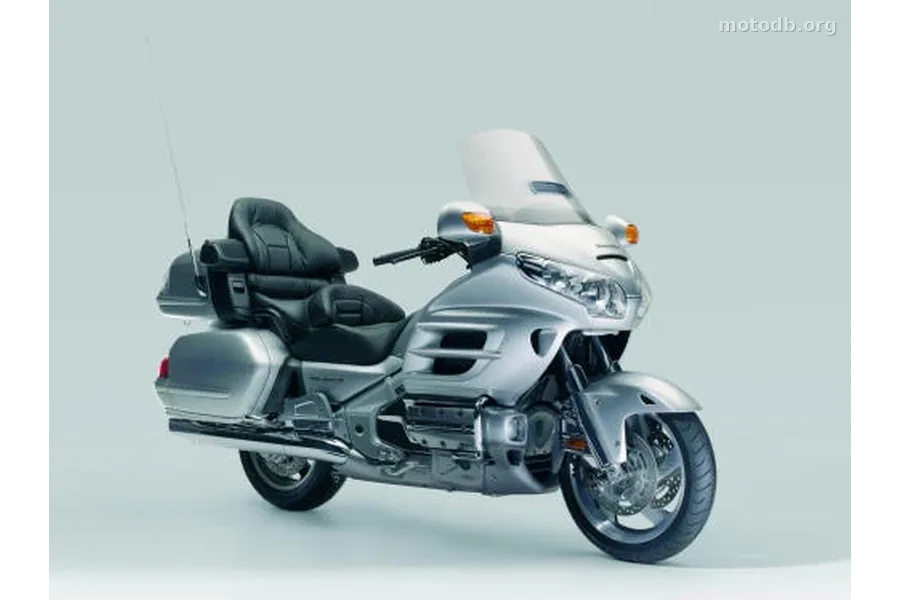
On the machine side, the flagship doesn't do things by halves. The 1832 cc flat-six delivers 118 horsepower at 5500 rpm and a massive 166.7 Nm of torque from 4000 rpm, all transmitted to the rear wheel by shaft drive via a five-speed gearbox. On the scales, it tips at 363 kg dry and 417 kg fully fueled, figures that make you cough at first glance but fade away as soon as the beast rolls, thanks to a seat set at 740 mm from the ground and a Diamond-type twin-spar aluminum frame that channels it all with clinical rigor. Count on 200 km/h top speed and a 25-liter tank to swallow France in one go. Faced with an aging BMW K 1200 LT or the Harley Electra Glide that bets everything on image, the Goldwing imposes a technical superiority that is hard to contest.
That leaves the touchy question, that of price. Honda charges a little over 2000 euros for the airbag option, pushing the bill to 29,900 euros, or about 12% more than the standard version already offered above 26,000 euros. On paper, the total stings. In the reality of the segment, it's almost a trifle for the targeted clientele, experienced long-distance riders, often in their fifties, who rack up their 20,000 annual kilometers with passenger and luggage, and for whom passive safety is well worth the price of an aftermarket exhaust.
So, marketing gimmick or real breakthrough? The answer clearly leans toward the latter. The Goldwing never sought to seduce the Sunday track rider or the nervous urbanite; it addresses those who make the road a discipline in its own right. In 2007, Honda offered them a safety net that competitors would take nearly a decade to imitate, and this pioneer's panache alone justifies the price of admission.
Standard equipment
- Assistance au freinage : Dual-CBS et ABS
Practical info
- La moto est accessible aux permis : A
Indicators & positioning
Similar bikes
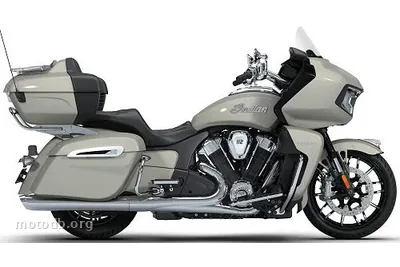
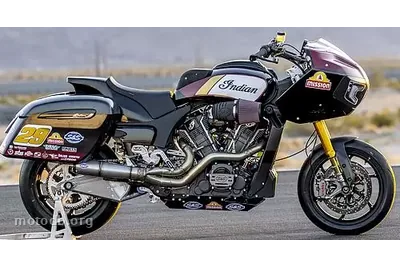
1830 Challenger Venum
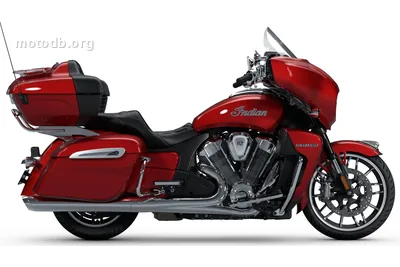
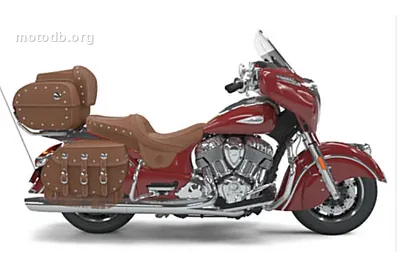
1830 Roadmaster Limited / Dark Horse
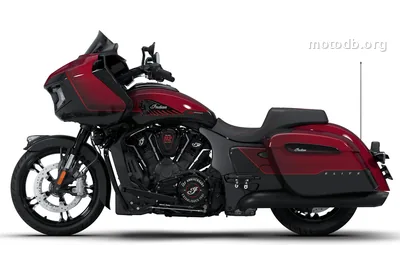
1830 Challenger 125th Anniversary Edition
Reviews & comments
No reviews yet. Be the first to share your opinion!