Key performance
Technical specifications
Engine
- Displacement
- 998 cc
- Power
- 184.0 ch @ 12500 tr/min (135.3 kW)
- Torque
- 116.7 Nm @ 10500 tr/min
- Engine type
- 4 cylindres en V à 65°, 4 temps
- Cooling
- liquide
- Compression ratio
- 13 : 1
- Bore × stroke
- 78 x 52.3 mm
- Valves/cylinder
- 4
- Camshafts
- 2 ACT
- Fuel system
- Injection Ø 48 mm
Chassis
- Frame
- Double poutre périmétrique en aluminium
- Gearbox
- boîte à 6 rapports
- Final drive
- Chaîne
- Front suspension
- Fourche téléhydraulique Öhlins inversée 43 mm, déb : 120 mm
- Rear suspension
- Mono-amortisseur, déb : 130 mm
Brakes
- Front brakes
- Freinage 2 disques Ø 320 mm, fixation radiale, étrier 4 pistons
- Rear brakes
- Freinage 1 disque Ø 220 mm, étrier simple piston
- Front tyre
- 120/70-17
- Rear tyre
- 200/55-17
Dimensions
- Seat height
- 845.00 mm
- Fuel capacity
- 18.50 L
- Dry weight
- 181.00 kg
- New price
- 19 999 €
Overview
Twenty thousand euros for a road bike. The figure is startling, until you realize what Aprilia has slipped under the fairing: a 65-degree V4 of 998 cm³ that screams to 12,500 rpm to unleash 184 horsepower and 116.7 Nm of torque at 10,500 rpm. Noale built its RSV4 Factory APRC based on a simple premise. World Superbike is its laboratory, the road is its delivery terrain.
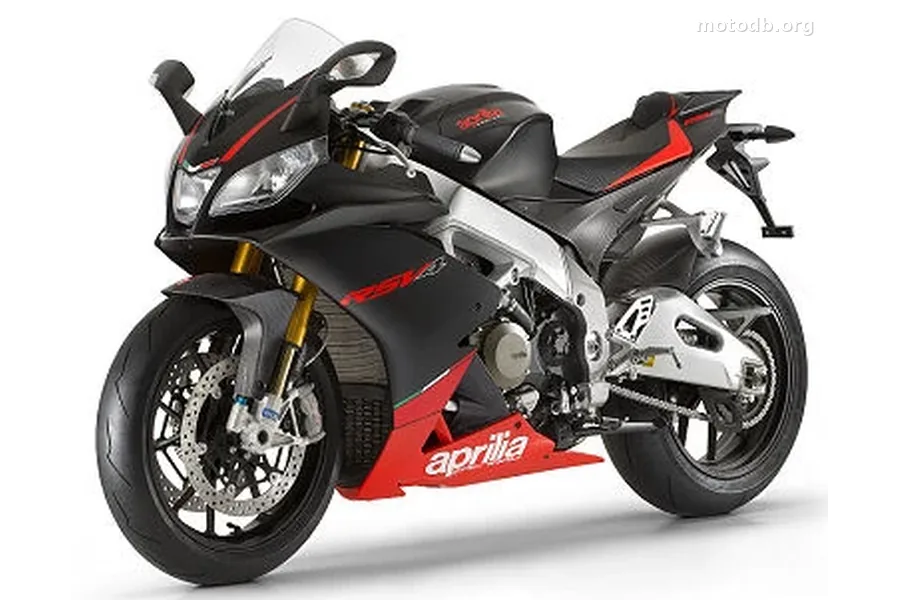
What the 2014 version brings compared to its predecessors is first and foremost an electronic maturity that its direct competitors — BMW S 1000 RR, Kawasaki ZX-10R, Ducati 1199 Panigale — took years to achieve. The APRC, the Aprilia Performance Ride Control, is not just a disengageable traction control thrown in as an option to look good. It is a coherent package that includes adjustable traction control on eight levels, an adjustable wheelie control, a three-mode launch control and a quickshifter that allows you to upshift without touching the clutch or throttle. The cherry on top for 2014 is the Bosch 9MP ABS, weighing in at just two kilos, declined in three maps — track, sport, rain — and combinable with each of the three engine modes. On a mid-October wet track, this level of personalization changes everything.
The chassis deserves attention. The perimeter aluminum frame comes directly from Aprilia’s 250 GP program, with eighteen world titles to its credit. This is not marketing; it’s proven geometry. The engine itself is positioned within the frame, offering a degree of adjustability that few manufacturers offer even in competition. The 43 mm Öhlins inverted fork and the Öhlins rear monoshock work with 120 and 130 mm of travel respectively. For 181 kg dry weight, this is a solid base.
Braking also evolves, with Brembo M430 monoblock radial calipers at the front, clamping onto two 320 mm discs. At 305 km/h top speed — as claimed in the technical specifications — you don't joke about deceleration. The 200 mm section rear tire works with a seat at 845 mm, a tank increased to 18.5 liters and a slightly lowered position. These are details, but they testify to an attention to the rider that earlier generations did not always have.
The target audience for this Factory APRC ABS is clearly identified: the experienced rider who rides on the track on weekends and returns home on Monday morning. For a beginner, this machine is a mistake. For a confirmed track rider looking for a road-homologated mount without compromise, it is one of the most coherent proposals in the hypersport segment. The price of 19,999 euros positions the RSV4 Factory at the top of the hypersport market, on par with the Panigale and above the S 1000 RR. The difference lies in the character: Aprilia’s 65-degree V4 has a sound and a torque delivery that is unique to it, something between the density of a twin-cylinder and the frenetic revving of a Japanese four-cylinder. This is what justifies the price. For those who hear it once, the question doesn't really arise.
Standard equipment
- Assistance au freinage : ABS Bosch 9MP
Practical info
- La moto est accessible aux permis : A
Indicators & positioning
Similar bikes
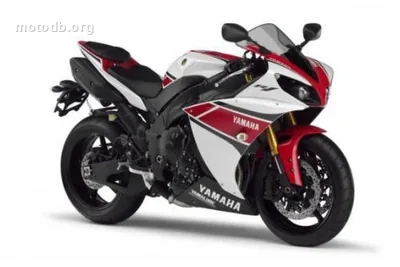
YZF-R1 1000 WGP 50th Anniversary
Reviews & comments
No reviews yet. Be the first to share your opinion!